
The quality inspection of claw clasp snap hook (claw clasp snap hook) is a comprehensive assessment process, mainly covering the following aspects:
First. appearance and size inspection
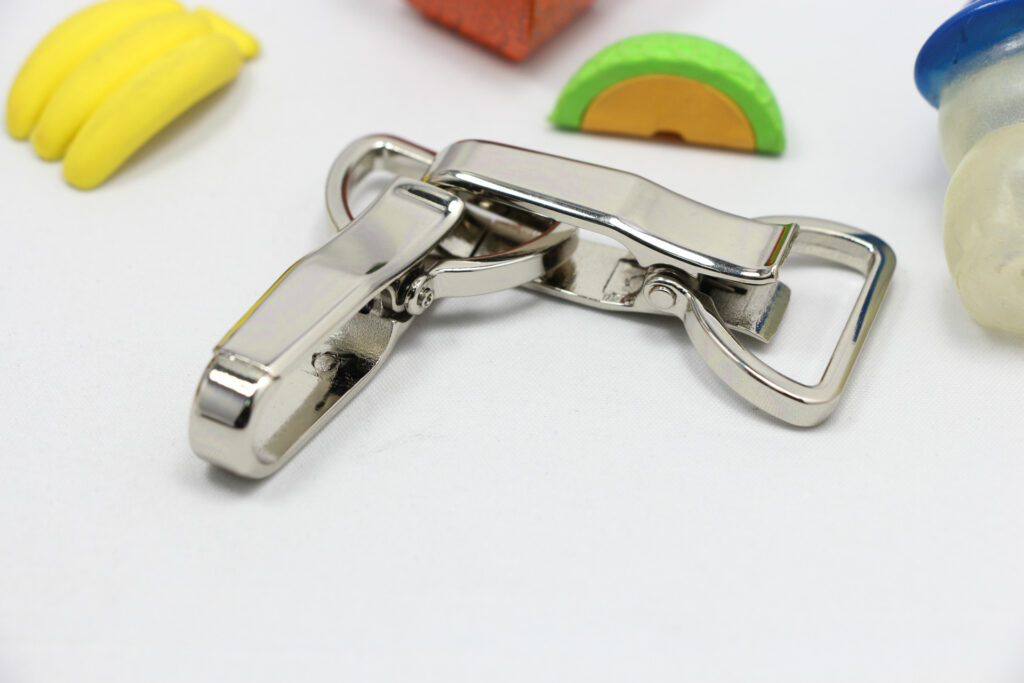
- Appearance inspection:Observe the surface of the claw clasp snap hook using the naked eye or a low magnification lens to check for scratches, dents, rust, oxidation or other surface defects.Ensure that the claw clasp portion, the snap hook portion, and the connecting portion are all intact and free of obvious deformation or damage.
- Dimensional measurements:Use an accurate measuring tool (e.g., vernier calipers) to measure critical dimensions of the claw clasp snap hook, such as length, width, thickness, and size of the claw clasp opening.Compare the measurement results with the product design specifications to ensure that all dimensions meet the design requirements.
Second.material and composition testing
- Material Identification:Determine the material of the claw-and-button snap hook by visual inspection or chemical composition analysis, common materials include metal (such as stainless steel, zinc alloy, etc.), plastic and so on.
- Chemical Composition Analysis (for metallic materials):Use spectrometer or other chemical composition analysis equipment to analyze the composition of metal materials to ensure that the elemental content of the material meets the relevant standards and requirements.
Third. functionality and durability test
- Latch function test:Test whether the locking function of the claw-clasp snap hook is normal, Check if it locks firmly and unlocks easily. Perform locking and unlocking operations several times to assess its reliability and durability.
- Load-bearing capacity test:Apply progressively increasing loads to the claw clasp snap hook using appropriate test equipment until it reaches its design load-bearing limit. Observe and record the deformation of the claw clasp snap hook during load bearing, Inspect for any breaks, damage.
- Corrosion Resistance Test (for metallic materials):Place the claw clasp hook in a solution containing corrosive substances (e.g. salt water, acid solution, etc.) to simulate its use in a harsh environment. After a certain period of time remove and check whether there is corrosion on its surface.
- Abrasion resistance test:Conduct friction and abrasion tests on claw clasp snap hooks using abrasion testing equipment to simulate the friction and abrasion they may subject to during use. Evaluate whether its wear resistance meets the design requirements.
Fourth, safety testing
- Edge smoothness inspection:Check whether the edges of the claw-and-button snap hooks are smooth and free of sharp corners, in order to prevent harm to the user in the process of use.
- Harmful substances detection:Harmful substance testing of claw clasp snap hooks, such as lead, mercury, cadmium and other heavy metals, as well as plasticizers and other harmful chemicals. Ensure that the product meets the relevant safety standards and regulatory requirements.
In summary, the quality testing of claw closure snap hooks needs to be comprehensively considered and evaluated in terms of appearance and size, material and composition, functionality and durability, as well as safety. Through the strict testing process, the reliability and safety of claw clasp snap hooks can be ensured in a variety of use environments.