What is a bag feet?
During the daily use of luxury handbags, the wear and tear at the bottom of the bag is always one of the most worrying issues for the owner. Whether it is the delicate Box cowhide, the soft sheepskin, or the smooth suede, once the bottom of the bag repeatedly rubs against a rough surface, sand, road, or an uneven shelf, the resulting scratches and wear become irreversible “scars”. Under this demand pain point, the bag bottom pad – a hardware accessory installed at the bottom of the bag – has moved from behind the scenes of luggage accessories to the forefront. It is not only a physical barrier to prevent wear and tear, but has also quietly evolved into an indispensable aesthetic element in bag design. This article will systematically analyze the “big considerations” behind this “small hardware” from the dimensions of the definition, development evolution, material classification, core functions, design aesthetics, purchase and maintenance, and market trends.
The Definition and Basic Function of the Bag Bottom Pad
The luggage industry also commonly calls the bag bottom pad bag bottom hardware, bottom nails, or bottom supports. This term refers to the hardware accessories that manufacturers install on the outer or inner side of the bottom of the bag through riveting, screw fixation, or embedding methods. In the classification system of luggage accessories, this pad belongs to the category of hardware in the auxiliary materials. Although plastic, rubber, or felt bag bottom pads also exist in the industry, metal-based pads, which manufacturers have electroplated or spray-coated on the surface, appear most commonly, and these pads together form the “first line of defense” for protecting the bottom of the bag
Core Function: Physical Protection
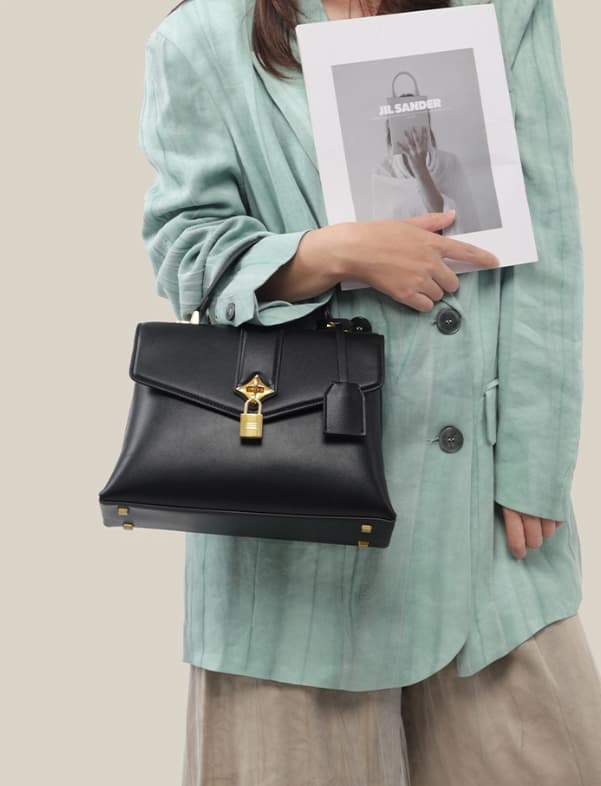
The primary function of the bottom pad is to reduce the direct friction between the bag fabric and the contact surface. For leather bags, the corners at the bottom are the most prone to wear. When users place the bag on a table, the ground, or any rough surface, the bottom pad acts as a sacrificial layer, bearing most of the physical friction and abrasion, thereby effectively protecting the grain surface of the leather, preventing fraying, fading, and scratches, and significantly extending the lifespan of the bag. Take a bag with four metal bottom nails at the bottom as an example: these nails raise the bag’s bottom by approximately 2 to 3 millimeters, holding the leather completely clear of the storage platform surface and thus avoiding direct contact.
Structural Support: Maintaining the Bag’s Shape
For large-capacity soft bags such as totes and bucket bags, prolonged exposure to heavy loads can easily cause the base to sag, compromising the aesthetic appeal of the overall silhouette. A base insert with a certain degree of rigidity and thickness (such as a metal base plate or an EVA inner insert) provides robust support for the base, distributes the force applied to it, and prevents deformation caused by the weight of the contents, ensuring the bag retains its structured shape even when not in use. In the field of luxury goods care, practitioners often refer to this as ‘shape preservation’—the physical support from the base insert helps delay the sagging and creasing that prolonged stress causes to the bag’s base
Decorative Accents: Enhancing Texture
As luggage design has evolved, the function of the bag base pad has long transcended the realm of mere protection. By altering the material, shape, colour and surface finish of the base pad, designers have made it an integral part of the bag’s overall design language. For example, using gold- or silver-plated base pads that match the colour of the bag’s metal fittings, or engraving the brand logo and patterns onto the metal surface, can subtly enhance the bag’s refinement and sense of luxury. The base pad has thus transformed from an ‘invisible guardian’ into a ‘stylistic footnote’, becoming one of the key details used to judge the level of craftsmanship in a bag.
The Historical Development and Evolution of the Bag Lining Industry
Rudimentary protection for the bases of early luggage
From the 19th century to the early 20th century, luggage typically featured a wooden frame that craftsmen covered with heavy canvas or leather, and thickened leather or metal corner guards usually reinforced the base to provide protection. The concept of ‘luggage base pads’ had not yet taken shape as a distinct category during this period; instead, corner guards and edging provided the primary protection. Simple and straightforward logic drove this protection strategy: craftsmen reinforced the material or fitted metal plates over it wherever wear tended to occur. However, these early protective components often appeared crude and bulky, with little decorative value, and they primarily served functional products such as travel trunks
The Development and Popularisation of Modern Bag Base Pads
In the mid-to-late 20th century, the rise of the luxury handbag industry and growing consumer awareness of bag care led manufacturers to begin using bag base pads systematically as standalone hardware accessories. High-end handbag brands, such as Hermès and Chanel, were the first to incorporate exquisite metal studs at the four corners of the bag’s base. This not only protected the expensive leather but also showcased the brand’s exquisite metalwork through the design and material of the studs. Subsequently, bag base pads gradually extended from the high-end luxury sector to mid-to-high-end fashion handbags, becoming one of the key indicators of a bag’s quality.
Trends over the past decade
Over the past decade, two major trends have driven the development of bag sole pads: firstly, functional diversification—the market no longer limits them to a single protective function but now combines anti-slip, shock-absorption, support, and decorative features; secondly, refined design—brands have begun to customise sole pads specifically for different bag styles and strive to ensure that everything from the curvature and spacing of the studs to the surface texture blends perfectly with the bag’s overall style. At the same time, consumers’ perception of bag base pads has shifted from being ‘optional’ to ‘indispensable’, and a specialised sub-sector has even emerged within the third-party maintenance market, dedicated to producing bespoke base pads for popular bag styles.
Comparison of the Main Materials and Characteristics of Bag Soles
The choice of material for bag soles directly determines their protective performance, service life and decorative effect.The market commonly categorises the materials for bag soles mainly as metal, rubber and silicone, plastic (EVA), and felt; each material has its own advantages and disadvantages and suits different bag styles and usage scenarios
Metal
Metal bag base pads come from base materials such as copper, iron, zinc alloys, and stainless steel, and their surfaces usually receive electroplating (gold, silver, gunmetal, antique bronze, etc.) or spray coating as finishing treatments. Their key advantages lie in their extremely high hardness and outstanding wear resistance; they can withstand considerable pressure without deforming easily, whilst their metallic texture lends the bag a sophisticated visual and tactile experience, making them highly decorative. However, the inherent weight of metal increases the overall weight of the bag; prolonged exposure to damp environments or perspiration carries a risk of oxidation and rust; furthermore, metal studs may produce a squeaking noise when dragged across hard surfaces. This type of material is primarily used in high-end genuine leather handbags, structured bags and suitcases.
Rubber and Silicone Types
Manufacturers typically make rubber and silicone bag base pads from silicone rubber or nitrile rubber, and they often use these pads in conjunction with a metal frame to form a composite structure consisting of a ‘metal core and rubber outer layer’. A soft and elastic texture, excellent anti-slip properties, effective vibration absorption and noise reduction when placing the bag down, and good corrosion resistance and wear resistance give these pads their advantages. However, rubber’s visual and tactile qualities fall short of those of metal, and some inferior-quality rubber tends to age, harden, yellow, or even crack after prolonged use. Manufacturers predominantly use these materials in functional bags requiring anti-slip and shock-absorbing properties, such as electronic equipment bags and tool kits.
Plastic and EVA-type
Manufacturers injection-mould plastic and EVA-type bag base pads from high-density EVA or engineering plastics. These materials give the pads light weight, waterproof and insulating properties, and low cost, whilst also offering a degree of flexibility and resilience. However, their relatively average abrasion resistance, their tendency to deform and collapse after prolonged weight-bearing, and their less refined texture compared to metal limit their decorative appeal. Manufacturers primarily use these materials for inner base pads, shaping inserts, or organisational dividers in affordable fashion bags
Felt-type
Manufacturers make felt-type bag base pads from compressed polyester fibre. A soft texture gives these pads a gentle feel that will not scratch the bag’s lining or leather base; they offer good cushioning and noise-reduction properties, and users can cut them to size to suit the bag’s shape. However, felt’s poor wear resistance and its tendency to attract dust and lint make it unsuitable for direct contact with rough external surfaces. Consequently, felt-type bag base pads mainly function to support the interior base of the bag, protecting the lining and helping maintain the bag’s shape
Comparison of Materials
| Material type | Key Features | Advantages | Disadvantages | Common use cases |
| Metals | Copper, iron, zinc alloys and stainless steel, often with an electroplated finish | High hardness, excellent wear resistance, a premium feel, high decorative value and good load-bearing capacity | It is quite heavy, which can cause rattling noises, and is prone to oxidation and rust in damp environments | High-end genuine leather handbags, structured bags and suitcases |
| Rubber/Silicone | Silicone rubber and nitrile rubber are often combined with metal reinforcements | Soft and elastic, non-slip and shock-absorbing, with excellent noise-reduction properties and corrosion resistance | The texture and appearance are not as good as those of metal; poor-quality items are prone to ageing, hardening and yellowing. | Electronics bags, tool bags, and functional bags requiring anti-slip and shock-absorbing properties |
| Plastics/EVA | Injection moulding of EVA or engineering plastics | Lightweight, waterproof, insulated, reasonably flexible and inexpensive | It has average wear resistance; it is prone to deformation under long-term weight-bearing conditions, and its texture is rather ordinary. | Bag liners, affordable and stylish bags, moulded inserts |
| Felt products | Polyester fibre compaction | Soft texture, won’t scratch the lining, quiet cushioning, can be cut to size | It has poor wear resistance, is prone to attracting dust, and is not suitable for use on external floors | Inner support liner and organisation pad at the bottom of the bag |
Structural Classification and Process Analysis of Sole Pads
Semi-encapsulated and Fully-encapsulated Structures
In the field of sole pads combining rubber and metal, there are two structural types: ‘semi-encapsulated’ and ‘fully-encapsulated’
A fully-encased construction refers to a design in which the rubber completely envelops the entire metal frame, with no metal parts exposed.This construction gives the advantage that rubber makes up the entire surface of the sole in contact with the ground, offering optimal slip resistance and noise reduction, while also minimising metal oxidation. However, the more complex manufacturing process places higher demands on the bonding technology between the rubber and metal, and consequently increases costs.
A semi-encapsulated structure refers to one in which the rubber only encases the base or key load-bearing areas of the metal framework, whilst the metal sides or top remain exposed. This design ensures slip resistance and wear resistance at the base whilst retaining the visual texture of the metal, facilitating the use of electroplating processes to showcase the colour and lustre of the brand’s metal components, thereby balancing functionality and aesthetics.
Surface Treatment Processes
The decorative appeal of base pads depends largely on their surface treatment techniques. For metal base pads, common processes include:
- Electroplating: Gold plating, silver plating, gunmetal plating, antique bronze plating, black chrome plating, etc., which can achieve a rich variety of colours and lustre effects.
- Polishing and Brushing: Mechanical polishing produces a mirror-like finish, whilst brushing creates a subtle, matt metallic texture.
- Sandblasting: This creates a uniform, fine-grained texture on the metal surface, resulting in a more understated and subdued visual appearance.
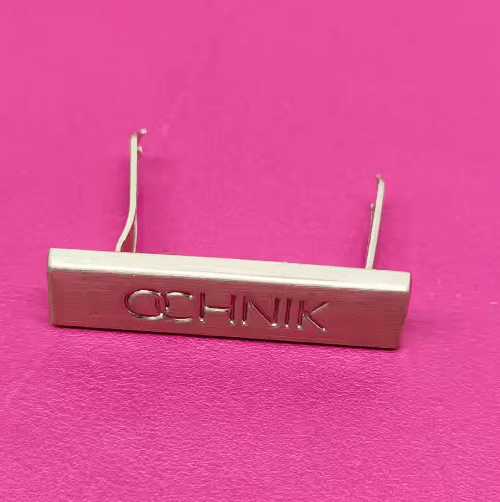
- Embossing and engraving: Moulds imprint brand logos, geometric patterns, or leather-like textures onto the surface of the mat, enhancing the level of detail and refinement
For rubber-backed mats, manufacturers can use moulds to emboss leather-like textures, fabric-like patterns, or anti-slip geometric designs onto the rubber surface, thereby increasing friction whilst enhancing aesthetic appeal
Installation and Fixing Methods
The method used to install the base pad directly affects its stability and the safety of the bag. Common fixing methods include:
- Riveting: The base pad is secured to the leather base of the bag using hollow rivets. This method offers extremely high stability and is difficult to dismantle; it is commonly used in high-end bags.
- Screw fastening: The base pad is secured from the inside of the bag’s base using small screws. This facilitates future replacement and repairs, but places certain demands on the bag’s lining.
- Adhesive bonding: The base pad is affixed to the bag’s base using industrial adhesive or double-sided tape. This is suitable for DIY projects or non-permanent installations, but offers relatively low strength.
- Inset method: A groove is cut into the base leather, into which the base pad is inserted and secured, ensuring it sits flush with the base. This offers the highest aesthetic appeal but requires extremely high precision in craftsmanship.
A Re-examination of the Functional Value of Bag Base Pads
Assessment of Actual Wear-Resistance
For a frequently used genuine leather handbag, the four corners of the base are the ‘high-wear areas’. Without protection, a handbag used daily for commuting will show noticeable wear on its base corners within three to six months; in mild cases, this manifests as peeling of the finish and fading of the colour, whilst in severe cases, the leather fibres become exposed, resulting in costly repairs. In contrast, with a bag fitted with a sole pad, metal or rubber studs raise the bottom corners, transferring the wear and tear to the sole pad itself. Even if the sole pad becomes scratched, polishing or replacing the pad can restore it simply, without the need for complex repairs to the bag’s leather body.. From the perspective of maintenance economics, the cost of investing in a sole pad is far lower than the cost of a single professional repair to the bag’s corners.
Anti-slip and noise-reduction properties
In addition to preventing wear and tear, the anti-slip function of bag base pads should not be overlooked. A smooth leather base is prone to sliding on sloping or slippery surfaces, increasing the risk of the bag accidentally falling. Rubber or textured metal base pads, however, can significantly increase the friction between the bag and the surface on which it rests, ensuring the bag is placed more securely. At the same time, the base pad creates a barrier between the bag’s base and the surface, preventing the ‘clack’ sound produced when leather comes into contact with a hard surface. This is particularly useful in quiet office environments or restaurants, demonstrating attention to detail in the etiquette of bag usage.
Shape Retention and Structural Reinforcement
In the mechanical structure of a bag, the base is the core load-bearing area. In soft bags without a base insert, the base naturally sags under the weight of the contents, leading over time to irreversible collapse that affects the bag’s overall silhouette and aesthetic appeal. Metal base supports or rigid EVA inner liners effectively prevent sagging and deformation of the bag’s base by distributing the force applied to it. In the luxury goods care industry, fitting soft bags with inner base liners has become one of the standard practices for extending the bag’s lifespan.
The Aesthetics and Brand Language of Handbag Base Pads
Handbag Base Pads as Elements of Brand Identity
In the design of handbags by top luxury brands, the base pad is no longer merely an ‘accessory’, but rather a key component of the brand’s identity system. For example, a classic handbag from a certain French luxury brand features base studs with a distinctive curved ‘double C’ design that echoes the metal clasp on the body of the bag; whilst the iconic handbag from another Italian brand features a base plate with a metal finish in the same colour scheme as the bag, and the plate bears an engraving of the year the brand was founded. These details are not merely a display of craftsmanship, but also a silent narrative of the brand’s story.
Harmony between the bag base pad and the overall style of the bag
The design of the bag base pad must harmonise with the bag’s overall style. For vintage-style bags, distressed copper or antique silver metal studs are suitable to create a time-worn texture; for modern, minimalist bags, the preference is for small, concealed studs or base pads in the same colour as the bag’s base, aiming for an ‘invisible’ effect that does not disrupt the bag’s clean lines; For luxurious evening bags, diamond-encrusted or mirror-polished base pads complement the bag’s sparkling exterior perfectly.
Rules for Matching Bag Base Pads with Metal Fittings
The ‘colour consistency’ of a bag’s metal fittings is a key criterion for assessing design details. The colour of the bag base pad should match the metal fittings on the bag itself—such as zips, clasps, rivets and chains—whether they are in the gold, silver or gunmetal colour family. If there is a ‘mix-and-match’ situation where the base pad is gold whilst the zip is silver, this is considered a basic design error in the eyes of professionals. This rule of coordination also applies when purchasing third-party bag base pads; consumers should ensure that any replacement or additional base pads match the colour tone of the bag’s original hardware.
The Actual Impact of Bag Base Pads on a Bag’s Value
In the second-hand luxury goods market, the condition of a bag’s base is one of the key indicators that valuers use to assess price. A bag whose base corners show no obvious wear and whose metal fittings have no severe scratches often fetches 15 to 30 per cent more than an identical model whose base is in perfect condition. Using a bag base protector is akin to fitting a protective cover over the bag’s ‘sole’; by actively absorbing wear and tear, it safeguards the bag’s most vulnerable areas. However, the choice of base protector requires particular care. If the material is too hard or the edges are not smoothly finished, prolonged use may actually wear down the leather edges or lining fabric of the bag’s base A common misconception is that ‘the thicker and harder, the better’; the correct approach is to choose a pad that conforms to the curve of the bag’s base, has rounded edges and possesses a certain degree of resilience.
Conclusion
The bag base pad—this unassuming piece of hardware—may be nothing more than a minor footnote in the grand narrative of luggage and handbags. Yet it is precisely this attention to detail in such a small space that reflects the exquisite craftsmanship of bag-making and consumers’ refined pursuit of a quality lifestyle. With humility, it silently withstands the impacts and friction from the ground, preserving the bag’s original beauty. True luxury lies not merely in ownership, but in meticulous care and enduring companionship. When investing in a cherished bag, selecting a suitable base pad may well be the simplest and most effective way to prolong that sense of ‘beauty’. From functional protection to stylistic expression, though small, a base pad is enough to reveal a bag’s true character in the details, allowing it to age with grace over time.