What Hardware do I need for my purse & handbag
In the world of luggage and handbags, although hardware fittings may be small, they are the key to defining a bag’s ‘soul’. As one industry insider put it: ‘A bag’s hardware fittings serve as the finishing touch—they are the soul of the bag; a bag’s aesthetic appeal and value depend to a large extent on the quality of its hardware.’ Whether in a wallet or a handbag, metal fittings serve multiple functions, including connecting, securing, opening and closing, and adding decorative flair. This article will systematically examine the types, functions and key selection criteria for the metal fittings required for both wallets and handbags.
Basic Knowledge of Hardware Fittings
Before delving into specific fittings, it is necessary to first understand the basic classification criteria for hardware fittings. Hardware fittings for luggage and bags can be categorised according to various factors, including material, shape, colour and specifications.
materials
Common materials used for luggage and bag hardware include iron, zinc alloy, aluminium, copper and stainless steel. Among these, zinc alloy is the most widely used due to its excellent die-casting properties and moderate cost, whilst copper hardware is predominantly used in high-end products. Hardware made from karat gold and pure gold is occasionally used in luxury goods, but remains relatively rare.
colour (electroplating processes)
Hardware fittings can be finished in a variety of colours through electroplating. Common finishes include: white (i.e. silver), gold, light gold, gunmetal, blue-patinated bronze, brushed blue-patinated bronze, and chrome. Different electroplating processes also have varying environmental standards; for export products, we must take care to ensure they comply with environmental and non-toxicity requirements
Manufacturing processes
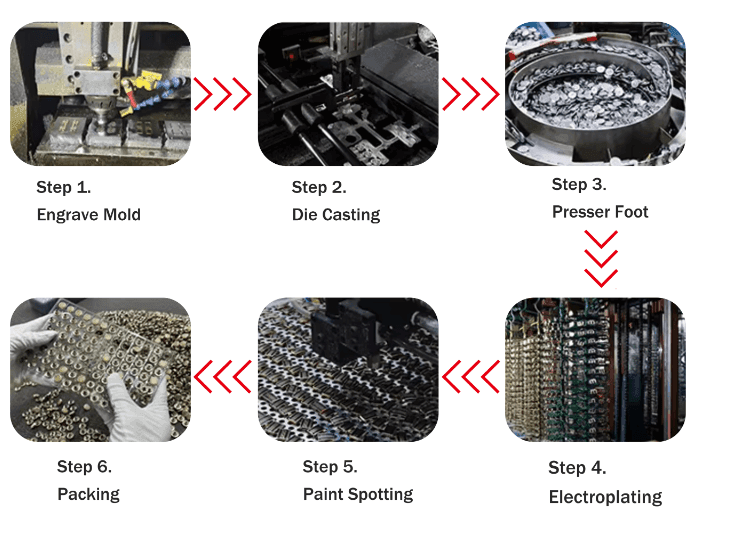
Hardware fittings typically undergo a series of stages including mould making, die-casting, polishing and grinding, and electroplating for colouring. Manufacturers further divide electroplating methods into barrel plating, rack plating, continuous plating, water electroplating, and vacuum electroplating, among others; each method influences both quality and cost
With this basic knowledge in mind, we can now examine the specific hardware fittings required for wallets and handbags respectively.
Example of the list of hardware needed to make a handbag
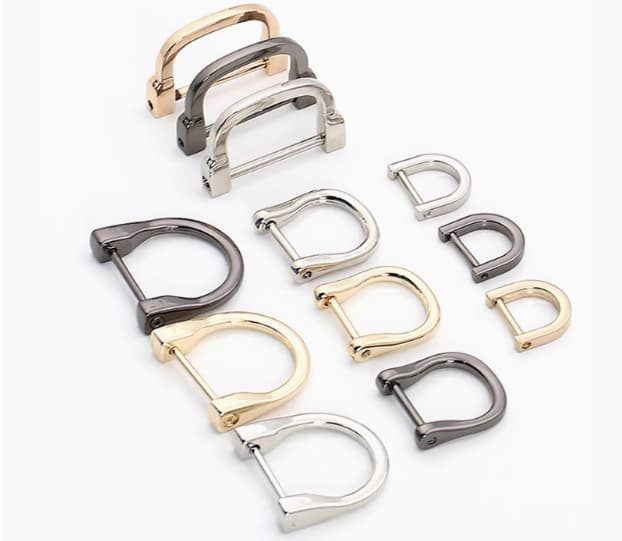
- 2 double D buckles, 2 5-point hooks (inner diameter 16mm)
- 1 set of flower turn locks (or other press locks)
- 1 3# zipper (27cm)
- 1 set of 3# sliders + top and bottom stops
- 1 handheld core
Key Considerations for Selecting Handbag Hardware
When selecting handbag hardware, we must take the following factors into account: Firstly, we need to ensure that hardware in load-bearing areas—such as handle fittings and shoulder strap buckles—is sufficiently strong; we should prefer zinc alloy or copper for these parts. Secondly, we must make sure the colour and surface finish of the entire set of hardware are harmonious and consistent, as this contributes to a sense of sophistication. Thirdly, we need to match the method of fitting the hardware to the bag’s material; for example, fitting heavy hardware to thin, supple leather may cause it to deform. Fourthly, if we are exporting products, we must also check whether the hardware complies with environmental standards such as SGS and RoHS.
Table of hardware needed to make a wallet
| Hardware Name | Common Quantity Range |
|---|---|
| Magnetic buckle (including male and female buckles) | 1 set |
| Snap button / buckle | 1-2 sets |
| Zipper | 1-2 pieces |
| Zipper pull | 1-2 pieces (matching the zipper) |
| Rivet | 4-8 pieces |
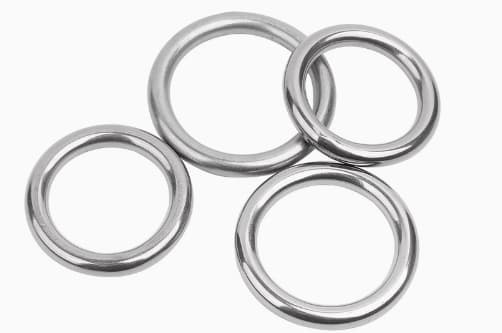
| D-ring / O-ring | 1-2 pieces |
| Grommet | 1-2 pieces |
You should keep in mind that handbags and wallets are just broad categories—only when you look at a specific style and a specific bag or wallet can you figure out what hardware to use
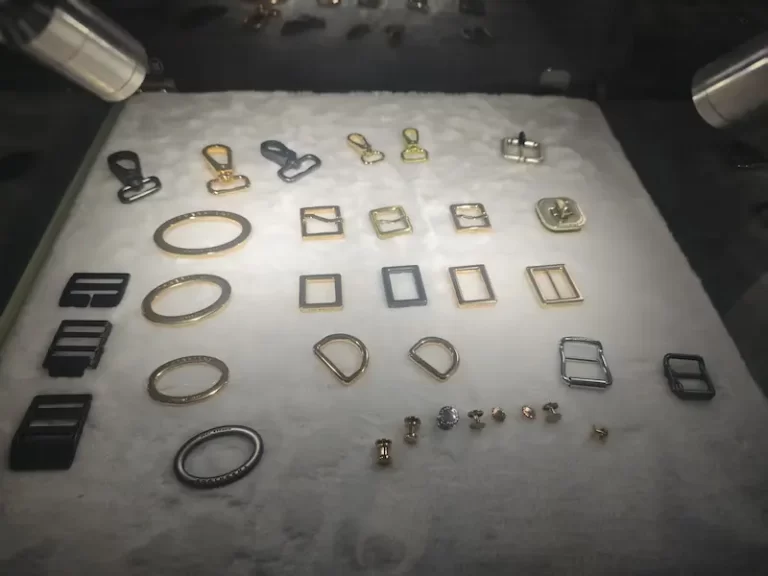
purse components
Purse Hardware
Zipper
Zippers are essential hardware components. Beyond the zipper itself, they are typically used in conjunction with a zipper pull.
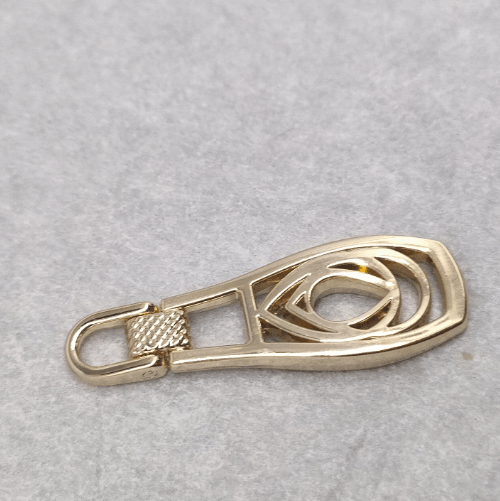
Note that these two parts are often separate and assembled for use.
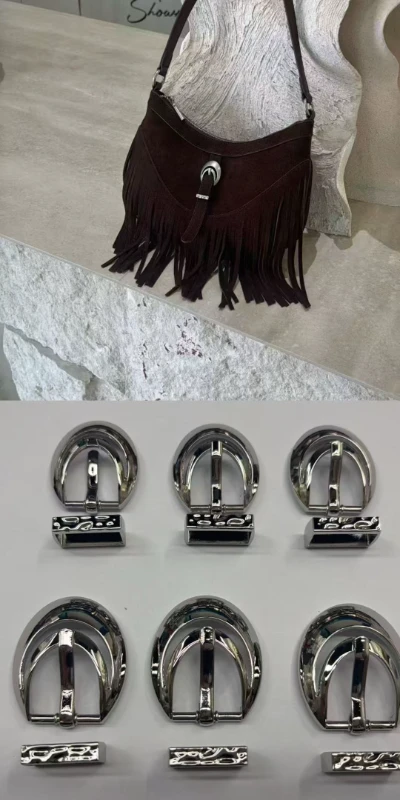
Buckle
A common hardware component used to connect bags and their bodies.
Lock Buckle is a type of Buckle. Any small category of bag hardware can be further subdivided according to different dimensions. It is best to communicate with bag hardware manufacturers and explain specific requirements.
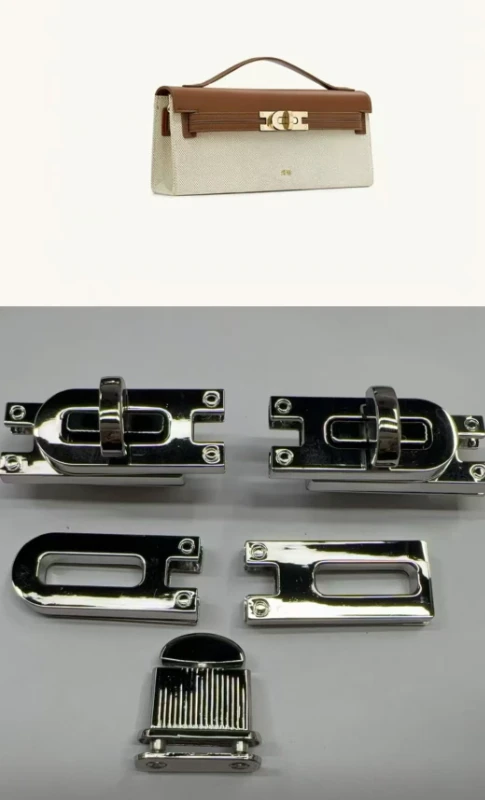
Snap Button
Snap Button Lightweight magnetic/press-to-close fasteners, categorized as concealed (hidden) or exposed (decorative). Often serve as auxiliary fasteners for zippers.
Magnetic Clasp
Magnetic clasps provide a convenient solution for the common need of temporarily closing a bag without locking it.
Metal Feet
Metal Feet Installed on the bottom of bags to protect them. We previously covered metal bag feet in a dedicated section.
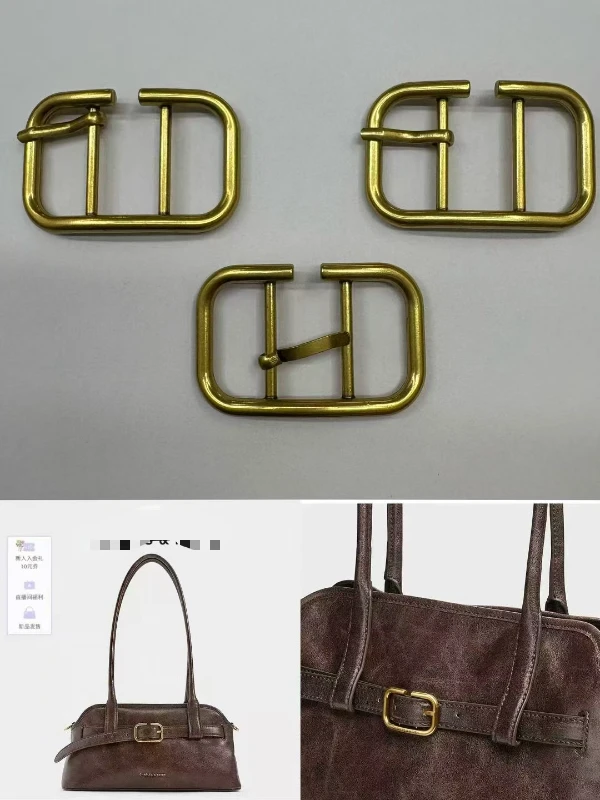
Strap Adjuster
Metal buckles for adjusting shoulder strap length, often paired with detachable straps to support switching between single-shoulder, crossbody, and other carrying styles.
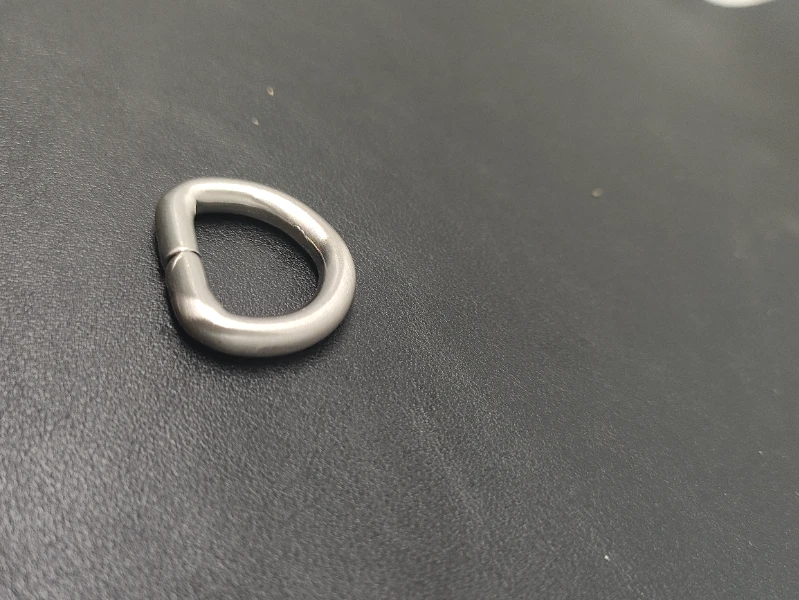
Strap Connector
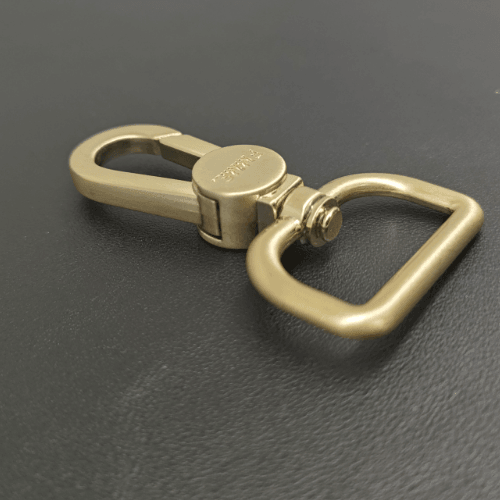
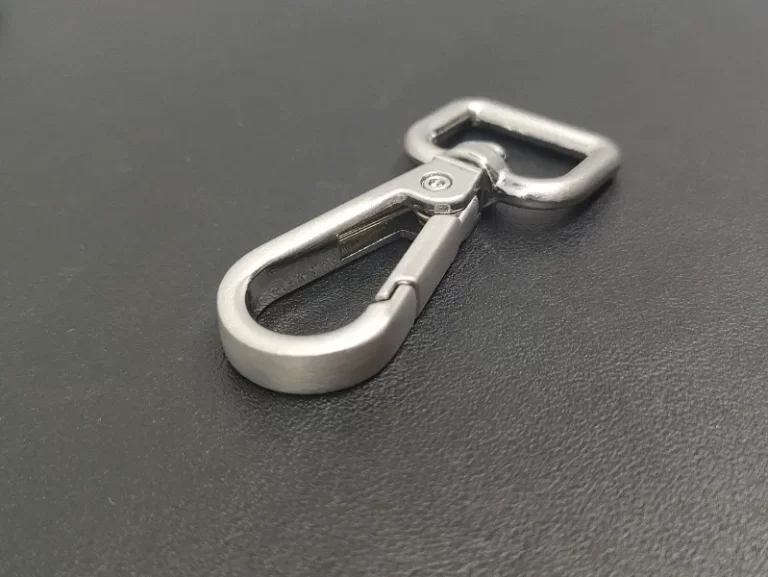
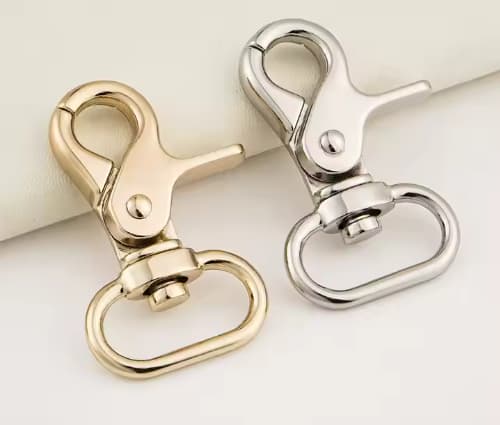
Metal buckles connecting the shoulder strap to the bag body, commonly D-rings or O-rings, ensuring secure strap attachment. Some are detachable.
Rivets
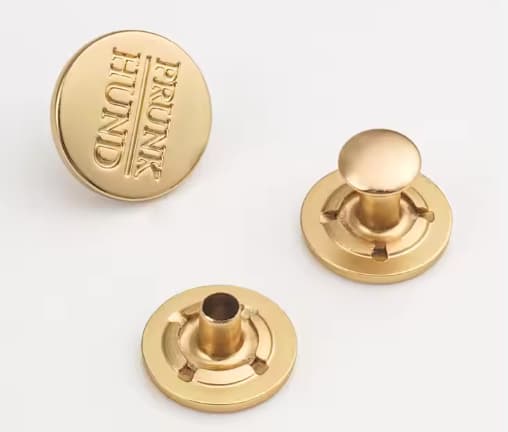
Rivets Secures bag connection points while serving decorative purposes, some are purely ornamental.
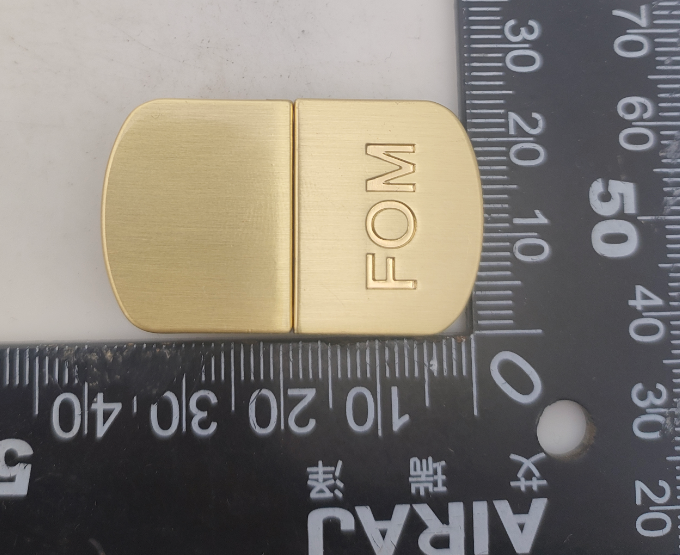
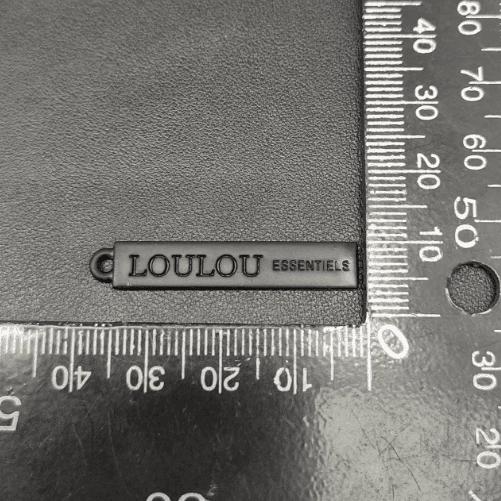
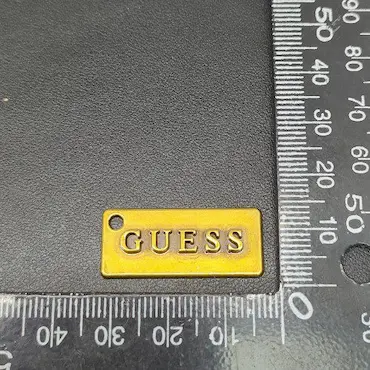
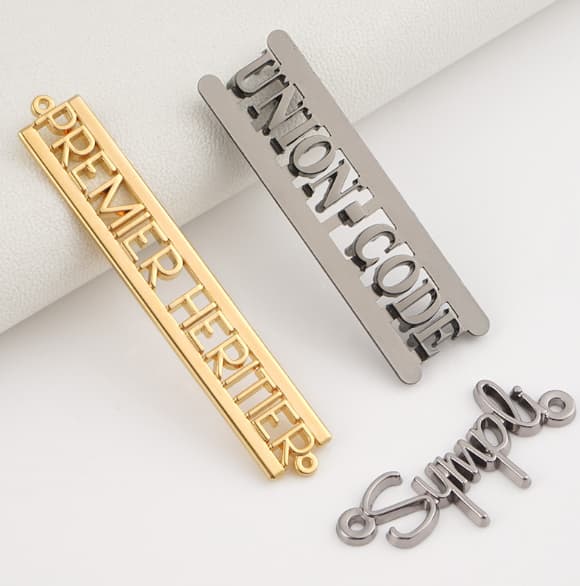
Metal Logo Plate
Typically features brand logos or lettering to enhance brand recognition.
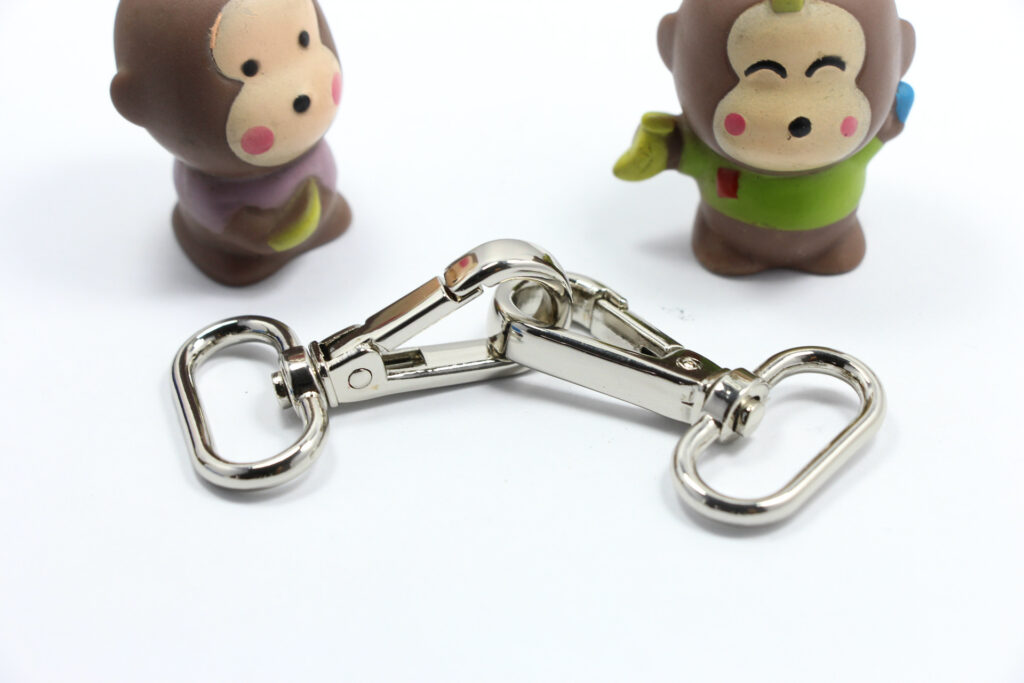
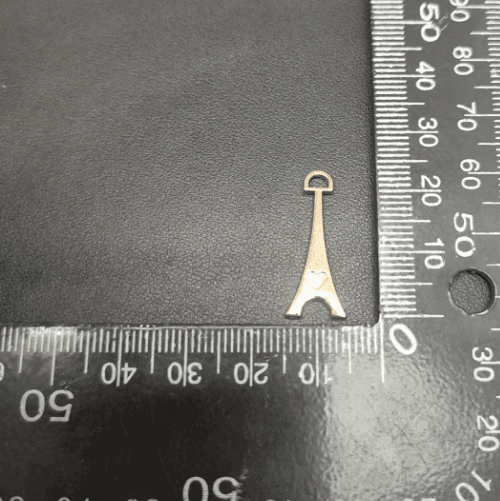
Key Hook Hardware component for attaching keys and small accessories.
Metal Corner Guards Metal Corner Guards Protect the bag’s edges while adding decorative appeal.
Key Considerations for Selecting Wallet Fittings
When selecting wallet hardware, we should pay particular attention to the following points: Firstly, because wallets are small and opened and closed frequently, we must prioritise the hardware’s durability and smooth operation; secondly, since the hardware comes into direct contact with skin or clothing, we need to ensure the surface plating is smooth and free of burrs to prevent scratches; thirdly, we must match the hardware dimensions to the wallet’s thickness and structure—choosing hardware that is too thick will make the wallet look bulky, whilst hardware that is too thin will weaken the fastening strength
List of Non-Hardware Components for Women’s Purses
- Bag Body
- Bag Base (Fabric)
- Bag Sides
- Top Handle
- Shoulder Strap (Fabric)
- Shoulder Pad
- Main Compartment
- Inner Patch Pocket
- Inner Zipper Pocket (Fabric Part)
- Card Slots
- Drawstring
- Lining
- Non-Hardware Charm
The difference between hardware fittings for wallets and handbags
| Dimensions of comparison | Wallet | Handbag |
| Core Functional Positioning | Primarily involving closing, securing and clamping, with relatively limited functionality | Combining load-bearing connections, opening and closing mechanisms, structural reinforcement and protection, and decorative appeal, it offers a wide range of functions |
| Primary load requirements | The forces involved are relatively small, consisting mainly of pressure and slight tension during opening and closing. | Subject to considerable stress, as it must bear the weight of the contents and the tension exerted whilst being carried on the back |
| Choice of materials | The range consists mainly of small zinc alloy die-cast components, with brass and pure copper used for high-end models | Zinc alloy, copper, iron and stainless steel are all used; copper or high-strength zinc alloy is generally chosen for load-bearing parts. |
| Dimensions and Specifications | The metal fittings are generally smaller and thinner to suit the wallet’s slim design. | Hardware fittings come in a wide range of sizes, from micro-sized models to large fasteners, and are significantly thicker and bulkier than those found in wallets. |
| Contact with the human body | Comes into direct contact with the skin or clothing; extremely high surface smoothness is required | Some metal fittings (such as handle connectors) come into indirect contact with the skin and should therefore be slightly looser, but components such as shoulder strap hooks and buckles must still be smooth. |
| Durability requirements | Emphasis on cycle life (frequent use); high fatigue resistance required | Emphasis is placed on load-bearing life and tensile strength, with high requirements for impact resistance and wear resistance |
| Cost proportion | The cost of hardware accounts for a relatively small proportion of the total cost of the wallet | Hardware accounts for a significant proportion of the cost, particularly in handbags with complex designs or luxury handbags |
In short, according to the bag designer’s idea, after choosing the corresponding style, you can roughly determine the need for the required accessories and materials, while the specific to the use of the bag hardware still need to be based on the specific design program.