What is a D ring handle of a bag?
In the world of luggage and bags, the D-ring may seem like an unremarkable detail—a small metal ring that nevertheless embodies multiple identities, ranging from a practical tool to a fashion icon. Whether on a handbag for the daily commute, a rucksack for outdoor hiking, or a luxury brand handbag on the catwalk, the D-ring is ever-present, thanks to its unique form and function. This article will delve deeply into the D-ring handle—a seemingly simple yet richly nuanced accessory—exploring it from multiple perspectives, including its definition, materials, historical origins, functional evolution and design aesthetics.
What is a D-ring?
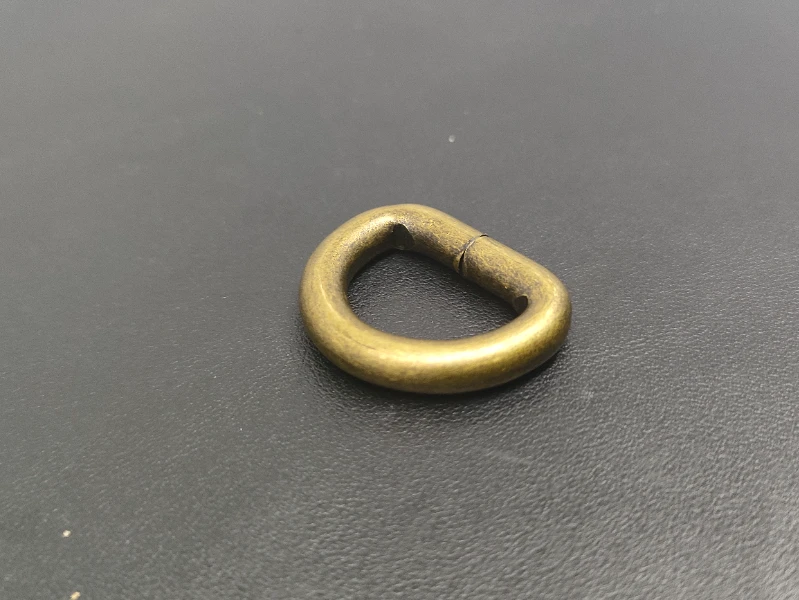
A D-ring, as the name suggests, is a metal fitting shaped like the letter ‘D’. Geometrically speaking, it consists of a straight edge and a curved edge, giving it an overall semi-circular or D-shaped form. This simple design is no accident—the straight edge facilitates secure stitching or fastening to webbing, leather or other materials, whilst the curved edge provides a smooth surface for force distribution, making it easy to thread hooks, ropes or fingers through for handling.
D-rings are primarily made of zinc alloy or iron, with surface treatments such as polishing and electroplating applied to enhance their durability and aesthetic appeal. D-rings made from zinc alloy are typically closed-ended, offering greater structural stability; iron D-rings, on the other hand, are mostly open-ended to allow for flexible installation. In the context of luggage fittings, D-rings are generally classified as a type of metal fastener and, together with hooks and square rings, form part of the functional hardware system for luggage.
From the battlefield to the handbag: the historical origins of the D-ring
The D-ring was not originally designed for luggage. Its history can be traced back to the field of military equipment—this small metal ring, thanks to its simple structure and reliable load-bearing capacity, was adopted early on for use in military belts and tactical gear. A well-known example comes from the British luxury brand Burberry, whose classic Trench coat features a D-ring fastening at the waist. According to records, this design served a specific practical purpose during the First World War: soldiers could attach equipment such as hand grenades to the D-rings at their waists for quick access when needed. This detail later became one of Burberry’s iconic elements and has been carried over into its handbag designs; for instance, the D-ring handbag launched by Burberry is a tribute to this historical heritage.
As it made the transition from the battlefield to everyday life, the function of the D-ring also changed. No longer merely a tactical attachment point for weapons, it has gradually evolved into a multi-purpose accessory for outdoor equipment and luggage. On outdoor rucksacks and travel bags, D-rings are often used to secure water bottles, hang towels or attach external gear. Many hikers tuck a towel used to wipe away sweat into a D-ring whilst on the move, so that it is readily accessible. This evolution clearly reflects the functional transformation of the D-ring from a ‘military tool’ to ‘outdoor equipment’ and, ultimately, to an ‘everyday fashion accessory’.
The Functions and Uses of D-rings in Bags
In contemporary bag design, the functions of D-rings have become highly specialised; depending on their position and the context in which they are used, they primarily serve the following roles:
Shoulder Strap Attachment Points
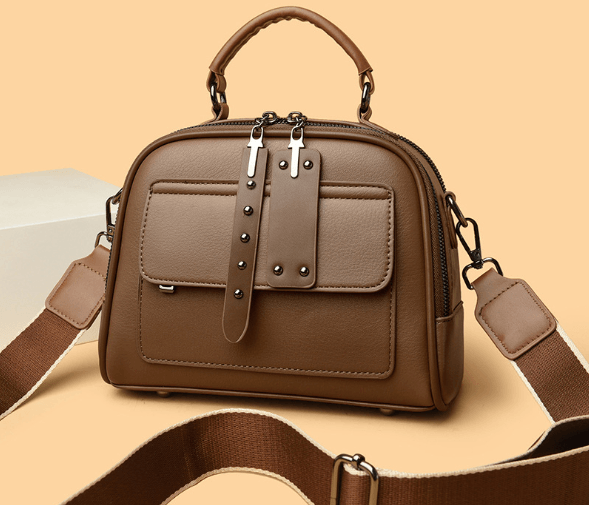
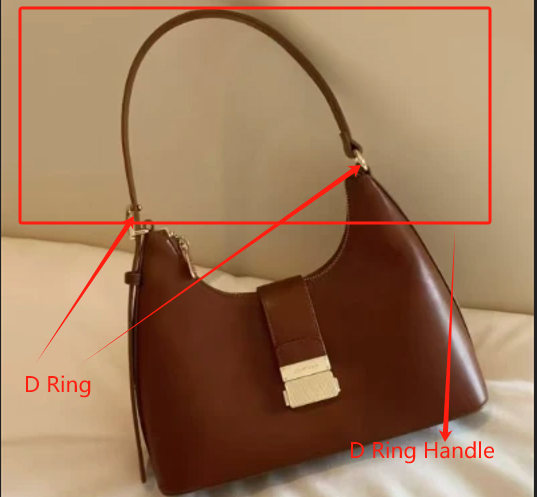
This is one of the key functions of D-rings on bags. Many handbags and shoulder bags feature D-rings on either side of the bag or at the base of the handles, designed to attach detachable shoulder straps or back straps. The Givenchy Mini Antigona East-West handbag is a prime example: its articulated leather handles feature four D-rings, specifically designed to attach an adjustable, detachable shoulder strap, allowing the wearer to switch freely between carrying the bag by hand or wearing it cross-body. Gucci’s Bamboo Vendetta range of handbags also incorporates D-rings into their design, allowing a shoulder strap to be attached and thereby expanding the bag’s versatility.
Assisting with Lifting
On large travel bags or rucksacks, D-rings are often positioned at specific points on the shoulder straps or the sides of the bag. As the smooth curve of the D-ring makes it easy to grip with the index finger or thumb, it naturally serves to assist with lifting. For example, some large travel bags feature a D-ring on the front right of the shoulder strap; when the contents of the bag are too heavy, the user can hook their right hand through this ring to assist with lifting, thereby reducing the strain on their shoulders.
Attaching small items
This is the most common and versatile use of the D-ring. In everyday use, the D-rings on a bag can be used to hang small personal items such as key rings, access cards, small charms and even earphone pouches. In outdoor settings, they can be used to secure water bottles, attach carabiners or mount external gear. This ‘hang-and-go’ flexibility makes the D-ring a readily available attachment point, greatly enhancing the bag’s practicality.
Fixed Webbing and Adjustment Mechanisms
In some rucksack and tactical bag designs, D-rings are also used to thread and secure webbing, working in conjunction with other fasteners to adjust the length of shoulder straps or position the ends of the webbing. This application utilises the flat profile of the D-ring, allowing the webbing to be threaded through the ring and then folded back to secure it, thereby forming a secure connection point.
A Comparison of D-ring Handles with Other Handle Types
It is worth noting that, in the context of luggage and handbags, the term ‘D-ring handle’ may be interpreted in two ways:
The first refers to a handle structure that utilises a D-ring as a connecting component—that is, a D-ring is welded or sewn onto the base or side of the bag’s handle, integrating the handle’s function with the D-ring’s connecting function. This design is commonly found in commuter bags and certain luxury handbags; the handle itself may be made of leather or webbing, whilst the D-ring serves as the connecting point between the handle and the bag body, whilst also functioning as an attachment point for shoulder straps.
The second refers to the metal D-ring itself serving as a handle or pull tab—in some small handbags or decorative styles, the D-ring is enlarged and used directly as a handle, or paired with square or oval rings to form a combination handle.
Compared with traditional leather or webbing handles, D-ring handles have the following characteristics:
| Handle types | Advantages | Limitations |
| Leather handle | Comfortable to the touch, with a luxurious feel, and blends seamlessly with the rest of the bag | Has limited load-bearing capacity; prone to deformation and wear with prolonged use |
| Woven strap handle | Lightweight, durable and relatively inexpensive, making it suitable for outdoor use | Not particularly attractive; lacks a sense of refinement |
| D-ring handle | Combining a connecting function with a lifting function, it allows you to attach a shoulder strap or small items at the same time; the design is simple and sturdy. | On its own, it feels rather stiff to the touch and is usually used in combination with other materials |
Design Aesthetics: The Stylistic Expression of the D-ring
In addition to their practical function, D-rings also play a significant aesthetic role in handbag design. In the world of luxury handbags, the quality of the D-ring directly influences the overall character of the bag. High-quality zinc alloy, after meticulous polishing and multi-layer electroplating, takes on a warm metallic lustre, becoming an unmissable visual focal point on the bag.
In recent years, with the rise of retro trends and the ‘old money’ aesthetic, classic hardware elements such as the D-ring have come back into the spotlight. French vintage-style handbags place particular emphasis on the texture of their hardware; the D-ring is no longer a mere functional component, but has been given the role of a ‘stealth switch’ that elevates the bag’s aesthetic. D-rings in various colour schemes—such as pale gold, gilded gold and gunmetal black—are paired with fabrics ranging from velvet and wool to Oxford cloth, showcasing refined taste through these subtle details.
In commercial design, D-rings also convey a brand’s stylistic DNA. Burberry has transplanted the D-ring motif from its trench coats onto handbags, creating a design language that is instantly recognisable as the brand’s own. Givenchy’s Antigona collection, through its combination of four D-rings and a detachable shoulder strap, offers the flexibility of ‘one bag, multiple ways to wear’, embodying the pursuit of a fusion of function and form in modern luxury design.
Summary
The D-ring handle on a bag is far more than a simple metal ring. It originated from practical needs on the battlefield, evolved through the functional expansion of outdoor equipment, and ultimately found its own stylistic expression in the world of fashion luggage. From a tactical attachment point for securing hand grenades to a practical everyday aid for hanging key rings, from an ergonomic detail designed to assist with grip to a modular interface for attaching shoulder straps, the D-ring encapsulates multiple dimensions of function, history and aesthetics within its compact form.
For the average consumer, the next time you pick up a bag featuring a D-ring, perhaps you might pause for a second—that metal ring, standing quietly on the side of the bag, may be silently recounting its long journey from the battlefield to the catwalk, and from the wilderness to the city.