Zinc Alloy vs Iron Luggage Fittings: What’s the Difference? How Should Factories Choose? A Guide to Balancing Materials and Costs
When sourcing hardware components for luggage, leather goods and handbags, choosing the right material directly impacts product durability, aesthetic quality and brand reputation. Zinc alloy and iron are currently the two most common base materials for luggage hardware on the market, but there are clear differences between them in terms of physical properties, manufacturing suitability, cost structure and environmental compliance. Drawing on real-world scenarios in B2B bulk procurement, this article compares the performance of these two materials in applications such as luggage clasps, D-rings, square buckles, dog clips, magnetic fasteners, rivets and corner protectors, to assist procurement professionals and designers in making more informed material selection decisions.
Comparison of Basic Physical Properties: Strength, Weight and Corrosion Resistance
The differences in density, hardness and ductility between zinc alloys and iron determine their suitability for use in different parts of luggage
Zinc alloys are alloy materials formed by adding elements such as aluminium, copper and magnesium to a zinc matrix; common grades include No. 3 and No. 5 zinc alloys. Their density is approximately 6.7 g/cm³, they have a low melting point (around 380–420 °C) and good fluidity, making them suitable for die-casting. The tensile strength of zinc alloys ranges from 280 to 440 MPa, with a hardness of 80–100 HB. A dense oxide film forms naturally on their surface, providing better inherent rust resistance than iron; however, electroplating is still required for protection when exposed to damp environments over the long term.
Iron (in industrial contexts, this typically refers to low-carbon steel or SPCC cold-rolled sheet) has a density of approximately 7.85 g/cm³. It is stronger than zinc alloys, with tensile strengths exceeding 300 MPa, and its hardness can be further enhanced through heat treatment. However, iron is inherently prone to oxidation and rusting, necessitating protection via electroplating or spray coating processes. Iron fittings are relatively heavy, which can create a noticeable sense of bulkiness in luggage and bags where weight reduction is a key requirement (such as genuine leather handbags and nylon rucksacks).
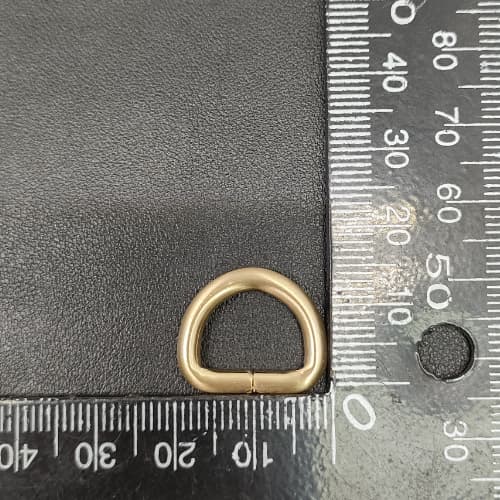 | 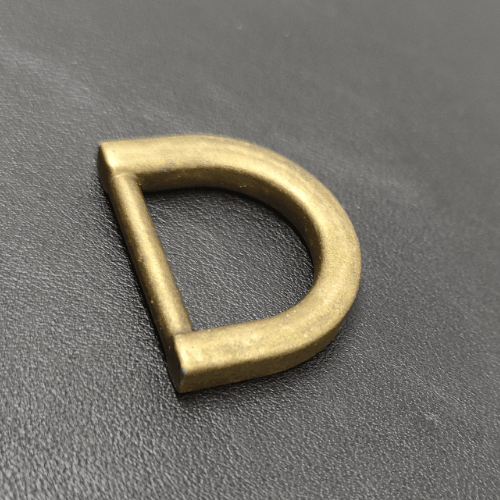 |
| Iron D Ring | Zinc Alloy D Ring |
Recommendations for product selection
- For components requiring lightweight construction, complex shapes and a high-gloss finish (such as luggage fasteners, magnetic clasps and decorative badges), zinc alloy is the preferred choice.
- For load-bearing components requiring high tensile strength (such as large carabiners, climbing hooks and heavy-duty corner protectors), and for luggage where weight is not a concern, iron may be selected.
Differences in Moulding Processes: Die-casting vs. Stamping – A Determining Factor in Moulding Costs and Precision
The mainstream processing methods for these two types of materials are entirely different, directly affecting the moulding cycle, moulding costs and the achievable level of design complexity
Zinc alloys: die-casting process
Engineers use hot-chamber die-casting machines to produce zinc alloys, injecting molten metal into precision moulds to form the part in a single operation. The advantages lie in
- Capable of producing complex three-dimensional structures, such as the internal grooves in the lock cylinders of luggage fasteners, nameplates with embossed logos, and multi-curved fasteners
- High surface finish, suitable for direct treatment such as electroplating, brushing and spray painting
- Dimensional accuracy of up to ±0.05 mm with excellent consistency, making it suitable for high-volume production
- Long mould life; a single die-casting mould can produce over 100,000–200,000 units
The downside is that the initial tooling costs are relatively high (simple zinc alloy fastener moulds cost around 2,000–5,000 yuan, whilst complex buckle base moulds can cost as much as 8,000–15,000 yuan); this is suitable for projects involving a single specification with order quantities of 5,000 units or more.
Iron: Stamping Process
Manufacturers typically produce iron components using cold stamping processes, in which they cut, bend, draw, and form sheet metal using dies.Key features include:
- Suitable for flat and bent components, such as D-rings, square buckles, D-shaped buckles and flat corner protectors
- High stamping speed, with a single machine capable of producing tens of thousands of pieces per day
- Stamping die costs are relatively lower than those for die-casting moulds (simple stamping dies cost between 1,000 and 3,000 yuan)
- It is difficult to control thickness consistency, and burrs may be present on the edges
The process has the following limitations: it cannot produce hollow, unevenly thick, or complex curved shapes; and when assembling multiple parts, workers must weld or rivet them, which adds to the number of production steps
Recommendations for product selection
- For customised hardware requiring three-dimensional designs, brand logos or a refined finish, opt for zinc alloy die-casting.
- For basic ring fasteners, simple bent parts and cost-sensitive general-purpose components, iron stamping is a suitable option.
Electroplating vs. Surface Finishing: Which Offers Better Colour Retention and Fade Resistance?
The appearance of luggage hardware is the first indication of a brand’s quality. These two materials exhibit different levels of adhesion and corrosion resistance when it comes to electroplated coatings.
Electroplating Characteristics of Zinc Alloys
Zinc alloy die-castings have a dense surface and can undergo the standard process of copper base + nickel layer + final plating (antique bronze, black gold, electrophoretic black, brushed nickel, etc.) directly. Zinc alloys exhibit good adhesion to the plating layer and are unlikely to peel or flake under normal use. Please note: Zinc alloys are not resistant to strong acids or alkalis; the acid pickling time must be strictly controlled during pre-treatment prior to plating, otherwise ‘blistering’ defects may occur. Properly plated zinc alloy components can pass a neutral salt spray test for 24–48 hours (depending on the thickness of the plating).
Electroplating Characteristics of Iron
Iron components must undergo thorough degreasing and acid pickling prior to electroplating; otherwise, the adhesion of the plating layer will be insufficient. As the iron substrate has a positive potential, any damage to the plating will accelerate corrosion of the substrate (electrochemical corrosion). Consequently, iron hardware for luggage typically employs a multi-layer plating structure consisting of a ‘copper base + nickel layer + chrome layer’, or utilises processes offering superior sealing properties, such as Dacromet or electrophoretic black coating. Iron components must undergo passivation and sealing treatment immediately after plating; otherwise, rust spots are likely to appear during storage.
Professional Explanation Regarding ‘Colour Fastness’
Note that any metal-plated component will experience varying degrees of colour fading when prolonged friction, perspiration corrosion, and ultraviolet light exposure act on it The compliant statement is as follows: Manufactured using our hypoallergenic, environmentally friendly plating process (compliant with ROHS standards), the plating adheres satisfactorily under normal conditions of use and withstands standard perspiration and friction tests. The purchaser should request a salt spray test report and cross-hatch test results as the basis for acceptance.
Recommendations for procurement and selection
- For highly decorative surface finishes such as high-gloss nickel, brushed antique bronze and black gold, zinc alloy offers more consistent results.
- For temporary components requiring extremely low costs and minimal specifications, you may consider single-layer galvanised iron parts (please note that these are suitable for dry environments only).
- For international orders (e.g. EU RoHS, US CA65) requiring environmentally compliant plating, both zinc alloy and iron materials are suitable, provided that the plating solutions and processes comply with the relevant standards.
Environmental Compliance and Adaptability to International Trade
Currently, the environmental requirements for hardware fittings imposed by branded luggage manufacturers and international trade buyers focus on
- Heavy metal content: Lead, cadmium, mercury and hexavalent chromium must be below the RoHS limits
- Nickel release: The EU imposes nickel release testing requirements on metal components that come into direct contact with the skin
- Corrosion resistance testing: Standards typically require the salt spray test duration to be ≥24 hours
One must take care to control lead content during the casting of zinc alloys. Our factory uses environmentally friendly alloy raw materials and can provide ROHS test reports. The cost of treating wastewater from zinc alloy electroplating is slightly lower, and the overall environmental compliance performance is strong.
Iron itself does not contain heavy metals; the electroplating process’s hexavalent chromium primarily creates environmental risks. Using trivalent chromium passivation or chromium-free passivation processes can achieve environmental compliance. However, note that treating wastewater from processes such as zinc-nickel alloy electroplating on iron parts costs relatively much. Some small-scale electroplating plants may pose a risk of non-compliance; therefore, when procuring such services, you should request proof of environmental credentials from the subcontracted electroplating plant.
Special Note for International Purchasing:
For luggage hardware intended for export to European and North American markets, we recommend prioritising zinc alloy with eco-friendly electrophoretic coating or trivalent chromium plating. Hypoallergenic plating processes meet the requirements for components that come into direct contact with the skin (such as handle clasps and shoulder strap buckles). Our factory can provide relevant test reports in accordance with customer-specified standards.
Analysis of Cost Structure: Unit Price Does Not Equate to Total Cost
Many procurement staff focus solely on the unit price of components, overlooking the total cost of ownership, which can lead to rework on the final product or customer complaints.
Cost structure of zinc alloy components
- Material costs remain relatively high; zinc alloy ingots cost approximately 20,000–30,000 RMB per tonne, and market fluctuations influence this price
- Mould costs: Initial investment is high, but moulds have a long service life; consequently, the cost per unit is low when production volumes are high
- Post-processing: Die-cast parts are electroplated directly, resulting in a high yield rate
- The overall cost per unit offers a significant advantage for large production runs (≥20,000 units)
Cost structure of iron components:
Low material costs (cold-rolled steel sheets cost approximately 5,000–7,000 RMB per tonne)
Relatively low tooling costs
- However, stamped iron parts often require additional processes such as deburring, polishing and cleaning
- The defect rate in electroplating is typically higher than for zinc alloys (due to the unstable surface condition of the base material)
- If rust prevention measures are inadequate during transport and storage, the parts may rust and become unusable
Real-life case study
A women’s handbag brand initially opted for nickel-plated iron casings for its magnetic fasteners to keep costs down. However, after two months’ storage during the rainy season in southern China, some components developed rust spots and discolouration, resulting in the entire batch of bags having to be reworked to replace the hardware. The brand subsequently switched to black-gold electroplated zinc alloy fasteners, which increased the unit price by approximately 35%, but reduced customer complaints by 90%, thereby significantly minimising the brand’s overall losses.
Procurement Recommendations
For cost-sensitive products intended for short-term use in dry environments (such as fast-fashion bags and disposable promotional bags), standard iron fittings may be used. For bags designed for specific brand positioning, with a warranty period of one year or more, and intended for use in damp or sweaty conditions (such as outdoor rucksacks, pet carriers and high-end ladies’ handbags), zinc alloy fittings are recommended.
A Checklist to Avoid Pitfalls in Procurement: How to Quickly Verify the Authenticity of Suppliers’ Materials
- Check the weight: For components of the same volume, iron is approximately 15%–20% heavier than zinc alloy. You can make a preliminary distinction by weighing them in your hand.
- Check the finish: Zinc alloy electrical components have a more uniform plating, whereas the stamped edges of iron components may occasionally appear dull or slightly rough.
- Examine the cross-section: During destructive testing, the cross-section of zinc alloy appears silver-grey with a fine-grained texture, whilst that of iron appears bright metallic white and fibrous.
- Request reports: Reputable manufacturers should be able to provide material certificates (such as spectroscopic analysis results) and salt spray test reports.
- Inquire about intended use: Professional suppliers will proactively ask about the intended use of your luggage and the export destination, and will recommend materials and processes based on this information, rather than simply recommending the most expensive or cheapest options.
Description of Our Customisation Services
As a manufacturer specialising in luggage and bag hardware, we specialise in D-rings, square buckles, dog clips, snap fasteners, magnetic clasps, rivets, corner protectors, luggage tags and all types of customised logo hardware. We can undertake:
- Customisation from drawings: Reverse engineering based on design drawings or physical samples
- Mould making and prototyping: We can produce both zinc alloy die-casting moulds and continuous stamping moulds for iron components
- Material selection: Four base materials available: zinc alloy, iron, brass and eco-friendly alloys
- Surface finishes: Nickel plating, antique bronze, black gold, electrophoretic black, brushed finish, spray coating, hypoallergenic eco-friendly plating (Compliant with international ROHS standards)
- Applications: Hardware components for a full range of products including high-end leather goods, rucksacks, ladies’ handbags, briefcases, outdoor luggage and pet carriers
For bulk orders, samples can be provided for confirmation of materials and processes. All products support third-party testing; hardness, plating thickness and environmental compliance can be customised to meet your requirements, ensuring compliance with brand standards for bulk delivery.