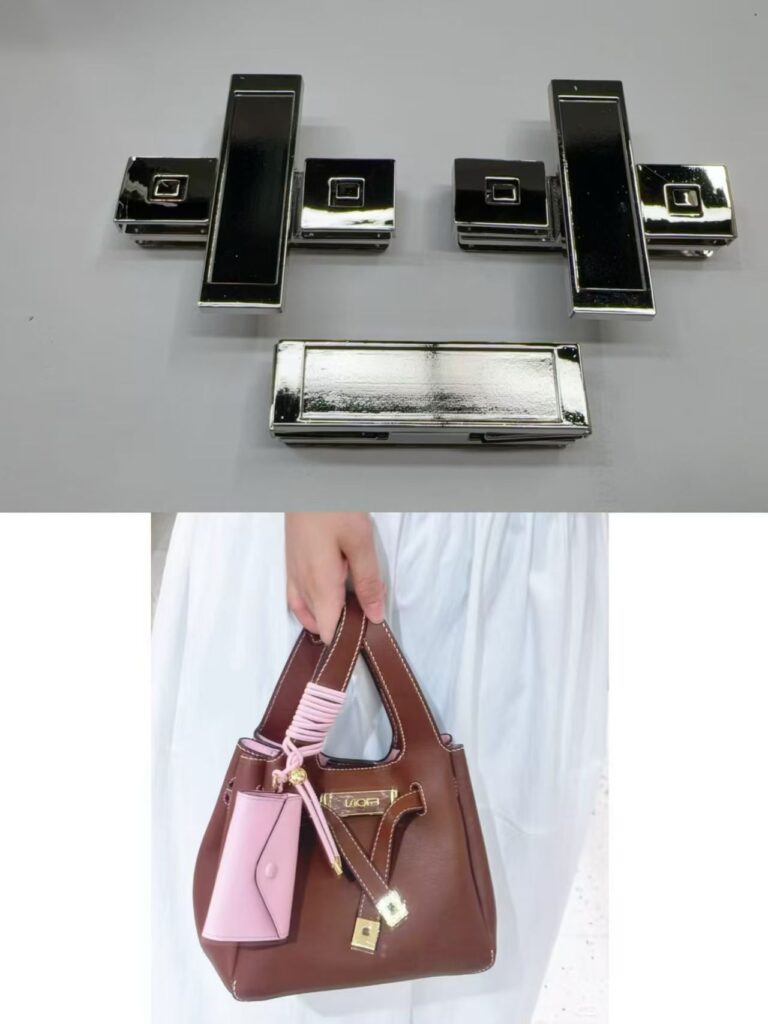
Advantages of Metal bag Labels for Bags
Metal tags on handbags—these tiny metal plates—have become one of the most recognisable brand symbols in the luxury sector. This article systematically analyses the multifaceted value of this tiny component from four perspectives: the significance, advantages, types and attachment methods of handbag metal tags. The research suggests that the reason metal tags stand out amongst numerous forms of brand identification lies in their ability to simultaneously fulfil the threefold value demands of luxury goods: as a tangible manifestation of a quality commitment, as a visual totem of identity, and as a vehicle for the transmission of craftsmanship. Through a comprehensive examination of the design, production, classification and application of metal tags, this paper reveals how this tiny component has become a key driver in the transformation of handbags from ‘utility items’ to ‘symbolic objects’.
Introduction: The Brand Narrative of a Single Metal Tag
In the world of luxury handbags, details are never merely details—they are the product itself. A meticulously crafted metal tag often evokes a deeper emotional resonance in consumers than the brand name itself. From the understated engraving on Hermès bag clasps, to Chanel’s iconic metal double-C, and the inscriptions on Louis Vuitton’s padlocks, metal tags, with their distinctive presence, forge the most direct line of communication between the brand and the consumer.
The significance of a metal tag to a handbag extends far beyond its decorative function. It serves as the brand’s ‘miniature calling card’, ‘tangible proof’ of quality, and, crucially, the key element that elevates the handbag from a mere ‘container’ to a ‘collector’s item’. As one industry insider once remarked: ‘A handbag featuring a sturdy, finely crafted metal tag is highly likely to be a product that stands the test of time.’
This article aims to systematically examine the core dimensions of handbag metal tags—their significance, advantages, types and methods of attachment—in an attempt to answer a question that appears simple yet is rich in meaning: how has a tiny piece of metal become an indispensable, soul-defining component of luxury handbags?
The Significance of Metal Labels on Handbags
A Tangible Symbol of Brand Identity
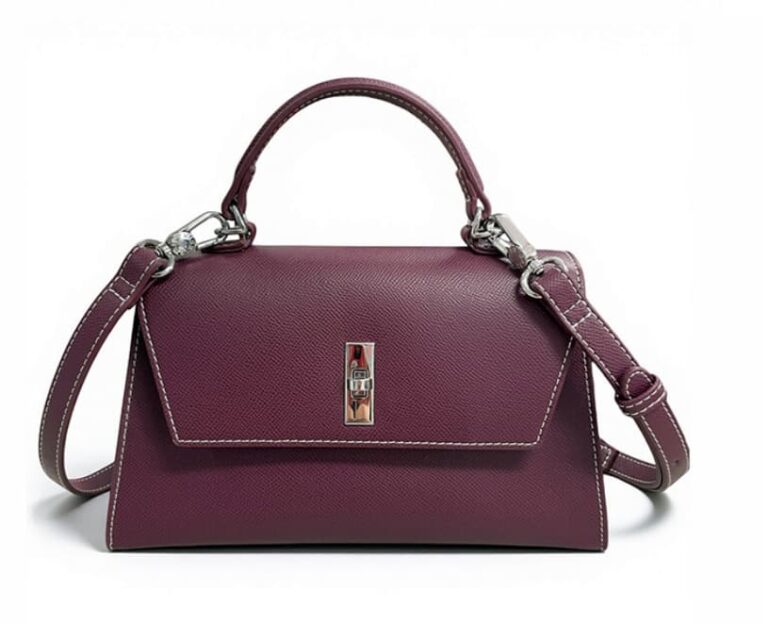
In the fashion industry, where brand competition is fierce, every touchpoint within a brand’s identity system is crucial. Metal tags are the most direct physical symbols of a brand—they typically bear the brand name or logo, serving as a subtle yet powerful form of advertising. When a handbag is adorned with a metal tag, it immediately conveys the brand’s identity to potential customers. This is particularly important in the luxury handbag market, where brand recognition plays a significant role in consumers’ purchasing decisions.
The brand significance of metal tags lies not only in their static identification function, but more importantly in the brand promise they convey. A meticulously crafted metal tag sends a message to consumers: this brand is willing to invest in the finer details and use the finest materials to present its name. For luxury brands, this ‘conveyance of attitude’ is more persuasive than any advertisement.
Tangible Evidence of a Commitment to Quality
When it comes to luxury goods, consumers are purchasing not only the product itself, but also the brand’s commitment to quality. Metal tags are the tangible embodiment of this commitment. These tags are typically crafted from durable materials such as brass, nickel, or even gold and silver in the case of high-end brands. The use of these materials not only enhances the aesthetic appeal of the handbag but also reflects the brand’s commitment to quality and durability.
Furthermore, metal tags can serve as a hallmark of authenticity. In an era where counterfeit goods are rife, these tags help consumers distinguish between genuine and fake products. Genuine handbags usually feature meticulously crafted metal tags with clear and precise engravings. In contrast, the tags on counterfeit products may be crudely made, with blurred or incorrect logos. Consequently, the presence and quality of a metal tag can serve as a reliable indicator of a handbag’s authenticity. This anti-counterfeiting function further reinforces the significance of the metal tag as a ‘commitment to quality’—it is not only a statement of the brand’s commitment to quality, but also a basis for consumers to verify that quality.
A Condensed Embodiment of Artistic Value
Metal tags also serve as a condensed embodiment of a handbag’s artistic value. From the design stage onwards, designers work closely with the brand to conceive tag designs that reflect the brand’s identity and aesthetic. These may range from a minimalist brand logo to more complex, artistic designs. The designs are then converted into digital format using computer-aided design software to enable precise dimensional control and fine-tuning of details.
Every stage of the production process—from die engraving and die-casting to polishing and electroplating—embodies the craftsmanship and expertise of skilled artisans. The complexity of this production chain ensures that every tag stands as a tangible testament to the ‘spirit of craftsmanship’. In an era dominated by mechanised mass production, the craftsmanship embodied in metal tags is precisely what sets luxury brands apart from mass-market brands.
The Finishing Touch to a Luxurious Aesthetic
Finally, metal tags can also add a touch of luxury to a handbag. This is particularly true for high-end brands that use precious metals for their tags—the lustre of gold or silver can instantly elevate the bag’s appearance, making it feel more luxurious and desirable.
Designers usually give considerable thought to the size, shape and placement of the tag to ensure it complements the bag’s overall design rather than detracting from it. A carefully designed and thoughtfully placed label can enhance a handbag’s visual appeal, making it more attractive to potential buyers. In a sense, the metal label is the ‘crowning touch’ of a handbag’s aesthetics—without it, the handbag remains complete; with it, the handbag truly comes to life.
The advantages of metal tags for handbags
Durability and Longevity
One of the most notable advantages of metal labels for handbags is their exceptional durability. Unlike labels made from other materials, metal labels are not prone to fading, tearing or damage caused by moisture. This makes them ideal for use on frequently used bags and luggage. The resilience of metal labels ensures that they remain intact and legible even after prolonged use, thereby effectively fulfilling their role in brand recognition.
From a comparative materials perspective, metal labels demonstrate significant advantages in durability testing. Corrosion-resistant metal labels are far more durable than plastic alternatives in damp or high-friction environments. The surface of a metal label can withstand repeated cleaning without losing its clarity, and its lifespan far exceeds that of fabric labels. This durability makes metal labels the ideal medium for a brand’s ‘long-term commitment’ – a well-crafted metal label can accompany a handbag for a decade or more, remaining clearly legible throughout.
Visual Distinctiveness and Brand Reinforcement
Another key advantage of metal labels lies in their unrivalled visual distinctiveness. The lustre, three-dimensionality and weight of the metal ensure they maintain a strong visual presence under any lighting conditions. Unlike flat-printed labels or woven tags, the three-dimensional embossed effect and reflective properties of metal labels ensure that the brand logo can be clearly recognised and remembered from any angle.
From the perspective of brand communication, metal labels constitute a ‘self-promoting’ medium. Every time a consumer uses a handbag featuring a metal label, they are inadvertently conveying the brand message to those around them. This ‘mobile advertising’ effect is particularly valuable in the luxury sector—it is rooted in the consumer’s real-life usage scenarios and is more persuasive and effective in terms of reach than any paid advertising.
Anti-counterfeiting Features
The anti-counterfeiting advantages of metal tags stem from the complexity of their manufacturing process and the technical barriers to replication. Genuine handbags typically feature metal tags with clear engraving or embossing, characterised by sharp lettering and precise details, whereas counterfeit products often have crudely made tags with blurred logos or incorrect proportions.
On a deeper level, the anti-counterfeiting advantages of metal tags are also reflected in their ‘irreplaceability’. Counterfeiters may be able to replicate the appearance, but they struggle to replicate the quality control measures within the production chain—metal purity, consistency of surface treatment, and the precision of engraving depth and angle. These subtle differences are often impossible to conceal during professional authentication. For luxury brands that cherish their reputation, metal tags represent an anti-counterfeiting defence that is difficult to ‘circumvent at low cost’.
Potential for Personalisation and Customisation
Against a backdrop of rising consumer spending and an explosion in demand for personalised products, customised metal tags are emerging as a new battleground for brands seeking to differentiate themselves. Customised metal tags allow consumers to choose the font, colour, shape and even the text to be engraved, thereby leaving a personal mark on standardised products.
This capacity for customisation confers a unique competitive advantage upon metal tags. A tag engraved with the owner’s initials transforms a handbag from a mere ‘commodity’ into a ‘personal possession’. The creation of this ‘sense of belonging’ significantly strengthens the emotional connection between consumers and the brand. Many brands now offer the option to have a customer’s initials or name engraved on metal tags, a trend that is particularly popular amongst younger consumers who value individuality and personal expression.
Types of Metal Labels for Handbags
Classification by Material
There is a wide variety of materials available for handbag metal tags, with each conveying a distinct brand message and set of values.
Brass tags are one of the most common choices, widely favoured for their excellent durability and the wide range of surface finishes available. Brass can be finished in a variety of ways, from polished to antique, to suit different design styles.
Stainless steel tags are renowned for their corrosion resistance and stylish, modern appearance. They are well-suited to minimalist or industrial-style designs and are widely used in high-end handbags.
Zinc alloy tags play a significant role in mass production due to their low melting point, ease of die-casting and relatively low cost. They are typically electroplated to produce a range of colours, including gold, silver and rose gold.
Classification by Manufacturing Process
The manufacturing process of metal labels determines their final visual appearance and tactile feel
Embossed metal labels (relief labels) are the most classic type, characterised by raised letters or logos on the metal surface, creating a three-dimensional effect. Embossed labels are highly versatile and can be customised to suit different bag styles; they are a timeless choice that adds a touch of elegance to any bag.
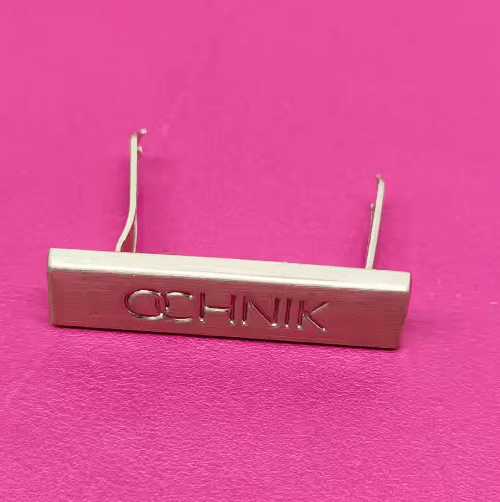
Engraved metal labels (etched labels), on the other hand, feature letters or logos etched into the metal surface, presenting a stylish and refined appearance. Engraved labels are particularly well-suited to handbags with a minimalist or modern aesthetic, adding a subtle yet stylish touch to the overall design.
Perforated metal labels feature intricate cut-out patterns or shapes, allowing the leather of the bag to show through and creating a visually interesting contrast. Perforated labels are ideal for adding creativity and personality to bags and have become increasingly popular with designers in recent years.
Brushed metal labels feature a brushed metal finish, giving them a robust and textured appearance. Suitable for bags with an industrial or urban aesthetic, they lend a sense of ruggedness and durability to the design.
Polished metal labels boast a shiny, reflective surface that exudes refinement and elegance, making them ideal for designer bags or high-end accessories.
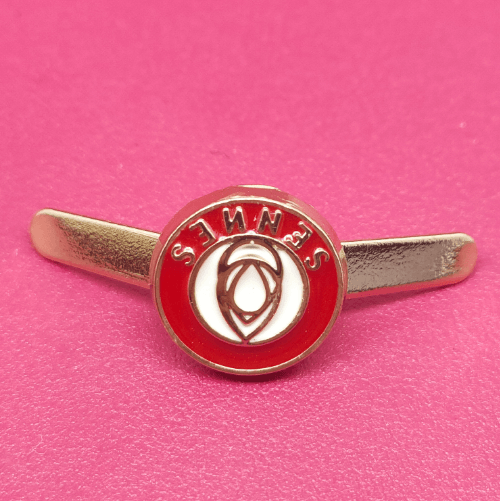
Enamel-filled metal tags feature coloured enamel applied to a metal surface, creating a vibrant and eye-catching look, ideal for adding a playful and whimsical touch to bags.
Antique-style metal tags undergo a special treatment to achieve a distressed and weathered appearance, lending bags a sense of nostalgia and charm; they are ideal for bags in a vintage or bohemian style.
Methods of Attaching Metal Labels to Handbags
The method by which metal labels are attached directly affects their safety, durability and aesthetic appeal. Different attachment methods have their own advantages and disadvantages; brands need to select the most suitable solution based on the label’s design, the handbag’s material and the intended use.
Rivet Fastening
Rivet fastening is one of the most secure methods of attaching metal labels. This method involves punching holes in the corresponding positions on both the label and the handbag, allowing the rivet shanks to pass through the leather and secure the label to the backing plate. Rivet fastening is characterised by an extremely secure bond and is suitable for areas that must withstand long-term wear and tear, such as handle joints subject to frequent stress or the front of the bag.
In practice, the process begins by placing the rivet washer at the intended installation position. Using this as a guide, two corresponding small slits are marked and cut into the leather. The rivet shanks are then threaded through these slits, bent and flattened on the inside of the leather, and finally covered with adhesive tape to prevent them from rubbing against the bag’s lining. Although this method is relatively complex to carry out, it provides the highest level of secure fastening.
Sewn Attachment
This method involves sewing the metal label onto the surface of the handbag by hand or by machine. This approach creates a stronger sense of the label being an integral part of the handbag—as if it had ‘grown’ from the bag itself, rather than being an accessory added at a later stage
This method works particularly well for fabric-based bags like canvas totes, and it is also commonly applied to specific areas of leather bags. That said, the durability of the stitching really comes down to the thread quality and the maker’s skill—when done properly, high-quality stitching will keep the label securely in place even with years of regular use.
Adhesive Attachment
Operators favour the adhesive method for its ease of use, applying it in situations where no specialist skills are required. They can easily affix self-adhesive metal labels to a handbag’s surface without punching holes or sewing, and they avoid causing any physical damage to the bag.
The adhesive method generally lends itself only to temporary labelling or light-use scenarios, as its durability is limited—the adhesive loses tack over time, particularly in humid conditions or with repeated friction For long-term luxury handbags, designers opt for riveting or stitching instead.
Folding Prong Fastening
Folding prongs are a common and convenient method of attaching metal labels. The reverse side of the label features two or more metal prongs; to attach the label, the prongs are first threaded through pre-cut slits in the leather goods, then bent and flattened on either side on the inside of the item to secure it firmly in place.
The advantages of this method lie in its simplicity of installation, secure fastening, and the fact that it requires no additional rivets or backing plates. Many suppliers of bespoke metal labels offer this fastening method as a standard option, suitable for bags made from a variety of materials.
The Code of Value Within a Small Space
The metal tag on a handbag—this tiny piece of metal—plays a role in the luxury goods value system that far exceeds its physical dimensions.
The craftsmanship of metal tags transforms them into tangible brand symbols and quality testaments, delivering advantages in durability, visual impact, authentication, and customization through a diverse range of materials, processes, and styles that align with varying brand aesthetics. As for attachment methods, a variety of solutions coexist—including riveting, stitching, adhesive bonding, clips and retainers—providing precise solutions for different scenarios.
From the precision engraving of a mould to the transformation of colour in the electroplating tank; from the designer’s initial sketches to the subtle sheen on the surface of a handbag—every detail of a metal tag tells a story of craftsmanship, quality and identity. As one craftsman put it: ‘The next time you admire a handbag, please take a moment to appreciate the small yet significant metal tag that adorns it. It bears witness to the craftsmanship, quality and attention to detail that went into its creation.’
In the world of luxury, no detail is too small — every metal tag is a miniature monument to the brand’s promise.