2025 Bag Label Materials Guide: How to Choose the Right Type
It’s important to understand that material and manufacturing techniques directly determine a label’s texture, durability, and cost. While manufacturers commonly use metal labels for bags, they actually have multiple materials and production processes available
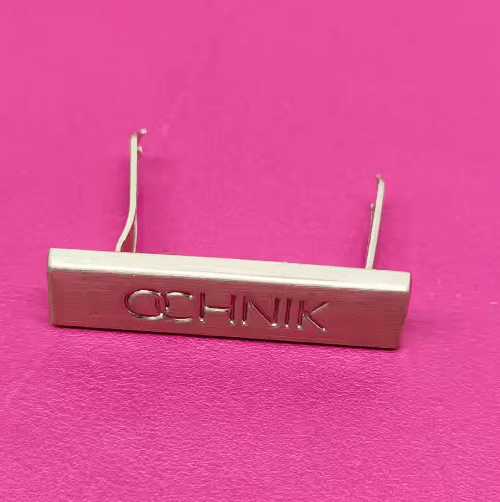
Label Materials: Types, Features, Processes & Applications
| Material Category | Features | Applicable Processes | Application Scenarios |
|---|---|---|---|
| Metal | High-end, durable, strong texture | Stamping, corrosion (etching), laser engraving, electroplating (gold/silver/chrome), wire drawing, sandblasting | Home appliances, tools, automobiles, luxury goods, industrial equipment |
| Plastic | Low cost, rich colors, high plasticity | Injection molding, UV printing, silk screen printing, hot stamping (gold/silver) | Consumer electronics, toys, small home appliances |
| Stainless Steel | Modern, corrosion-resistant, sturdy | Etching and filling, laser engraving, polishing, wire drawing | Medical devices, kitchenware, outdoor equipment, high-end electrical appliances |
| Aluminum | Lightweight, oxidizable for coloring, easy to process | Anodic oxidation (can produce various colors), corrosion, printing | Electronic products, instrument panels, automotive badges |
| Brass/Copper | Vintage, luxurious, good electrical conductivity | Corrosion, electroplating, laser engraving, aging treatment | Audio equipment, furniture, door plates, high-end gifts |
| Acrylic/Glass | Transparent, modern, exquisite | Silk screen printing, UV printing, back engraving | Cosmetics, retail displays, electronics |
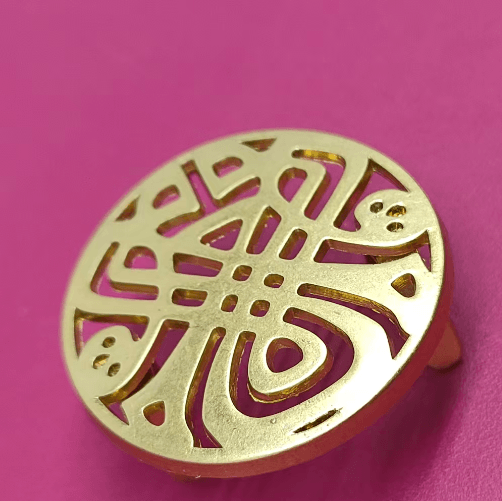
Matching Matrix for Brand Styles and Logo Types
Different brand positioning and design styles often correspond to different logo presentation styles. Below is a summary of the relationships between several typical brand styles and logo production techniques
| Brand Style Types | Feature Description | Recommended Logo Production Techniques | Typical Brand Case Studies |
| Classic Luxury | Emphasising historical heritage and craftsmanship, logos are often the brand name or a classic emblem | Three-dimensional metal logo (copper or solid steel, with a fine electroplated finish); Monogram print on the fabric | Louis Vuitton, Hermès, Gucci |
| Minimalist Modern | Centred on clean, crisp typefaces or geometric symbols, aiming for a clean visual aesthetic | Embossing (without foil stamping); metal nameplates (small size, finely engraved) | Céline, Bottega Veneta, Loewe |
| Youth Culture | To emphasise visual impact and recognisability, logos are often enlarged or arranged in a repeating pattern | Three-dimensional metal logos (distressed/special effects); fabric prints or jacquard patterns | Gucci, Versace, Burberry |
| Affordable luxury and practicality | Balancing quality and value for money, logos are often incorporated as part of functional hardware. | Metal nameplates; engraving on zip pullers/fasteners | Mike Coles, Tang Liboqi, Coach |
| Freelance designer | With an emphasis on creativity and originality, logos are often subtle or unconventional | Hot foil stamping; embossing (in specific areas, such as the inside); labels made from special materials | A host of up-and-coming brands |
Common Craft Effects:
Embossing/Debossing: Creates raised or recessed text and patterns through stamping or etching, delivering a premium tactile experience.
Enamel Filling: Applies paint into etched or stamped grooves for vibrant, wear-resistant colors.
Brushing/Sandblasting: Surface treatments that produce fine textures, enhancing the metal’s visual depth.
Electroplating: Imparts metallic finishes like gold, rose gold, chrome, and more.
Methods of Label to handbags
Screw fastening: This is a very secure and removable method. The ‘feet’ on the back of the logo plate usually feature screw holes and are secured from inside the bag using screws Some high-end handbags employ this method to facilitate subsequent repairs or replacements, such as for personalisation.
Rivet fastening: Holes run along the edges of the logo plate, and hollow rivets or pop rivets pass through the bag’s fabric and secure it. This method is extremely secure and also adds a decorative touch.
Magnetic fastening: This is an innovative, interchangeable method. First, a magnetic recess attaches to the bag by sewing or adhesive; then the magnetic logo simply snaps into place. In this way, users can swap out different logo designs at any time according to their preferences.
Sewn attachment: This is the most basic and traditional method. Manufacturers punch small holes around the edges of the logo plate and then sew it directly onto the bag by hand or machine. They can also use this method to attach fabric labels or leather tags.
Die-casting: Manufacturers commonly use this method with metals such as zinc alloys; they mould the logo plate as a single piece using the die-casting process and can combine it with electroplating to give the logo’s surface a more textured finish.
Customization process
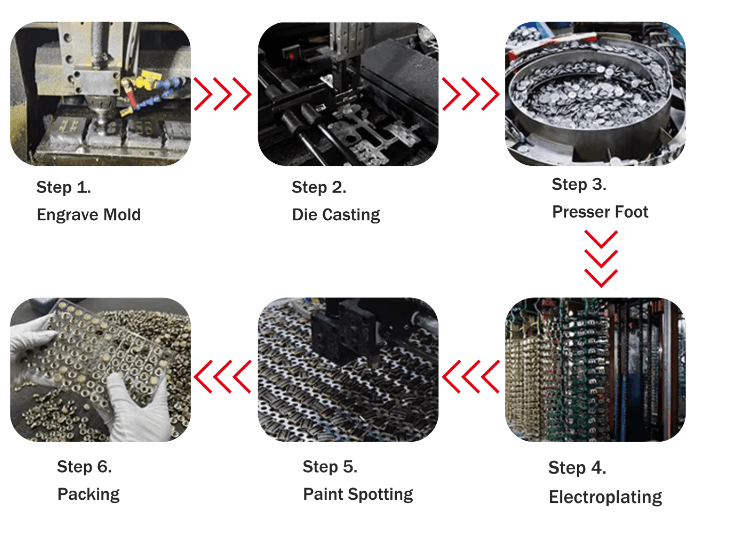
The Hidden Details of Metal Logos: From Materials to Engraving
For brands that have decided to use metal logos, selecting the appropriate type and quality standard of metal fittings is a crucial step in determining the calibre of the final product. Here are several key details to bear in mind.
Choice of Base Material: Zinc Alloy, Copper or Steel?
Zinc alloy serves as the most common base material for handbag hardware logos because its excellent die-casting properties allow complex and intricate three-dimensional logos to form in a single moulding process, while also providing a smooth surface that takes electroplating easily. Brass, on the other hand, offers a warm lustre and substantial feel, which make it the preferred choice for high-end handcrafted leather goods. High-end hardware also utilises pure steel, which is difficult to machine and costly; however, its resistance to dents and colour fading makes it highly favoured in top-tier handbags.
Electroplating and Surface Treatment: The Philosophy of Lustre
The quality of electroplating directly determines the visual sophistication of a logo. Luxury metal fittings often aim for a restrained lustre—a ‘subdued bronze’ is more difficult to achieve than a ‘glaring shine’, and possesses greater texture. Gucci’s double-G hardware utilises an antiquing process; the authentic piece’s matt finish and polishing marks stand in stark contrast to the ‘whitish sheen’ found on counterfeits.
Engraving Precision: The Devil Is in the Details
The precision of logo lettering is one of the key indicators for distinguishing genuine products from counterfeits. Authentic metal logos show clear, natural lettering with varying stroke thickness (e.g., the “G” has a thicker left side and thinner top and bottom), along with rounded edges and smooth, grain-free groove bottoms. Achieving these details requires high-precision moulds and rigorous quality control.
The Decision-Making Process: How to Choose a tags for Your Handbag
Step 1: Define your brand positioning and target audience
Brands targeting the luxury market should invest more in the material and plating quality of their metal logos; those positioning themselves as young and trendy may wish to consider distressed metalwork or bold fabric prints.
Step 2: Assess your budget and minimum order quantities
Brands with stable production volumes and longer product lifecycles invest more initially in fabric prints and three-dimensional metal logos, while brands with small batches or trial products prefer embossing and hot foil stamping
Step 3: Consider how well the logo integrates with the handbag’s design
Designers should not simply “stick on” a logo as a label, but rather blend it seamlessly with the handbag’s overall design. Gucci’s combination of the double G motif with bamboo handles, and Louis Vuitton’s incorporation of the Monogram into the chain and clasp, are both prime examples of this integration.
Step 4: Verify the feasibility of the manufacturing process
Before creating moulds and producing prototypes, discuss the technical details thoroughly with the supplier—the engraving depth of metal logos, the colour of the plating, and the pressure and temperature for embossing—as every detail may affect the final result.
Ultimately, no single material or production technique is universally superior for bag tags. For example, the choice depends on the client’s budget, intended message, brand identity, and other factors. Therefore, only through customized design can clients determine the optimal material and specific production process.