Leather bag hardware suppliers CHINA
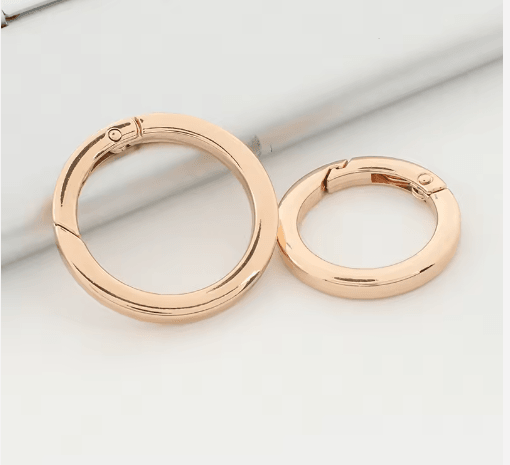
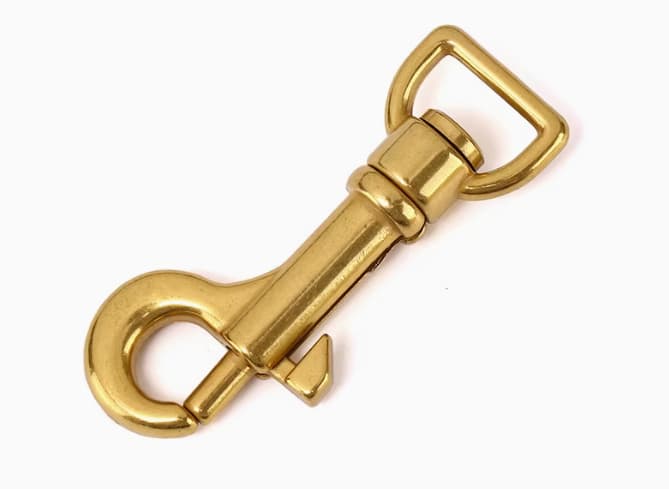
The first impression of a leather bag comes from the leather and its design, but what often determines the product’s lifespan, reputation, and repeat purchase rate are the unassuming metal hardware components. Clasps, D-rings, dog clips, magnetic closures, zipper pulls, and rivets—these metal parts are the “bones and joints” of leather goods. Many brands allocate a significant portion of their budget to leather but neglect hardware procurement. This often leads to issues such as peeling paint, rust, and broken fasteners. Consumers do not blame the hardware itself but instead directly attribute these problems to the bag’s overall poor quality, resulting in negative reviews, returns, and skyrocketing after-sales costs.
The vast majority of leather goods hardware worldwide is produced in China. Mature industrial clusters have formed in Dongguan, Guangdong; Shiling, Guangzhou; and Wenzhou, Zhejiang, comprehensively covering global procurement needs—from low-end off-the-shelf products to high-end custom orders. Whether they are domestic original brands, cross-border e-commerce sellers, or overseas designer brands, the vast majority of buyers source from Chinese hardware factories. However, the market is a mixed bag; hardware that looks identical can vary in price by several times, with significant differences in quality.
This article focuses on three key areas—the value of high-quality hardware, the reasons for choosing Chinese suppliers, and practical methods for screening reliable factories—to provide leather goods professionals with a practical procurement guide.

The Importance of High-Quality Hardware in Leather Bags
Many buyers fall into a common misconception: they view hardware as mere accessories and assume that as long as they look similar, they’ll suffice. In reality, hardware directly impacts the product’s user experience, after-sales costs, and brand prestige—and can even determine a bag’s market lifespan.
Determining a Product’s Actual Service Life and Mitigating the Risk of Mass After-Sales Issues
In many cases, damage to leather goods is not caused by wear and tear on the leather itself, but rather by the premature failure of metal hardware. A broken dog clip can cause the shoulder strap to detach; weakened magnetism in a magnetic clasp can prevent the bag flap from closing; a jammed lock spring can make the bag impossible to open; and a D-ring that deforms under stress can render the entire bag unusable.
Low-cost hardware often uses recycled zinc alloys of insufficient purity, resulting in brittle materials that crack easily under stress; the plating is too thin, causing oxidation, discoloration, and the appearance of white rust spots within a short period. Especially in humid environments in southern China and high-humidity regions overseas, substandard hardware begins to fail within three to five months.
After-sales service represents a massive, often hidden cost. When a batch of hardware fails, it’s not just the shipping costs for returns and exchanges—it also consumes significant customer service resources, leads to negative reviews on e-commerce platforms, causes store ratings to drop, and damages the brand’s reputation. Many small and medium-sized leather goods brands have seen the market trust they worked so hard to build destroyed simply because of faulty hardware. High-quality hardware reduces the likelihood of batch failures right from the source.
The Quality of Hardware Directly Determines a Product’s Grade
When consumers assess the quality of a handbag, the hardware is the most intuitive indicator.
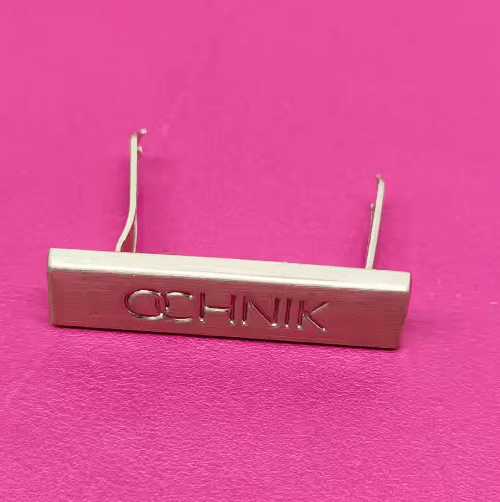
Take two bags with the same design and leather material: high-end hardware features an even, fine plating with a soft luster, smooth edges without burrs, and crisp, clean logo engraving; in contrast, low-quality hardware may appear shiny at first glance but, upon closer inspection, reveals pitting, bubbles, and rough edges, and feels flimsy and cheap to the touch.
Luxury and premium brands invest heavily in hardware. Even when it comes to gold finishes, the plating process, plating thickness, and polishing techniques can create completely different visual effects. Even for affordable, mass-market items, as long as the hardware feels high-quality, the overall perceived value of the product is significantly enhanced. Conversely, even the finest genuine leather paired with cheap hardware will look cheap.
Consistent dimensional accuracy reduces assembly waste in leather goods factories
Many people overlook the issue of hardware tolerances. For the same type of fastener, significant dimensional deviations make it difficult for leather goods workshop assemblers to align the parts properly. Mismatched hole positions and inconsistent spring tension can lead to a large amount of rework, driving up production costs and slowing down delivery times.
High-quality hardware manufacturers use precision die-casting and stamping molds, ensuring consistent dimensions across the entire batch. This allows for smooth fitting during leather punching and sewing assembly, reducing defective products. This is especially critical for custom designs, which must strictly match the designer’s drawings; even the slightest deviation in precision can prevent the entire pattern from being successfully implemented.
Compliant Manufacturing Processes That Meet Market Access Requirements Both Domestically and Abroad
For leather goods exported to Europe, the United States, Japan, and South Korea, the metal hardware must pass ROHS and SGS testing to ensure that the leaching of heavy metals such as nickel and lead is within permissible limits. Many small, low-cost manufacturers use electroplating processes that fail to meet these standards, resulting in excessive levels of heavy metals. If such products are subject to a customs inspection upon export, they will be immediately detained, leading to substantial financial losses.
High-quality hardware suppliers strictly control raw materials and electroplating processes and provide comprehensive test reports. For domestic brands, compliance is equally important to prevent allergic reactions caused by consumer skin contact.
User Experience Lies in the Fine Details and Feel of Hardware
High-quality hardware feels “smooth” to use. Latches turn without any sticking, magnetic closures open and close with just the right amount of resistance, dog clips rotate smoothly, and springs snap back crisply and firmly. Poor-quality hardware makes strange noises when turned, springs lose their springiness after a period of use, and fasteners fluctuate between being too loose and too tight.
Consumers may not be able to describe these details using technical terms, but they can intuitively feel the difference when using the product. These subtle experiences subtly influence users’ perceptions of the brand and determine their willingness to repurchase.
Why Choose Chinese Leather Goods Hardware Suppliers
In the global leather goods supply chain, China’s hardware industry does not rely solely on low prices to compete. Its comprehensive industrial clusters, mature manufacturing processes, flexible customization capabilities, and competitive lead times are qualities that are difficult for other regions overseas to replicate.
A fully developed and mature industrial cluster with a high degree of concentration across the entire supply chain
China’s major luggage hardware industry is concentrated in three major regions: Dongguan, Guangdong; Shiling, Guangzhou; and Wenzhou, Zhejiang. The entire industrial chain—including die-casting, stamping, mold development, electroplating, polishing, laser engraving, and logo engraving—is based locally.
The mold blanks and steel required for mold making; the chemical raw materials needed for electroplating; surface treatment processes such as polishing, electrophoresis, and oil sealing; and packaging materials—all of these can be sourced within a radius of several dozen kilometers. For a new product design, it is standard practice in the industry to produce a sample within 72 hours, from blueprints to prototype.
In many regions overseas, manufacturers can only handle a single production step—molds must be sourced from Location A, and electroplating must be sent to Location B—which lengthens turnaround times and increases communication costs. In China, the entire process—from raw materials to finished products—can be completed within a single factory, ensuring highly efficient communication and coordination.
Balancing High-Volume Mass Production with Small-Batch Flexible Customization
This is a particularly prominent strength of Chinese suppliers.
For large orders from major brands—ranging from tens of thousands to hundreds of thousands of units—automated die-casting and stamping production lines can deliver stable output with controllable costs and consistent quality.
At the same time, a large number of factories support small-order prototyping and small-batch trial production. Many independent designers and small-to-medium-sized cross-border sellers do not have large orders and only need a few hundred or a few thousand pieces of custom hardware. Domestic factories can accommodate small-order mold making, structural modifications, logo adjustments, and changes to plating colors, flexibly meeting the needs of clients of all sizes.
In contrast, local hardware factories in Europe and the U.S. have extremely high minimum order quantity thresholds, charge high prototyping fees, and generally do not accept small orders. Some factories in Southeast Asia specialize more in standardized off-the-shelf products and have limited capabilities for complex customization.
Our craftsmanship covers the entire price range, from budget alternatives to high-end luxury items.
Many people have the stereotype that Chinese hardware is synonymous with low-end products. The reality is quite the opposite. Domestic factories produce hardware components across the entire spectrum—from affordable mass-market items to affordable luxury and high-end luxury products.
For entry-level products, we offer cost-effective zinc alloy items available in stock; for mid-range products, we provide thick-walled die-cast pieces with multi-layer plating; and for high-end products, we use 316L stainless steel and brass materials, meeting stringent salt spray test requirements and matching the standards of major international hardware brands.
Purchasers can freely choose materials and plating standards based on their brand positioning. For those looking to reduce costs, there are cost-effective solutions; for those developing high-end product lines, they can match imported manufacturing processes while paying significantly less than they would for overseas procurement.
Our price advantage doesn’t come from cutting corners; it stems from efficiency throughout the supply chain.
Under the same quality standards, Chinese hardware is significantly cheaper to source than its European and American counterparts. This is due to the high level of coordination within the supply chain, not to cutting corners on raw materials.
Centralized procurement of raw materials, widespread use of automated equipment, and the proximity of upstream and downstream suppliers eliminate the costs associated with cross-regional logistics, tariffs, and long-distance communication. For the same set of high-standard stainless steel fasteners, quotes from domestic factories often show a significant price difference compared to those from overseas factories.
Draw a clear line between two cases: although the market offers low-quality, low-priced products that appear identical, they come from factories that use recycled materials or abbreviate the plating process—and they certainly do not represent the “normal standard of Made in China.” When you make purchases, you must discern whether a low price results reasonably from supply chain efficiency or stems from substandard manufacturing that cuts corners.
Mature foreign trade services tailored to global market demands
Numerous domestic hardware factories have long served overseas clients and are well-versed in international standards. They can provide SGS material reports and salt spray test reports to meet export standards such as RoHS and REACH; they also offer customs clearance, packaging, and ocean freight support services, and are highly proficient in coordinating with overseas buyers’ processes.
The factories understand the pain points of international trade clients—including labeling, packaging, testing documentation, and delivery schedule management—so there is no need for buyers to repeatedly explain the rules. At the same time, domestic online communication channels serve us well; suppliers can rapidly deliver emails, instant messages, and sample pictures, videos, and on-site photos to clients, thereby facilitating efficient remote collaboration
How to Choose the Right Supplier in China
The market is filled with a mix of original manufacturers, trading intermediaries, and resellers of spot goods. Many buyers fall into traps: samples may be of excellent quality, but the actual production batch is of inferior quality; high standards are promised verbally but no actual testing is conducted; and when quality issues arise, suppliers pass the blame and drag their feet. When selecting a supplier, don’t just look at quotes and sample photos—you need a comprehensive verification process.
Distinguishing Between: Source Factories, Traders, and Spot Market Brokers
First, you need to determine what type of partner you are dealing with.
Source Factory
A facility with its own die-casting or stamping workshop and in-house mold shop; ideally, it also has its own electroplating workshop or a long-term partnership with one. It can produce molds based on drawings or samples, control every step of the process, and trace production back to the source if problems arise. This type of supplier is the preferred choice.
Traders
These entities do not have their own production facilities; they source products from third parties and resell them to you. Their advantage is a comprehensive product range, but since they do not control the production process, discrepancies between samples and mass-produced goods are common. If issues arise, you must contact the manufacturer directly, resulting in a longer communication chain.
Spot Market Brokers
These brokers sell only ready-to-ship inventory and offer virtually no customization options. They are suitable for simple, standard parts but are not suitable for brand-specific customizations such as logos or special structures.
Simple ways to tell the difference: Ask the other party to provide actual footage of the production floor, the mold shop, and the electroplating shop; clarify whether they manufacture the molds in-house or outsource them; and ask if they can provide certificates of material composition for the raw materials. A genuine factory can clearly demonstrate the production process, while a middleman can only provide photos of finished products.
Verify Qualifications and Testing Capabilities—Don’t Rely Solely on Verbal Promises
Don’t believe verbal claims like “We can pass the salt spray test” or “We use high-quality materials”; ask for actual documentation.
Check the business license
In order to confirm that the scope of business includes hardware manufacturing and processing, not just trading and sales.
Request material reports and SGS test reports.
Pay close attention to the report numbers and verify that the reports match this specific batch of materials—do not use old reports randomly found online. Distinguish between: material reports, plating test reports, and heavy metal environmental compliance reports.
Confirm whether the factory has in-house testing equipment
salt spray testers, tensile testers, and hardness testers. A reliable factory will conduct salt spray tests, opening/closing durability tests, and tensile strength tests in-house, rather than relying entirely on third-party testing.
The electroplating process is the biggest pitfall in the hardware industry
Clarify whether the factory has its own electroplating workshop or outsources the process to a third party. If quality control is poor when outsourcing electroplating, it is very easy for issues such as color variations between batches and paint peeling to occur.
The following table summarizes the key points of procurement verification:
| Evaluation Dimensions | Content to be confirmed | Risk Warning |
| Raw Materials | Zinc alloy / stainless steel / brass grades; no unidentified recycled materials accepted | Misrepresentation of materials: labeled as 304 but actually made of ordinary iron |
| Electroplating Process | Coating Thickness, Salt Spray Test Standards (48h/72h/96h) | Low-cost barrel plating often results in insufficient plating on edges and corners, making the surface prone to rust and discoloration. |
| Testing Capabilities | Do you have your own salt spray and tensile testing equipment? | We only provide sample reports; we do not test bulk orders. |
| Production Model | In-house die-casting and stamping facilities; in-house tooling shop | All production processes are outsourced, making it impossible to control quality. |
Assess the factory’s technical capabilities to ensure they align with your product positioning
Different factories have different areas of expertise. Some specialize in high-volume, standard off-the-shelf products; others excel at complex custom mold making; and still others focus on high-end stainless steel. Find a factory that aligns with your positioning—don’t blindly go for the biggest ones.
If you’re in the mid- to high-end leather goods business, focus on these three points:
Mold Machining Precision
Inspect the edges and corners of the sample for burrs or flash, and check whether the logo engraving is clear. If the mold is of poor quality, no amount of subsequent polishing will improve the product’s basic quality.
Surface Treatment Processes
Distinguish between rack plating and barrel plating. High-end products should prioritize rack plating, which ensures an even coating and prevents corrosion at the edges and corners; barrel plating is lower in cost and suitable for budget products, though the coating tends to be thinner at the edges and corners.
Past Projects
Review the types of clients the factory has served. If the factory has long specialized in low-end, street-vendor-style goods, it will be difficult for them to immediately adjust their entire production workflow, even if they accept your high-end order.
At the same time, discuss the sample production timeline, how long it will take to modify the mold, and the timeline for color-modified samples. For custom designs, the ability to modify molds is crucial.
Request samples and place small-batch trial orders; do not place a large production order right away.
This is the most critical step in procurement. Many people fall into the trap of skipping the trial order and placing a large production order directly.
Samples only reflect the quality of the samples themselves; it’s the mass production that truly demonstrates a factory’s capabilities. Many factories go out of their way to produce high-quality samples for customers to see, but then, to cut costs, they switch to lower-quality materials and lower plating standards for mass production, resulting in a “world of difference between samples and mass-produced goods.”
Practical Process:
- Confirm the drawings, materials, and plating standards, and include all of them in the quotation. Clearly specify the salt spray duration and plating requirements in writing—do not rely solely on verbal communication.
- Upon receiving samples, conduct simple tests yourself: repeatedly open and close the fasteners to assess the spring’s feel; perform a basic salt spray test; and check for pitting, bubbles, or color discrepancies.
- Place a small-batch trial order first—ranging from a few hundred to a few thousand pieces—to verify the quality, color consistency, and dimensional accuracy of the mass production run. Only scale up the order once the mass production quality is confirmed to be stable.
- During mass production, request pre-production samples and actual photos taken midway through production; if possible, arrange for third-party inspection.
Evaluating Delivery Times, Communication and Coordination, and After-Sales Support
Even if the quality meets standards, delivery and cooperation are also key factors to consider.
Verify whether the delivery schedule is realistic. Some factories make casual promises of very short lead times to secure orders, only to delay them indefinitely later. Be sure to ask about their production schedule and whether lead times will be extended during peak seasons.
Assess the efficiency of their communication and response. When faced with request for changes or issue reports, does the factory actively seek solutions, or do they simply pass the buck? A high-quality supplier isn’t one that never has problems, but one that can quickly identify the cause of an issue and provide a remedy.
Agree on procedures for handling defective products in advance. Before you enter into a partnership, clarify how you will handle returns, replacement shipments, and compensation if batch-wide quality issues arise—don’t wait until a problem occurs to negotiate
Avoiding Common Procurement Pitfalls
Focusing solely on the lowest price: While hardware costs account for a relatively small portion of the total bag cost, they have a significant impact on quality. If a quote is significantly below the normal market range, it’s highly likely that corners have been cut on raw materials or plating. When comparing prices, you should do so based on the same materials and manufacturing standards—don’t just compare unit prices.
Overemphasizing factory size
In very large factories, large orders take priority, and small orders are often overlooked. Small- to medium-sized specialized factories, on the other hand, tend to provide better service to small and medium-sized customers. Finding a factory that suits your order volume is more important than simply choosing the largest one.
Focusing only on appearance while ignoring internal structure
Products may look identical on the outside, but there can be huge differences in internal springs and alloy compositions. You can imitate appearance easily, but you cannot distinguish materials and manufacturing processes with the naked eye; you must rely on testing and reports
Relying on verbal agreements
Clearly stipulate all material specifications, plating standards, and salt spray test requirements in the order contract to prevent later misunderstandings.
Conclusion
In the leather goods industry, competition has shifted from exterior design to the often-overlooked details of hardware components. Though small, hardware profoundly impacts product reputation, return rates, and brand value. High-quality hardware is not the exclusive domain of luxury brands; rather, it is a fundamental requirement for all leather goods brands.
China boasts the world’s most comprehensive supply chain for bag hardware, offering a vast selection of excellent suppliers—from affordable off-the-shelf options to high-end custom solutions. However, this supply chain advantage does not mean that simply choosing any supplier will guarantee high-quality goods. The core of procurement is not finding the cheapest supplier, but rather identifying a partner whose craftsmanship standards, service capabilities, and order volume align closely with your brand’s standards.
By conducting thorough preliminary qualification checks, rigorously testing samples and pilot orders, and clearly documenting material and craftsmanship standards in writing, you can fully leverage the advantages of the “Made in China” supply chain, avoid the risk of mass production failures, and truly enhance product competitiveness through the details of the hardware.