How to Choose the Best Handbag Hardware Manufacturer
Handbag hardware serves as both a core accessory and a load-bearing component. The quality of accessories such as clasps, chains, rivets, zippers, and hooks directly determines a handbag’s durability, visual appeal, and product grade. High-quality hardware can increase a handbag’s premium value, while substandard hardware can lead to issues such as discoloration, breakage, and rust, severely damaging a brand’s reputation. For handbag brands, international buyers, and manufacturers, carefully selecting high-quality hardware manufacturers is a critical step in ensuring product quality and optimizing the supply chain. This article will explain methods for screening manufacturers in the two major production hubs—India and China—analyze the core strengths of Chinese and Indian manufacturers, outline the key characteristics of high-quality manufacturers, and compare the fundamental differences between top-tier and average manufacturers, providing practical guidance for industry procurement.
Methods for Selecting Indian Handbag Hardware Manufacturers
India is a major global producer of handbags and leather goods. Thanks to its well-established leather goods industrial clusters, flexible customization services, and cost-effectiveness, it has become a key destination for sourcing hardware for mid-to-low-end handbags. Indian hardware manufacturers specialize in handcrafted products and small-batch customization, catering to the production needs of niche brands and specialty leather goods. When selecting suppliers, it is essential to focus on three core criteria: industrial clusters, regulatory compliance, and suitability of manufacturing processes.
Focus on Core Industrial Clusters and Prioritize Direct Manufacturers
India’s handbag hardware industry is highly concentrated, with core industrial clusters centered in four major regions: Kolkata, Chennai, Kanpur, and Delhi. These regions feature comprehensive upstream and downstream supply chains, as well as mature systems for raw material procurement, processing and production, and logistics and distribution. Buyers who prioritize source manufacturers within these clusters can effectively reduce procurement costs and shorten lead times, while avoiding issues such as markups by middlemen and unstable supply. Small workshops outside these clusters generally suffer from rudimentary equipment and incomplete supply chains, making it difficult to guarantee quality and lead times; therefore, they are not recommended as priority partners.
Verify Compliance Credentials to Mitigate Trade Risks
When sourcing from Indian suppliers across borders, it is essential to verify their core compliance credentials, as this is the foundation for ensuring a smooth partnership. Purchasers should proactively verify the supplier’s GST registration status and IEC import/export codes, and use publicly available data from the Directorate General of Foreign Trade (DGFT) to confirm the supplier’s legitimate business credentials. Additionally, prioritize suppliers with LWG leather industry certification and ISO quality management system certification. Such suppliers adhere to more standardized production processes and environmental standards, enabling them to meet import compliance requirements in multiple countries and effectively mitigate risks such as export returns and customs audits.
Focusing on Craftsmanship Advantages to Meet Procurement Needs
Indian hardware manufacturers specialize in meticulous handcrafted finishes and excel in vintage, distressed, and niche, personalized hardware techniques, making them well-suited for the production needs of light luxury vintage styles and handcrafted leather goods and handbags. Buyers should pay close attention to the manufacturers’ electroplating processes and the details of hand-polishing to verify the products’ corrosion resistance and colorfastness. Additionally, Indian manufacturers generally support small-batch customization and flexible design adjustments, making them ideal for new product prototyping and niche order procurement.
Core Strengths of Indian Handbag Hardware Manufacturers
The Indian handbag hardware manufacturing industry has developed unique competitive advantages based on a century of leather craftsmanship, giving it irreplaceable strengths in its niche market.
manufacturers possess a rich heritage of artisanal craftsmanship
A large number of seasoned artisans specialize in intricate techniques such as metal polishing, vintage aging, and textured engraving. The hardware they produce features a unique texture and a rich vintage charm, making it a perfect match for distinctive handbags—including handcrafted “affordable luxury,” vintage niche styles, and ethnic-inspired designs—whose artisanal quality and texture cannot be replicated by mass-produced machine-made products.
Indian manufacturers offer exceptional flexibility in customization
The industry widely adopts a production model with low minimum order quantities, eliminating the need for high tooling costs. This allows them to quickly respond to the prototyping and small-batch customization needs of small and medium-sized brands and independent designers, significantly lowering the barrier to entry for niche brands in new product development. At the same time, leveraging high-quality local leather and hardware resources, raw material procurement costs are lower; as a result, product quotes offer exceptional value for money under the same manufacturing standards.
leading Indian manufacturers place a high priority on sustainable production and compliant operations
They generally hold international environmental and social responsibility certifications such as LWG, BSCI, and the Higg Index, and implement green electroplating and eco-friendly raw material processing techniques, resulting in lower carbon emissions. This precisely aligns with the procurement standards of global affordable luxury and sustainable fashion brands, giving them a strong competitive edge in niche high-end overseas markets.
| Inspection Items | Scope of the Audit | Passing Criteria |
| Industry Location | Is it located within a core industrial cluster? | Direct-from-manufacturer factories in the industrial belts of Kolkata, Chennai, Kanpur, and Delhi—no middlemen involved |
| Business Licenses | GST and IEC Import/Export Codes | The document is valid and can be verified on the official platform. |
| Industry Certifications | LWG, ISO, and Environmental Testing Reports | Hold valid certificates and comply with environmental regulations in the target market |
| Processing Specialization | Specializes in the following types of craftsmanship | Vintage-inspired, hand-polished, with strong small-batch customization capabilities |
| Order Volume | Can handle MOQ | We offer low minimum order quantities, making us ideal for prototyping new products and niche orders. |
How to Select Handbag Hardware Manufacturers in China
China is the world’s largest producer and exporter of handbag hardware, boasting a massive industry scale, mature manufacturing processes, and ample production capacity. It covers the entire market spectrum, from low-end mass production to mid-range value-for-money products and high-end precision craftsmanship. Domestic manufacturers specialize in large-scale mass production, precision craftsmanship, and rapid delivery, catering to the procurement needs of mass-market brands, large foreign trade orders, and high-end lifestyle handbags. Selection criteria place greater emphasis on production capacity, precision, quality control, and service systems.
Leveraging Core Industrial Clusters to Select Large-Scale Source Factories
China’s handbag hardware industry is concentrated in regions such as Dongguan, Foshan, and Guangzhou in Guangdong, as well as Wenzhou and Yiwu in Zhejiang. The Guangdong region specializes in high-end precision hardware, while the Zhejiang region focuses on cost-effective, mass-produced hardware. Buyers should carefully select production regions based on their product positioning. For high-end handbags, Guangdong-based source factories are the preferred choice. These factories are equipped with CNC engraving machines and precision die-casting production lines, capable of controlling dimensional tolerances within ±0.01 mm, with industry-leading manufacturing precision. For mass-produced, mainstream handbags, large-scale manufacturers in Zhejiang are a suitable option, as they offer ample production capacity and outstanding value for money, making them ideal for large-volume orders.
Verifying Production Processes and Quality Control Standards
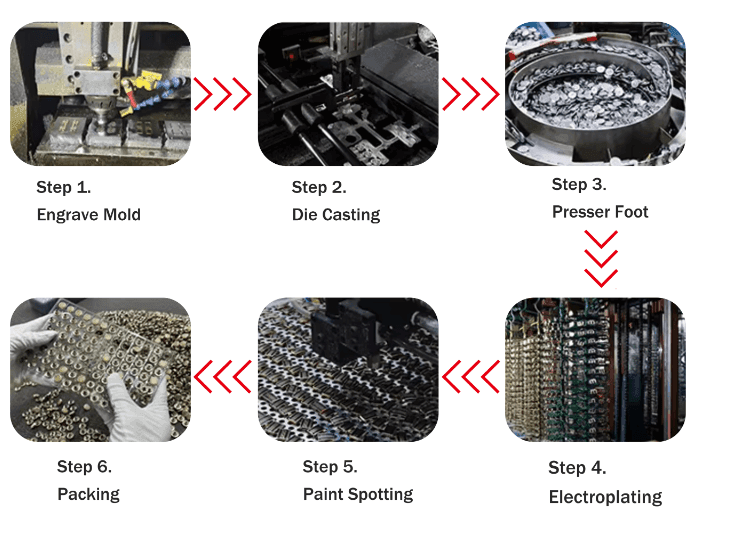
High-quality Chinese manufacturers have established comprehensive, end-to-end quality control systems, ensuring rigorous oversight at every stage—from raw material selection, mold fabrication, die-casting, and electroplating to final product inspection. Buyers should proactively verify the quality of manufacturers’ raw materials, giving priority to those that use high-strength zinc alloys and eco-friendly plating materials, as their products are scratch-resistant, sweat-resistant, and colorfast. At the same time, confirm whether the manufacturer has the capability to conduct salt spray testing and opening/closing durability testing. High-end hardware components must pass a 48-hour salt spray test and a 5,000-cycle opening/closing durability test to prevent quality issues such as rust and breakage.
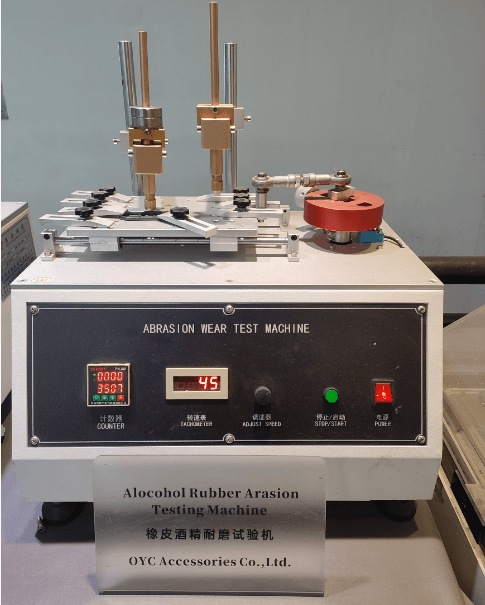 | 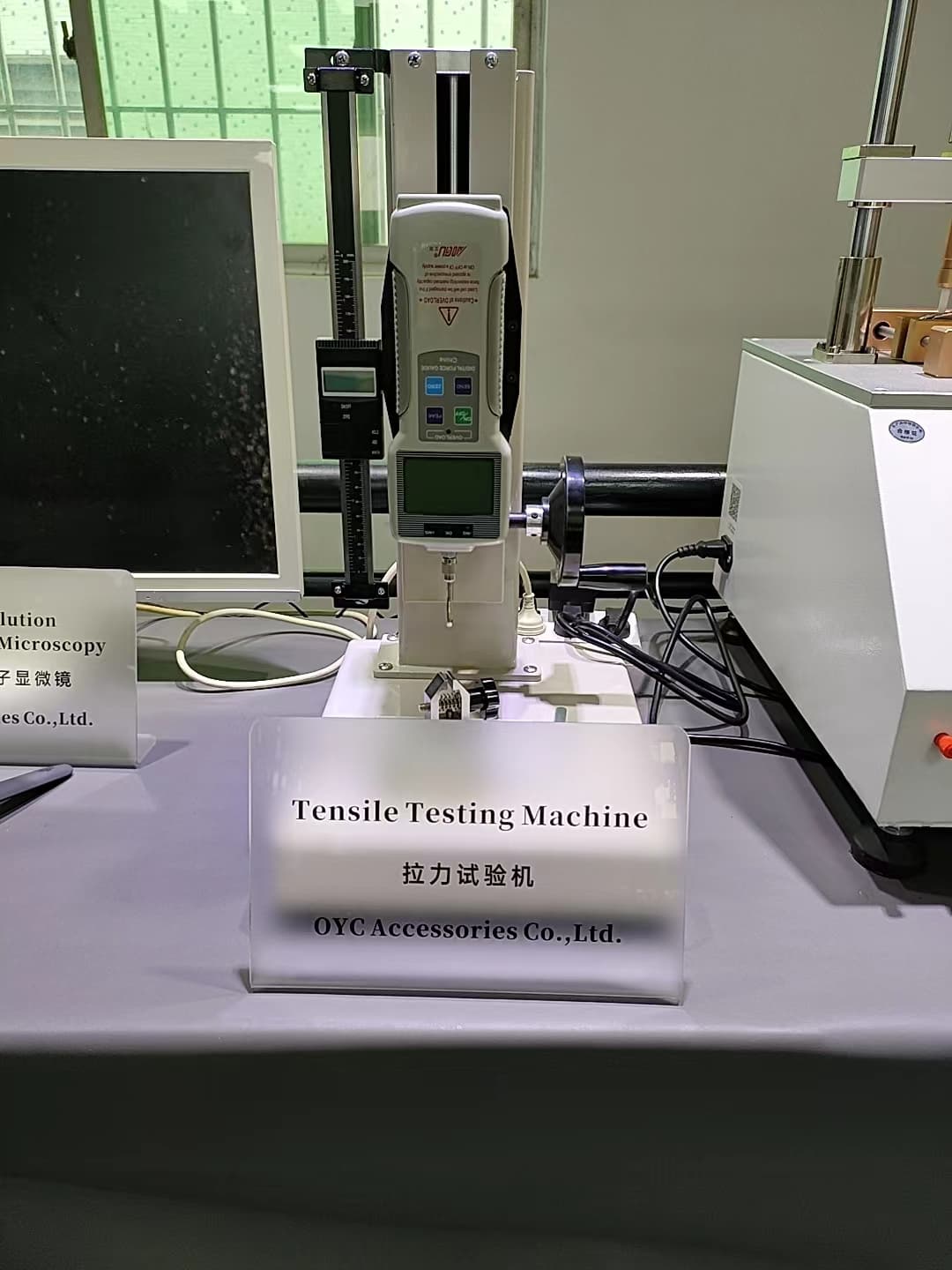 | 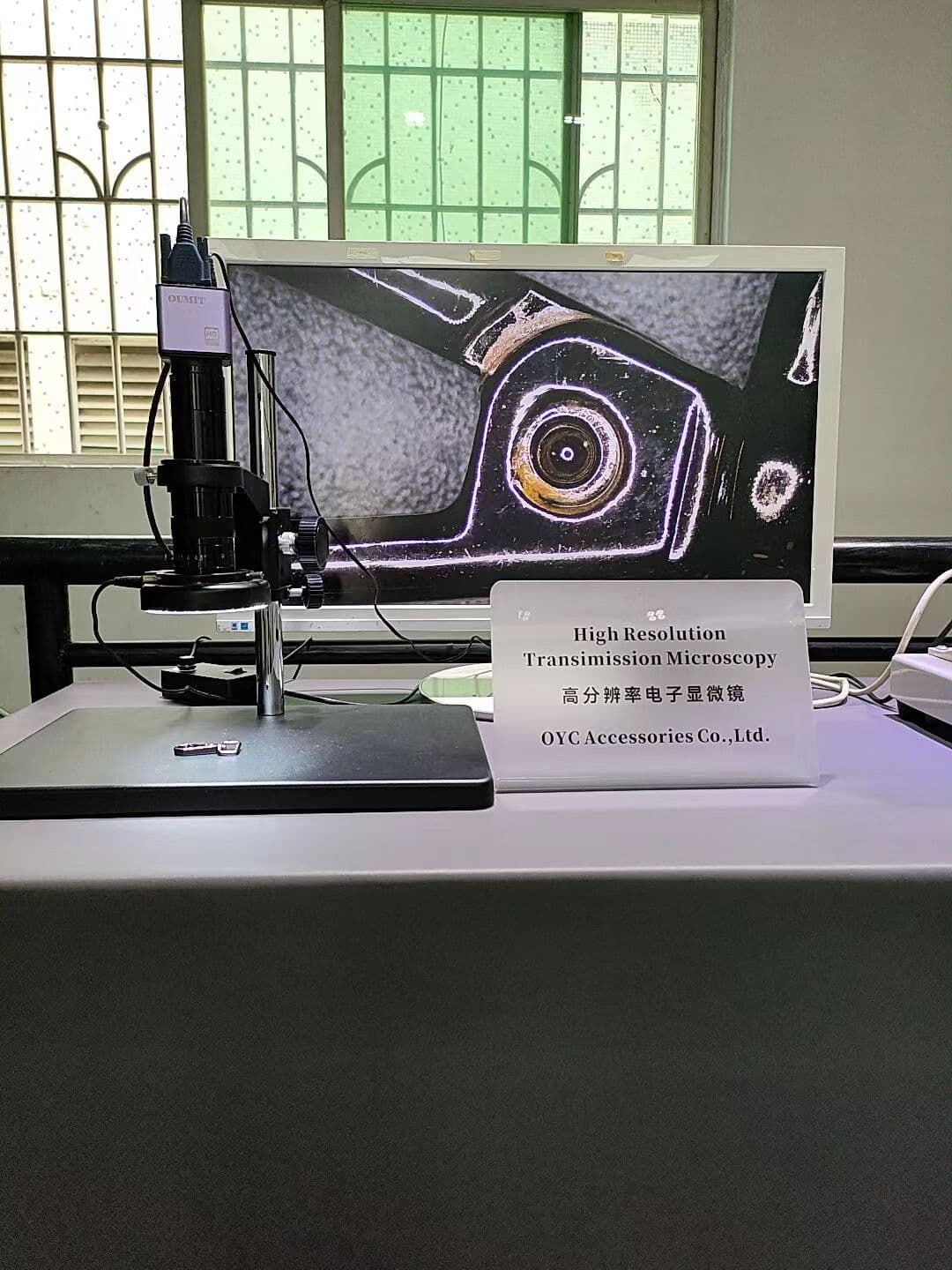 | 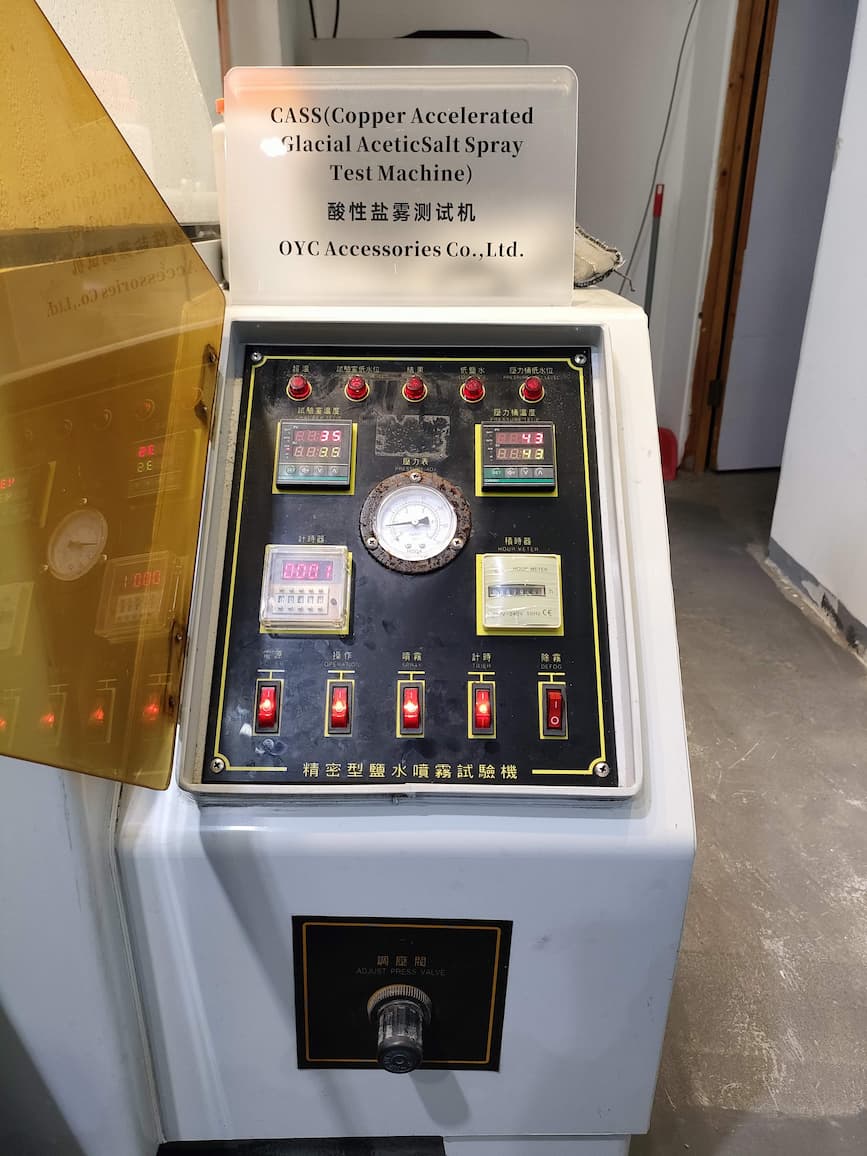 |
| Abrasion Testing | Tensile Testing Machine | High Resolution on Transmission Microscopy Testing Machine | Copper Accelerated Glacial Acetic Salt Spray Test Machine |
Evaluating Customization Capabilities and Delivery Efficiency
High-quality domestic hardware manufacturers all support OEM and ODM customization services. They can quickly create molds and produce prototypes based on customer drawings and samples, and accommodate customized requests such as personalized logo engraving, special color schemes, and non-standard structural designs. Buyers should focus on evaluating manufacturers’ prototyping lead times, mold-making efficiency, and mass production delivery capabilities. Reputable source factories can deliver rapid prototyping within 3–7 days and ensure stable, on-time delivery for large-volume orders. Additionally, high-quality manufacturers have established comprehensive after-sales response mechanisms to promptly address product defects and post-sale rectifications.
Core Advantages of Chinese Handbag Hardware Manufacturers
Thanks to its full-industry-chain layout, intelligent production systems, and mature supply chain infrastructure, China’s handbag hardware manufacturing industry holds a dominant position in the global mid-to-high-end market, with highly distinctive core competitive advantages.
domestic manufacturers possess a complete end-to-end industrial chain
enabling one-stop production from mold R&D, raw material smelting, precision die-casting, and surface treatment to finished product inspection, packaging, and logistics. This eliminates the need to rely on external supply chains, effectively shortens production cycles, and reduces overall procurement costs. It is one of the very few regions in the world capable of independently producing a full range of hardware components.
With industry-leading production precision and mass production capabilities
our top-tier factories have fully adopted intelligent equipment such as CNC precision machining, fully automated die-casting, and smart electroplating. Our mature, standardized production processes ensure strict control over the uniformity of product dimensions, color, and structure, resulting in mass-produced items with zero color variation and tight tolerances—perfectly meeting the quality requirements of high-end “affordable luxury” and luxury brand handbags. At the same time, our massive production capacity allows us to handle large-volume export orders in the hundreds of thousands or even millions, with delivery reliability far surpassing that of other production regions.
Through continuous R&D iteration and the refinement of service capabilities
domestic manufacturers have established professional R&D and design teams that closely follow global fashion trends and rapidly introduce new hardware designs. At the same time, they are capable of fulfilling custom orders involving complex, irregular shapes and high-end specialized processes. In addition, domestic manufacturers have well-established after-sales support systems with fast response times, offering on-demand modifications, expedited restocking, and quality traceability—all of which align with brands’ needs for long-term, stable supply chain partnerships. As a result, they are the top choice for leading domestic and international brands.
| Inspection Items | Scope of the Audit | Passing Criteria |
| Selection of Production Areas | Region where the factory is located | Third-party test reports are available; high-end models undergo ≥48-hour salt spray testing. |
| Production Equipment | Die-casting, CNC, and electroplating equipment | For high-end products, choose Guangdong; for affordable bulk orders, choose the Zhejiang industrial cluster. |
| Raw Materials | Alloy Materials, Electroplating Materials | We have our own production facilities, equipped with precision die-casting and CNC machining equipment. |
| Quality Inspection | Salt Spray and Opening/Closing Endurance Testing | Zinc alloy substrate, nickel-free, eco-friendly plating |
| Customization Capabilities | ODM/OEM, Mold Making and Prototyping | Prototypes available in 3–7 days; we offer logo engraving and custom-shaped part development. |
| Delivery Capability | Scheduling, Production Capacity Limits | Clear order scheduling; large-volume orders are delivered on time |
Key Characteristics of the Best Handbag Hardware Manufacturers
Whether based in China or India, top-tier handbag hardware manufacturers share the core characteristics of standardization, precision, and specialization, establishing key competitive advantages across four key areas: craftsmanship, quality control, service, and production capacity.
Exquisite Craftsmanship, Exceptional Product Consistency
Leading manufacturers utilize precision molds and intelligent production equipment, combined with proven processes such as constant-temperature smelting, precision die-casting, and eco-friendly electroplating, to ensure high consistency in dimensions, color, and structure across every batch of products. Product surfaces are smooth and burr-free, with uniform and durable plating. They support a variety of high-end finishes—including gunmetal black, antique bronze, brushed, and sandblasted—balancing aesthetics with practicality. Additionally, manufacturers have optimized product structural design to ensure smooth opening and closing, strong load-bearing capacity, and suitability for frequent use in handbags.
Comprehensive Quality Control System with High Compliance Rate
Leading manufacturers have established a dual-track quality control model combining manual re-inspection with intelligent equipment testing to conduct comprehensive screening of product dimensional accuracy, corrosion resistance, tensile strength, and surface finish. All products comply with industry environmental standards, utilizing nickel-free, eco-friendly electroplating processes that meet European and U.S. REACH environmental requirements. The product pass rate at shipment is nearly 100%, eliminating quality issues such as discoloration, deformation, rust, and breakage at the source.
Flexible Customization to Meet Diverse Needs
Leading manufacturers have assembled professional design and R&D teams to quickly address customers’ personalized needs, supporting differentiated customization such as custom-shaped hardware, exclusive logos, special color schemes, and customized structures. At the same time, these manufacturers flexibly accommodate orders of varying sizes—handling everything from small-batch prototyping for new products to large-scale mass production—and cater to all handbag segments, including luxury, high-end, mass-market, affordable, and niche specialty styles.
Fully Certified, Reliable Delivery
Reputable, high-quality manufacturers hold a full suite of industry certifications, including ISO 9001, SEDEX, CE, and RoHS, ensuring exceptional compliance and meeting export standards in numerous countries worldwide. Additionally, these manufacturers operate their own production facilities and maintain a stable supply chain, with ample raw material reserves and flexible production capacity allocation. This effectively mitigates issues such as order delays and supply shortages, ensuring long-term, stable supply.
The Key Differences Between Top Manufacturers and Ordinary Manufacturers
There are a vast number of ordinary hardware manufacturers in the market, but their quality, service, and reliability vary widely, and they lag significantly behind top-tier manufacturers.
| Dimensions of Comparison | Top Handbag Hardware Manufacturers | General-Purpose Handbag Hardware Manufacturer |
| Manufacturing Process | Precision molds, standardized die casting, and eco-friendly electroplating, with strict control over color variations between batches and dimensional tolerances | Simple molds, simplified electroplating process, significant batch-to-batch variation, and numerous burrs |
| Quality Control Testing | Full-process quality inspection, including salt spray, tensile strength, and opening/closing endurance tests, with test reports provided | If products are selected based solely on visual inspection without reliability testing, the defect rate tends to be high. |
| R&D and Customization | In-house mold making and structural optimization; capable of producing complex, irregularly shaped parts with consistent prototyping results | They only reproduce existing standard models, have limited capabilities for complex customization, and require frequent rework on prototypes. |
| Delivery Management | Stable production capacity, standardized scheduling, controllable lead times, and rapid response to issues | Production capacity fluctuates significantly, scheduling is chaotic, and delays are common; after-sales response is slow, and there is a tendency to pass the buck. |
| Compliance Qualifications | ISO, RoHS, and SEDEX certifications are all in place; eco-friendly electroplating; suitable for export to Europe and the U.S. | Lack of full certification and the use of non-environmentally friendly coatings in some cases pose a risk of the goods being detained upon export. |
| Long-term costs | The unit price is slightly higher, but the costs associated with defective products, returns, and rework are low, and the brand risk is minimal. | Although the unit price is low, high post-sale wastage can easily damage the brand’s reputation. |
conclusion
Handbag hardware manufacturers in China and India each possess distinct core strengths that cater to different types of procurement needs. Indian manufacturers specialize in intricate handcrafted techniques and niche, vintage-style customization. Their advantages—low minimum order quantities, high flexibility, and environmental compliance—make them an ideal fit for independent designers, niche luxury brands, and small-batch new product development. Chinese manufacturers, backed by a full industrial chain, high-precision craftsmanship, massive production capacity, and efficient service, cover all scenarios—from mass production for the mainstream market to high-end precision manufacturing and large export orders—making them the optimal choice for large-scale brands seeking long-term supply chain partnerships.
The core competitiveness of the best handbag hardware manufacturers lies in their exquisite and consistent craftsmanship, comprehensive quality control systems, flexible customization services, and reliable delivery capabilities—these are the key factors that distinguish them from ordinary manufacturers. During the selection process, buyers should not focus solely on low prices. Instead, they should consider their product positioning and order volume, comprehensively evaluate the differentiated strengths of Chinese and Indian manufacturers, and choose suitable, high-quality suppliers to ensure product quality and enhance the brand’s market competitiveness.