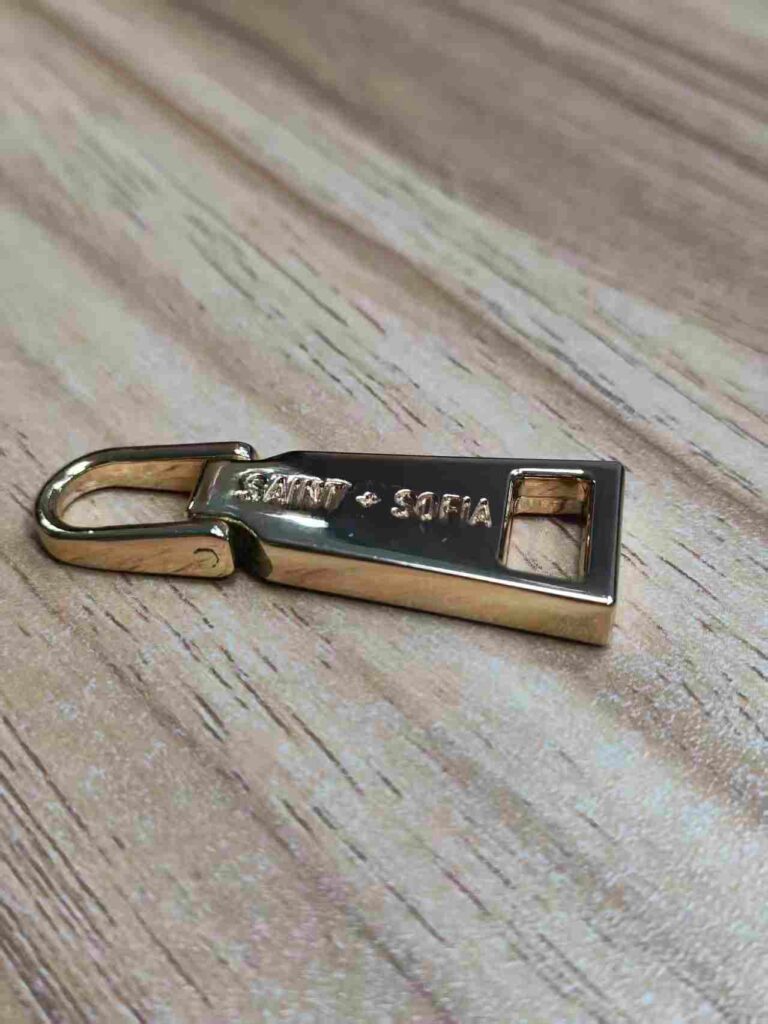
Best Metal Accessories for Making Leather Bags
Anyone who makes handmade leather bags knows that the leather determines the bag’s basic texture, while metal hardware directly influences its overall feel and lifespan. Many crafters focus solely on cutting the leather, stitching, and shaping the bag, neglecting the selection and maintenance of hardware. Poor-quality hardware can cause issues such as discoloration, rust, loose clasps, and scratches on the leather—problems that can completely ruin the finished look of a handmade bag.
Drawing on my years of hands-on experience in leather goods crafting, I’ll explain the practical use of leather hardware in plain, conversational language, covering four core dimensions: how to select hardware, quality assessment criteria, practical purchasing considerations, and environmental protection against damage. This course is packed with hands-on, actionable tips suitable for both beginners and seasoned crafters.
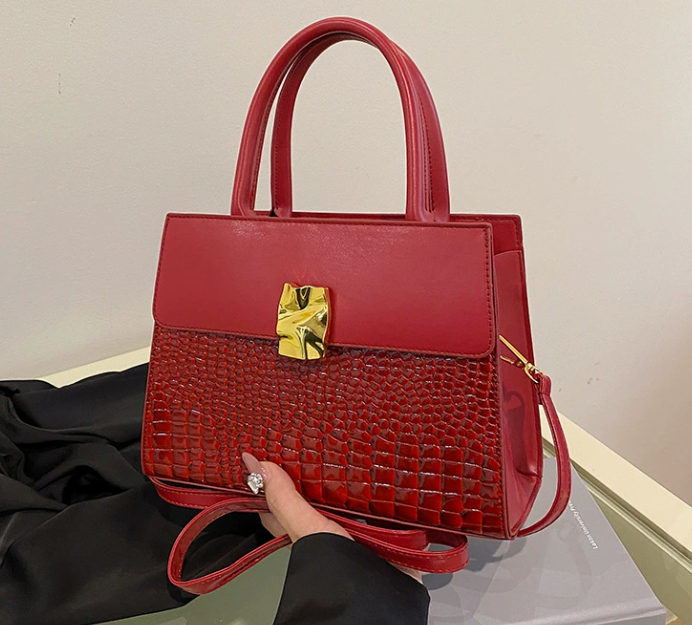
How to Choose the Best Metal Hardware for Leather Bags
Choose a Style Based on the Material’s Key Characteristics
Metal materials are the cornerstone of hardware quality, and there are significant differences in hardness, oxidation resistance, texture, and durability among various materials. When designing bags, we must select the appropriate materials based on the bag’s positioning, rather than blindly following trends.
I’ve compiled a comparison chart of the most common hardware materials used in leather goods. You can use this chart as a reference to quickly select the right hardware for your designs.
| Hardware Materials | Key Features | Applicable Package Types | Target Audience |
| 304 Stainless Steel | High hardness, high load-bearing capacity, waterproof and rust-resistant, resistant to warping, and resistant to everyday wear and tear | Commuter Bags, Tote Bags, Outdoor Bags, Heavy-Duty Backpacks | For long-term personal use, those seeking durability, and outdoor enthusiasts |
| Solid Brass | It has a smooth, warm texture and is highly malleable; the more you use it, the more it develops a vintage patina, giving it a sophisticated look. | Vintage Vegetable-Tanned Bags, Affordable Luxury Clutches, Custom-Made Collectible Leather Goods | Those who seek quality, create vintage handmade pieces, and are dedicated to long-term maintenance |
| Zinc Alloy | Wide variety of styles, full range of colors, great value, and exquisite design | Accessory bags, bags for short-term use, and clutch bags used infrequently | Beginner patternmakers, sample makers, and creators of affordable ready-to-wear bags |
| Iron | Extremely low price, average hardness, and highly prone to oxidation and rust | For temporary samples and low-end bulk orders only; not recommended for handcrafted premium items. | For temporary pattern-making without the need for high-end production |
When crafting high-end handmade leather goods, I prioritize two materials: 304 stainless steel and solid brass. These two materials offer excellent stability and strike a balance between texture and durability, making them suitable for the vast majority of premium bag styles.
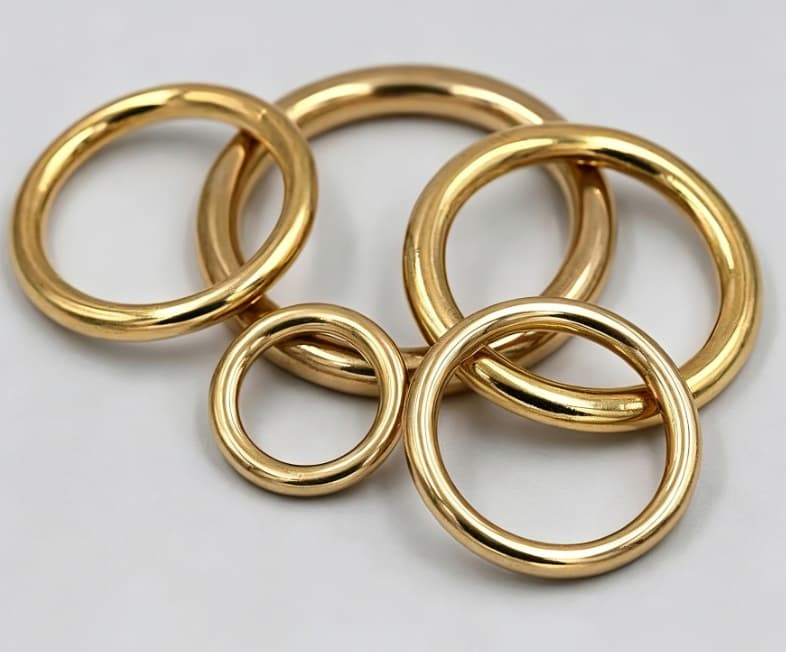 | 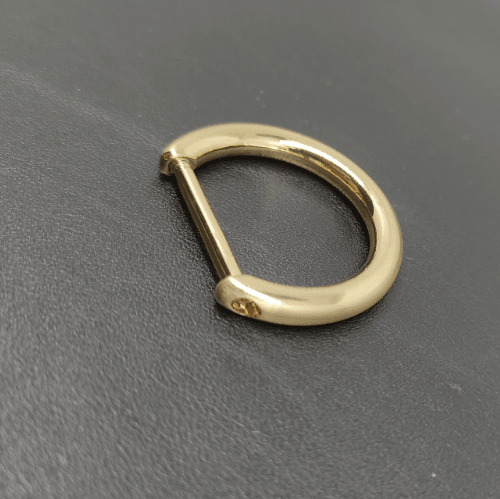 | 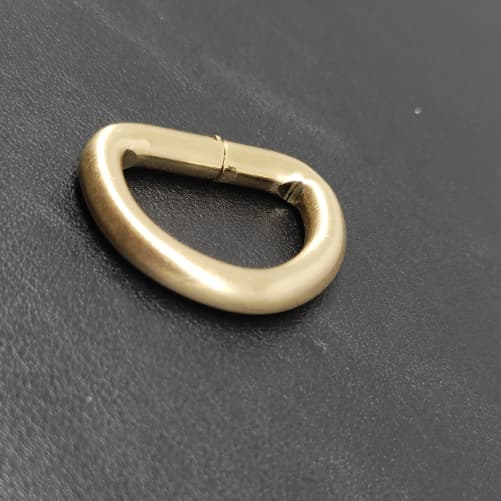 | 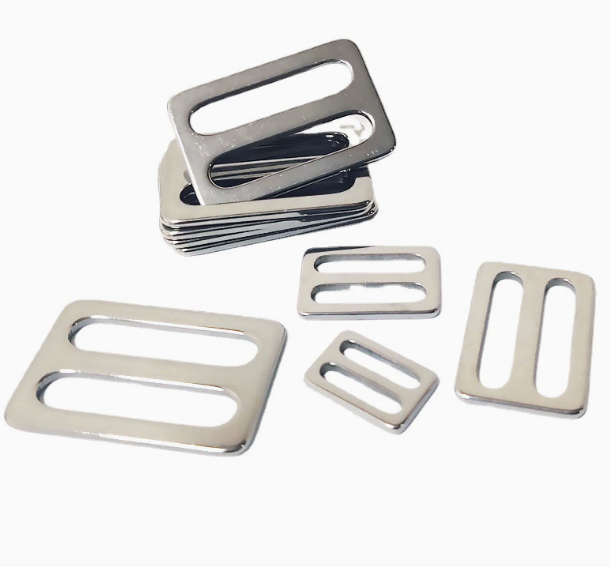 |
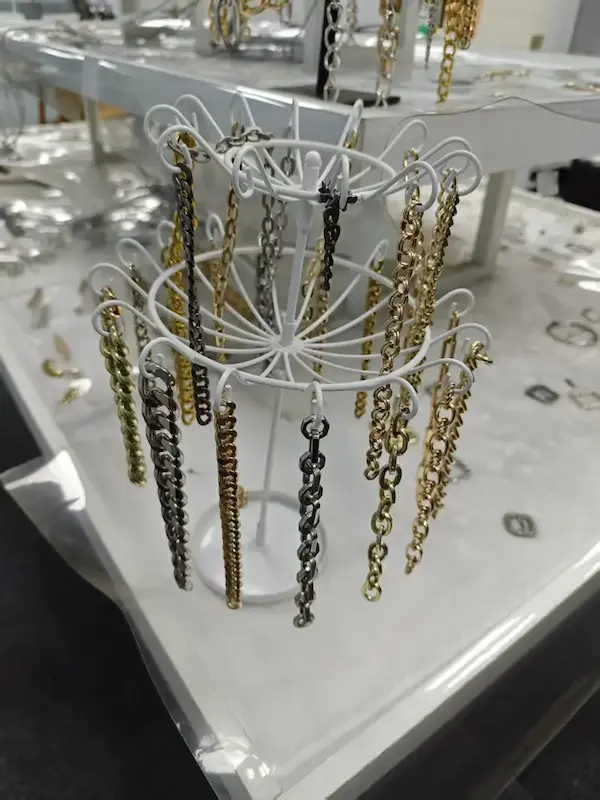
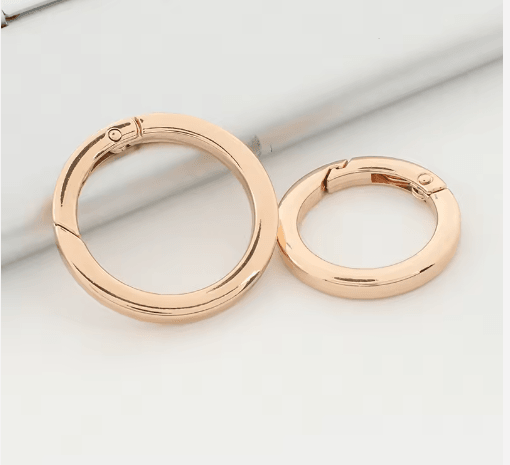
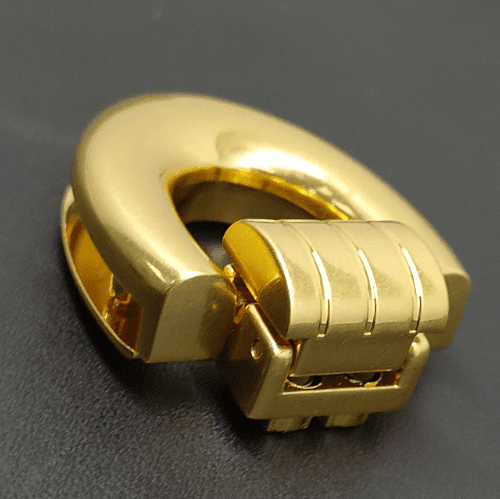
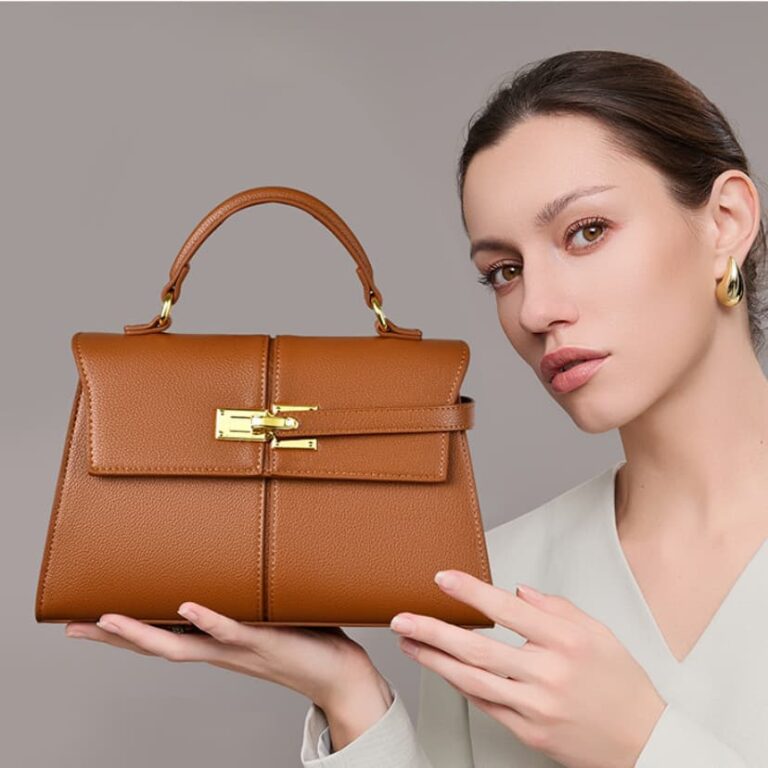
| Solid Brass material | Zinc Alloy material | Iron material | 304 Stainless Steel material |
Matching Hardware to the Functional Purpose of the Bag
Leather bags with different functions are subjected to entirely different levels of stress and used in vastly different environments. We must select hardware specifically tailored to each bag, rather than using a single set of hardware for all bag styles.
When crafting heavy-duty bags, special attention is given to reinforcing the D-rings, shoulder strap adjusters, and securing rivets. Since these bags carry significant weight on a daily basis, reinforced stainless steel hardware effectively prevents deformation, breakage, and detachment.
When crafting luxury-inspired mini bags, underarm bags, and clutches, prioritize lightweight, highly polished brass hardware. Since these bags are not designed to carry heavy loads, their elegance and overall aesthetic are paramount; lightweight, refined hardware better complements the bag’s style.
When crafting outdoor travel leather goods, avoid standard alloy hardware entirely and use corrosion-resistant stainless steel hardware throughout to easily withstand challenging environments such as rain, humidity, and temperature fluctuations.
Unify the five gold tones to match the leather style
The color and craftsmanship of the hardware directly determine the overall sense of sophistication of a bag. When designing bags, I always adhere to the principle of stylistic consistency to avoid a cluttered mix of tones that would detract from the quality.
Warm-toned vegetable-tanned leather, caramel, and brown cowhide are paired with antique bronze and natural brass hardware to create a natural, vintage, distressed look.
Cool-toned black, dark gray, and minimalist calfskin are paired with bright silver and matte gunmetal hardware, resulting in a clean, crisp, and sophisticated look.
The designer pairs light-colored and macaron-hued leathers, which have a thinner texture, with light gold and bright silver lightly polished hardware to avoid the heavy, antique bronze tones from overwhelming the fresh, delicate feel of the leather
Practical Assessment: What Makes the Best Hardware Components?
Assessing Details of Appearance and Craftsmanship
Assessing Details of Appearance and Craftsmanship
A close visual inspection quickly distinguishes high-quality hardware from low-quality hardware—no specialized instruments are needed (or: you need no specialized instruments)—because details best reveal shortcomings in quality
First, examine the plating process.
High-quality hardware features an even, translucent plating with no bubbles, pitting, or color variations on the surface, and a fine, soft luster. In contrast, low-quality hardware has uneven plating thickness, with some areas appearing shiny and others dull; upon close inspection, minor flaws are visible, and the plating will peel and fade after only a short period of use.
Next, let’s look at the edge finishing.
High-quality hardware is precision-polished with rounded edges, so it feels smooth to the touch with no burrs—it won’t scratch your hands or damage the leather. Cheap hardware has sharp, rough edges that can easily tear the leather during installation and will continue to wear down the bag over time.
Finally, examine the solder joints and seams.
High-quality hardware features flat, seamless solder joints that form a highly integrated whole, with no noticeable weld marks. Inferior hardware, on the other hand, has rough solder joints and visible gaps, which not only detract from the bag’s appearance but also make the hardware prone to loosening and breaking.
Hand Feel and Structural Assessment
A visually acceptable appearance is just the baseline; we must conduct hands-on testing. The feel and ease of use are the core criteria for high-quality hardware.
Weigh the hardware components directly
Manufacturers construct high-quality stainless steel and brass hardware solidly, giving it a uniformly substantial feel in your hand. Manufacturers typically make hardware that feels light and flimsy from hollow, thin material, and that hardware does not meet standards for load-bearing capacity and durability.
Thoroughly test the moving parts
Latches, clasps, and adjustment buckles must open and close smoothly without jamming, and the tension should be just right. Hardware with consistent damping has a longer service life; components that are too tight or too loose should be discarded immediately.
Check how well the base fits
High-quality metal bases are flat and uniform; once installed, they fit snugly against the leather surface without any gaps or翘边. Metal bases that do not fit properly will pull on the leather over time, causing it to deform and crack.
Testing for Wear Resistance and Oxidation Resistance
True top-tier hardware must withstand daily wear and tear and environmental corrosion. Here are two self-testing methods that even beginners can try right away.
Conduct a dry-wiping wear resistance test
Repeatedly wipe the surface of the hardware with a clean cotton cloth; high-quality hardware will not fade, leave marks, or become scratched. Poor-quality hardware will start to flake and lose its luster after just a few wipes, exposing the underlying base material.
Conduct a simple water resistance test
Gently wipe the surface of the hardware with clean water. Water droplets will roll off evenly on high-quality hardware, and after drying, there will be no water marks or rust spots. Ordinary alloy hardware is highly prone to water stains when wet and will oxidize and turn white within a short time.
With long-term use, high-quality hardware will only develop a natural patina and will not suffer from issues such as discoloration, rust, loosening, or warping—which is the ultimate criterion for determining the best hardware.
Key Considerations for Selecting Metal Fittings
Avoid the Low-Price Trap—Don’t Settle for Cheap Hardware
Many beginners choose hardware based solely on price, which is the most common pitfall. When it comes to leather goods hardware, you should remember the rule ‘you get what you pay for’ holds true—you will find that manufacturers almost always make ultra-low-priced hardware from recycled materials, apply only a thin plating layer, and produce it using simple manufacturing processes
These hardware parts may look fine at first, but after a month or two of use, they start to fade, rust, or even break—and that drags down the whole bag. So when we make our premium handmade bags, we stay away from cheap, unbranded hardware
That said, we also don’t blindly pursue high-priced imported hardware. Mid-range, reliable stainless steel and brass hardware fully meets our daily production needs, offering a better balance of value and durability.
Strictly control dimensions and specifications to ensure they match the proportions of the bag body
No matter how high-quality the hardware is, mismatched dimensions can completely ruin the project. Before production, I always double-check three key dimensional parameters.
Verify hole diameters
The diameters of rivet holes and grommet holes must match the thickness of the leather. Holes that are too large can cause the hardware to loosen and wobble, while holes that are too small can force the leather to split, compromising the bag’s structure.
Check the proportions of the hardware
Putting oversized hardware on a small bag looks clunky and awkward, while tiny hardware on a large bag just looks weak and cheap. So match your D-rings, clasps, and rivets to the size of the bag—that’s how you keep everything visually balanced.
Check the thickness of the hardware
We pair thick cowhide and workwear-style leather goods with reinforced hardware to ensure load-bearing stability; we pair thin lambskin and lightweight leather goods with slim hardware to prevent the hardware’s weight from compromising the bag’s texture
Unify the hardware style to avoid a cluttered, mismatched look
You will find many handmade bags look cheap—not because you use poor-quality leather or hardware, but because you mix and match hardware styles and colors in a mismatched and chaotic way.
For every bag we craft, we maintain a consistent gold color scheme and craftsmanship throughout the entire production process. We never mix gold clasps, silver zippers, or gunmetal-black rivets to avoid a disjointed overall style.
For minimalist bags, stick to matte, simple hardware. Vintage styles call for distressed brass, and luxury-casual pieces work best with high-polish hardware. Keep the style consistent across the bag, and it will instantly look more refined
Optimize the installation process to reduce the failure rate during production
Don’t pick hardware just because it looks good—keep your own experience in mind too. For beginners, it’s smart to choose pieces that are simple to put on and forgiving if you mess up.
For beginners, push-to-lock rivets and standard snap fasteners are good choices—they’re easy to install, hold well, and don’t leave much room for error. Complex threaded latches and intricately carved hardware, on the other hand, need specialized tools and skills. If you’re not careful, they can easily get bent or stuck, so it’s best to stay away from them when you’re starting out
When it comes to load-bearing parts, I only trust riveted or welded hardware. I don’t use glue or simple snaps for those—they tend to give out sooner or later, and I need things to stay solid
Protection of Metal Components Against Environmental Factors and Routine Maintenance
Damage to Hardware Caused by Common Environmental Factors
The aging, discoloration, and rusting of hardware are mostly not due to quality issues, but rather the result of long-term environmental erosion. We must identify four key harmful factors and take targeted protective measures.
Moisture is the number one enemy of hardware
Watch out for rainwater, sweaty hands, and humid air at home—they can eat away at the hardware plating and leave you with oxidation, tarnishing, or even rust
Prolonged exposure to direct sunlight accelerates the aging and cracking of the plating.
When temperatures go up and down, the base metal and the plating expand and contract at different speeds. Over time, this causes the plating to peel, flake, or even crack
Repeated temperature fluctuations can damage the plating on hardware
Alternating between high and low temperatures causes the base material and the plating to expand and contract at different rates, leading to peeling, flaking, and cracking.
Everyday chemicals can corrode hardware
Perfume, hand cream, disinfectant, and cosmetics leave residues that slowly eat away at the plating, leaving the hardware blotchy and discolored.
Preventive Care Measures for Finished Hardware
To extend the lifespan of hardware, it’s essential to implement preventive care measures to avoid damage at the source—these steps are simple and easy enough for even beginners to follow.
Once a bag is complete, apply a thin layer of specialized hardware protectant or leather care oil to the hardware surfaces to form an invisible protective barrier that shields against damage from air, moisture, and sweat.
When you’re not using your bag, keep it in a dust-proof cloth bag. This keeps the hardware away from damp air and helps slow down oxidation.
In daily use, make sure your hand cream and perfume are fully dry before you pick up your bag. This reduces the chance of chemicals corroding the hardware
Tips for Daily Cleaning and Minor Repairs of Hardware
If your hardware looks a little dull, oxidized, or stained, don’t rush to replace it. A quick clean and polish can usually bring back its shine.
For everyday care, just take a soft lint-free cloth or an eyeglass cleaning cloth and gently wipe off fingerprints and dust from the hardware. A quick wipe after each use goes a long way in slowing down aging.
If the hardware has already lost some of its luster or started to oxidize, try a gold-polishing cloth or a hardware cleaning paste. Gently rub it in—this removes the oxidation without harming the plating underneath..
If you spot a little rust, start by wiping the surface with a dry cloth to remove any dirt. Then apply a thin layer of maintenance oil, leave it for a while, and wipe it off. Whatever you do, don’t use sandpaper or anything hard to scrub it—that will strip the plating and ruin the hardware for good.
Key Maintenance Considerations for Hardware Made of Different Materials
Since hardware made of different materials has varying levels of wear resistance, we need to implement targeted maintenance to effectively extend the service life of these components.
| Hardware Materials | Key Areas of Protection | Frequency of Routine Maintenance | Prohibited Operations |
| 304 Stainless Steel | Just dust it regularly and keep it dry; no complicated maintenance is required. | Give it a quick wipe once a month | No special maintenance is required; avoid scratching with hard objects. |
| Solid Brass | Take special care to protect against moisture and oxidation; wipe dry immediately in humid environments. | Apply maintenance oil once every two weeks | Avoid frequent deep cleaning to preserve the natural patina. |
| Zinc alloy | Waterproof, abrasion-resistant, and resistant to chemical corrosion; protects thin plating layers | Simple Weekly Dust Protection | Do not soak in water; do not rub the plating vigorously. |
Conclusion
Metal hardware on leather bags may seem like a small detail, but it actually shapes the bag’s texture, look, and how long it lasts. Every leather craftsman needs to know how to choose the right hardware, judge its quality, pay attention to small details, and consider environmental impact.
We don’t have to chase after expensive imported hardware. With good material choices, careful craftsmanship, and proper daily care, we can make handmade leather bags that feel premium and last—pieces that stay timeless and grow more beautiful with use