TOP 5 high quality bag hardware manufacturer china
Bag hardware serves as both the backbone and the face of leather goods. The texture and durability of accessories such as D-rings, dog clips, buckles, chains, magnetic closures, and nameplates directly determine a bag brand’s perceived quality. China has already established three major high-end bag hardware industrial clusters in Dongguan, Foshan, and Wenzhou, giving rise to a number of source factories with comprehensive OEM/ODM capabilities.
Whether you’re a domestic leather goods brand, a cross-border bag seller, a design studio, or an overseas buyer, choosing the right manufacturer is far more important than simply comparing prices when seeking a stable supply of high-quality hardware. This article systematically explains the logic behind outsourcing the procurement of bag hardware by addressing four core issues and providing practical worksheets, helping buyers avoid common pitfalls such as failed prototyping, color discrepancies in mass production, plating discoloration, and delivery delays.
Are you looking for a Chinese bag hardware manufacturer for OEM/ODM production?
Many buyers initially struggle to distinguish between OEM and ODM, leading to inefficient communication and miscommunication of requirements. In the bag hardware industry, these two contract manufacturing models cater to entirely different client groups.
OEM Manufacturing (Based on Provided Materials or Samples)
The buyer provides drawings, physical samples, and dimensional specifications; the factory strictly follows the samples to create molds and carry out production, without participating in structural or aesthetic design.
Suitable for: Medium- to large-sized leather goods brands and established international trade buyers that have mature product lines and their own design teams, and are simply looking for a reliable contract manufacturer for mass production.
ODM Manufacturing (Custom Design and Manufacturing)
The factory has in-house product R&D, structural engineering, and industrial design teams that can provide solutions based on procurement needs, modify structures, optimize the feel of hardware openings and closures, and select appropriate surface plating processes.
Ideal for: Emerging luggage brands, independent designers, and new cross-border sellers who lack hardware structural design capabilities and are looking for a one-stop solution from the factory.
Is now the right time for you to start sourcing from domestic hardware factories?
First, use the table below to conduct a quick self-assessment:
| Demand Characteristics | Give priority to domestic OEM/ODM factories | Not suitable; we recommend purchasing from inventory first. |
| Product Requirements | Requires engraving of a custom logo, special dimensions, custom plating colors, or a special distressed finish | Standard hardware; no special modifications |
| Order Volume | Minimum order quantity of 500 pieces per style, with a plan for repeat orders | Small trial orders, small quantities of various items, and short-term one-time orders |
| Quality Standards | Requirements: Salt spray testing, environmental compliance reports, consistent color matching, and stable batch-to-batch consistency | With lower requirements for coating color retention and tolerances, this product is primarily aimed at the mass-market segment. |
| Long-Term Plan | To launch our own brand, we need to secure exclusive hardware designs to prevent market imitation. | No long-term product planning; frequent style changes |
Currently, more than 75% of the world’s mid- to high-end metal hardware for bags is produced in China, with the Pearl River Delta region home to the country’s leading high-quality hardware manufacturers. If your business meets the criteria listed on the left, working directly with manufacturers at the source is the best way to control costs and ensure consistent quality. If you’re just testing the waters with small batches, you can start by purchasing standard off-the-shelf products and then proceed with custom mold production once the products have been successfully validated.
How to Choose the Right Bag Hardware Manufacturer in China
The market is a mix of trading companies, small workshops, and large-scale source factories, and many buyers mistakenly treat middlemen as manufacturers. When selecting a high-quality bag hardware manufacturer, you can’t just rely on attractive sample photos; you need to screen candidates in stages.
Step 1: Identify Industry Clusters and Pinpoint Manufacturers
The regional division of labor among domestic manufacturers of high-end bag hardware is well-defined, with distinct differences in the craftsmanship specialties of different regions.
- Dongguan, Foshan (Guangdong): Specializes in affordable luxury and high-end leather goods hardware; excels in precision zinc alloy die-casting, vacuum electroplating, antique and distressed finishes, and complex-structure clasps; possesses strong ODM capabilities; suitable for mid- to high-end handbags and affordable alternatives to luxury leather goods;
- Wenzhou, Yiwu (Zhejiang): Strengths lie in standardized fasteners, stainless steel hardware, and high-volume, affordable components. With large production capacity and flexible minimum order quantities, these suppliers are well-suited for travel bags, outdoor backpacks, and budget-friendly luggage;
- Zhongshan, Jiangmen: Specialize in eco-friendly plating and lightweight aluminum alloy hardware, with high compliance with environmental standards for exports to Europe and the United States.
Step 2: Screen Factories Based on Five Core Dimensions
Production Chain: Prioritize in-house die-casting and stamping facilities, plus an in-house polishing workshop
Small workshops that rely entirely on outsourced processing find it difficult to maintain consistent quality control. High-quality factories must master at least the two core processes of forming and polishing; for electroplating, they may either handle it in-house or maintain long-term partnerships with designated suppliers to avoid ad-hoc, arbitrary changes in electroplating vendors.
Mold Development Capabilities
The greatest risk in custom hardware manufacturing stems from mold precision. Reputable manufacturers have dedicated mold shops, support CAD and 3D drawing integration, and clearly specify mold lifespan, mold costs, and fees for mold modifications. Many low-cost factories cut corners on mold quality, resulting in flash and dimensional deviations after just a few hundred pieces are produced.
Surface Treatment Process Capabilities
The key to the aesthetic appeal of hardware lies in electroplating: bright nickel, matte nickel, antique bronze, gunmetal black, light gold, vacuum IP plating, and nickel-free eco-friendly plating. High-end brands generally opt for vacuum plating, which offers far superior color retention compared to standard wet plating. When communicating with suppliers, be sure to clearly specify the type of electroplating process.
Quality Control Hardware Configuration
Standard equipment in a reputable, high-quality factory includes: a salt spray tester, a tensile testing machine, calipers, and a coating thickness gauge, capable of generating basic test data for each batch.
Flexible Order Adaptation
Distinguishing Factory Specializations: Large factories excel at handling stable, high-volume orders; medium-sized, precision-engineering factories are better suited for small-batch customization for small and medium-sized brands.
Comprehensive Factory Scoring Evaluation Form (For Use During On-Site or Online Procurement Verification)
| Evaluation Dimensions | Assessment Guidelines | Passing Criteria | Risk Warning |
| Factory Qualifications | Business License, Environmental Impact Assessment, Electroplating Partnership Qualifications; Distinguishing Between Manufacturers and Traders | Business scope includes the production of hardware products; we can provide real-life video footage of the factory premises. | We are unable to provide actual photos from the workshop; it is highly likely that this is a middleman. |
| Mold Making and Prototyping | Prototyping Lead Time, Mold Modification Costs, Sample Fidelity | Initial proofs are ready in 3–7 days, with up to two rounds of free minor adjustments included. | If you drive down the prototyping costs too much, the final production run is highly likely to fall short in quantity or deviate from the design. |
| Material Options | Zinc alloy, brass, stainless steel, aluminum alloy—can you provide material certificates? | Specify the raw material grade; avoid vague terms such as “alloy material” | When using recycled scrap material, porosity, breakage, and rust are likely to occur. |
| Electroplating Solutions | Electroplating / Vacuum Plating (optional); coating thickness, salt spray test results | For high-end models, vacuum electroplating is recommended; salt spray resistance ≥ 48 hours | Promises only an attractive appearance, without mentioning any corrosion resistance testing standards |
| On-Time Delivery Guarantee | Prototype Production Cycle, Mass Production Cycle, and Peak Season Production Scheduling Rules | Confirm the delivery date in writing and outline contingency plans in case of delays. | Verbal commitment to delivery dates; refusal to include them in the quote |
| Minimum Order Quantity (MOQ) | Minimum Order Quantity for Custom Items and Mixed-Order Policy for Multiple Styles | Matching is based on brand size, with no unreasonably high barriers to entry | If the MOQ is too low and the quote is extremely low, be wary of substandard workmanship. |
| After-Sales Service System | Standards for Reworking Defective Products, Rules for Determining Color Deviations | Clarify the AQL sampling standards and define liability for anomalies in mass production | Shifting blame and refusing to redo work or restock when quality issues arise |
Key Tips to Avoid Pitfalls
Don’t judge a factory’s capabilities based solely on the quality of its samples. Some small workshops meticulously craft one or two samples to attract customers, but then lower their polishing and plating standards during mass production, resulting in “good samples but poor actual products.” If possible, arrange a small-batch trial production before placing a formal order.
Why Choose Chinese Bag Hardware Manufacturers
Many overseas buyers compare manufacturers in Southeast Asia, such as Vietnam and Indonesia, but in the mid- to high-end bag hardware sector, Chinese manufacturing still offers irreplaceable overall advantages.
A complete upstream and downstream industrial chain, with the entire process handled under one roof
From metal raw materials, mold steel, polishing supplies, electroplating solutions, to packaging materials—all can be sourced locally within the industrial cluster. Metal mold making, die casting, CNC precision machining, hand polishing, surface electroplating, laser logo engraving, and assembly—all processes can be coordinated locally.
Overseas factories often have fragmented supply chains; outsourcing even a single process requires cross-regional transportation, which lengthens lead times and increases the risk of color discrepancies.
Wide Range of Manufacturing Processes to Meet Diverse Brand Positioning
Leading domestic hardware manufacturers can simultaneously meet three types of demand:
affordable standard hardware, mid-range electroplated hardware, and high-end vacuum precision-plated hardware. Whether for outdoor backpacks, business briefcases, affordable luxury women’s handbags, or niche designer leather goods, we can provide the appropriate manufacturing solutions.
Flexible Customization with Support for Both OEM and ODM
Hardware factories in Europe and the U.S. typically have extremely high minimum order quantities (MOQs), and making design changes is costly. Domestic factories, on the other hand, support the conversion of designer sketches into finished products, structural improvements, and fine-tuning of the feel of hardware openings and closings. They also offer small- and medium-batch customization options for emerging brands, making the entry barriers much more accessible.
Transparent cost structure, eliminating multiple layers of middlemen
We work directly with manufacturers at the source, bypassing foreign trade intermediaries and raw material wholesalers. Buyers can independently select raw material grades and plating specifications, keeping costs within budget, and enjoy a significant price advantage over overseas contract manufacturing for products of the same quality.
Compliant with Global Export Standards
High-quality factories in the Pearl River Delta generally provide SGS, REACH, RoHS, and nickel-free test reports, meeting environmental regulations in the EU, the U.S., and Southeast Asia, and catering to the export needs of cross-border e-commerce businesses and brick-and-mortar brands.
Quick Response and More Efficient Communication
With minimal time differences and real-time online communication, we provide faster feedback on drawing revisions, sample adjustments, and issue resolutions compared to overseas suppliers. Most factories have dedicated international trade teams that support English-language drawings and contracts to facilitate collaboration with global buyers.
TOP 5 high quality bag hardware manufacturer china
| Manufacturer | Location | Core Competencies | Featured Products | Special Services |
| Qifeng Hardware Products Co., Ltd. | Shiling, Huadu, Guangzhou | Zinc Alloy Die Casting, Mold Development | Metal Clasps, Bag Accessories | OEM/ODM, samples in 1–3 days, bulk orders in 10–25 days |
| OYC ACCESSORIES LTD | Shiling, Huadu, Guangzhou | Zinc Alloy Die Casting, Mold Development,High-End Customization | metal lettering logo,Brand Hardware Accessories | OEM/ODM, samples in 1–3 days, bulk orders in 15–25 days,Nickle free |
| Dongguan Changqin Hardware Co., Ltd. | Dongguan | Precision Die Casting, Multi-Color Electroplating | Rotating latch, lettered nameplate | Free design, 7-day prototyping, ISO/SGS/RoHS compliant |
| Xinyuan Hardware Factory | Guangdong | High-End Customization, Complete Set of Hardware | Luxury Handbag Hardware Sets | 100% on-time delivery, response time < 1 hour, custom logos/packaging |
| Guangzhou Huacheng Hardware Co., Ltd. | Guangdong | Mass Production of Standard Parts | Bag Frames and Fasteners | Customization of moderate complexity, suitable for mid-range brands |
Points Buyers Should Verify Before Selecting a Bag Hardware Manufacturer
Many procurement disputes stem from a lack of verification early in the partnership and a reliance solely on verbal agreements. Before placing a formal order, be sure to verify each item and ensure that key terms are included in the written quotation and contract.
Verification of Qualifications and Company Information
Verify business registration information to confirm that the company is a manufacturer rather than a trading company;
Inquire about electroplating-related qualifications; environmentally friendly electroplating projects require a compliant environmental impact assessment to avoid temporary production restrictions or shutdowns at the factory;
Request examples of collaborations on similar mid- to high-end bag hardware; give priority to manufacturers with long-term experience working with leather goods brands.
Verification of Product Technical Standards (Top Priority)
| Verification Items | You must confirm the details with the factory. |
| Raw Materials | Raw material grades (304 stainless steel, high-purity zinc alloy, etc.)—Do you refuse to accept scrap from these materials? |
| Dimensional Tolerances | Permissible Tolerance Ranges for Drawings; Fitting Standards for the Assembly of Hardware, Leather, and Webbing |
| Surface Treatment | Specify whether the plating is aqueous or vacuum plating, the coating thickness, the target salt spray duration, and whether an oil seal is required for protection |
| Appearance Standards | Criteria for evaluating color variation, pitting, sand holes, and scratches; retain confirmation samples |
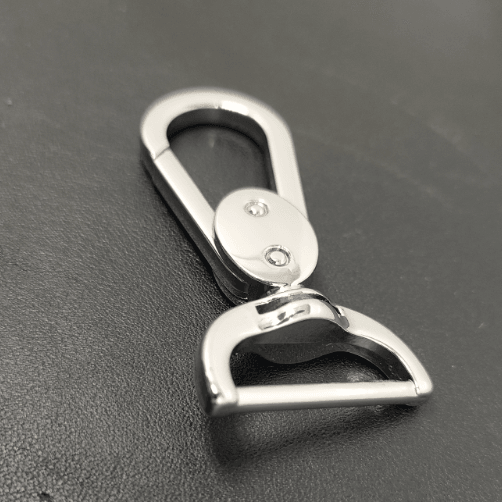
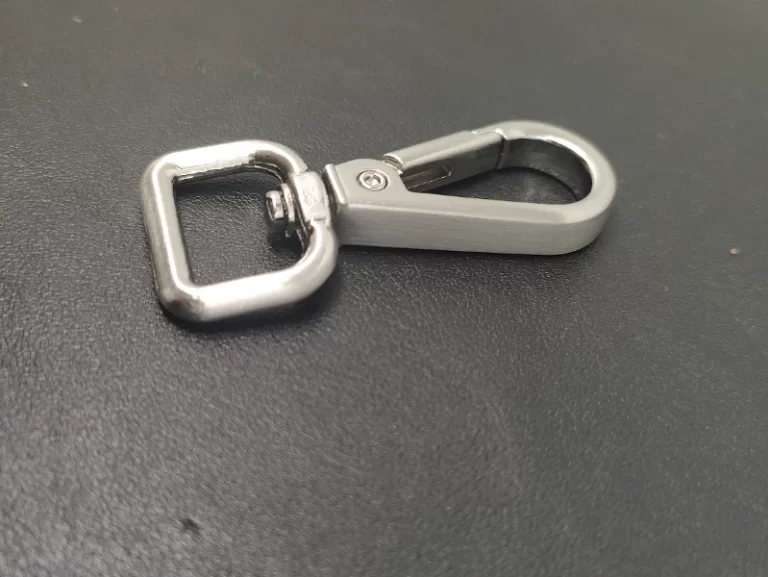
| Functional Testing | Dog Clip Load-Bearing Capacity, Magnetic Suction Force, Lock Opening/Closing Lifespan, and Spring Return Standards |
Verification of Mold and Intellectual Property Provisions
- Mold Ownership: After the purchaser pays the mold fee in full, does the purchaser own the mold, or does the factory
- Confidentiality Agreement: Have we signed an NDA that stipulates that we may not sell the customer’s exclusive designs to third parties
- Mold Modification Fees: How are minor adjustments and structural modifications billed separately?
- Prohibitions: We must clearly stipulate that we prohibit the factory from selling the same hardware to competing brands without our authorization
Advance Confirmation of Commercial Terms
- Validity period of the quote; mechanism for adjusting prices due to raw material cost increases;
- Minimum Order Quantity (MOQ); procedures for handling over- and under-orders;
- Payment terms; final payment schedule;
- Delivery location; party responsible for logistics;
- Delayed delivery; compensation for defective products; rework policies.
Confirmation of Sample and Inspection Rules
- Sample Sealing Process: After approving the pre-production samples, the supplier uses the sealed samples as the sole standard for all mass production;
- Inspection Timing: Do we permit mid-production inspections and pre-shipment inspections;
- Handling of Defective Products: In the event of batch-wide quality issues, the rework timeline and allocation of freight costs
Red Flags to Avoid in Procurement (Exercise Caution When the Following Situations Arise)
- Refusal to provide any material or plating test reports;
- Reluctance to sign a written contract, with all agreements made solely through verbal communication;
- Aggressive attempts to drive down prices, refusal to specify clear manufacturing standards, and evasion of testing requirements such as salt spray and load-bearing tests;
- Refusal to provide production videos from the factory premises and persistent evasion of on-site factory inspections;
- Promises of “lifetime color retention” without objectively explaining the normal oxidation patterns of metal hardware during regular use.
conclusion
For leather goods brands and cross-border buyers, bag hardware constitutes a long-term strategic supply chain and is not suitable for short-term, blind price comparisons. The complete process for finding high-quality OEM/ODM manufacturers of bag hardware in China is as follows: clearly define your OEM/ODM needs → identify industrial clusters based on your product positioning → screen factories across multiple dimensions → verify technical, commercial, and intellectual property terms item by item → conduct small-batch trial production for validation, and then initiate long-term repeat orders.
China’s top five high-quality bag hardware manufacturing clusters boast mature processes, complete industrial chains, and flexible customization capabilities. By conducting thorough preliminary due diligence and establishing standardized written agreements, brands can find stable hardware partners that align with their positioning. This approach minimizes issues such as hardware discoloration, assembly mismatches, and color variations between batches at the source, thereby enhancing the quality of finished bags and their market competitiveness.