A Guide to Selecting Materials for Luggage Hardware: An Analysis of the Advantages, Disadvantages and Suitable Applications of Zinc Alloy, Iron and Brass
In the B2B procurement process for the luggage, leather goods and handbag industries, the choice of materials for metal fittings directly determines product quality, service life, visual appeal and compliance with international trade regulations. Core components such as luggage clasps, dog clips, D-rings, square buckles, rivets, magnetic fasteners and metal labels vary significantly in terms of base material properties, manufacturing compatibility, cost ranges and environmental standards.
Many luggage manufacturers, branded leather goods companies and international buyers frequently encounter issues with inappropriate material selection during bulk procurement: the use of standard iron hardware in high-end leather goods lowers the product’s perceived quality; the selection of materials lacking sufficient toughness for outdoor luggage leads to easy breakage; materials failing to meet standards in international orders result in failure to pass ROHS environmental testing; and after-sales issues such as colour fading, deformation and rusting arise following bulk shipments.
Addressing the widespread confusion regarding material selection in industry procurement, this article focuses on the three most commonly used base materials for luggage hardware—zinc alloy, iron and brass—providing a comprehensive analysis across dimensions such as physical properties, surface treatments, suitability for specific product applications, environmental attributes, procurement costs and customisation potential. It offers professional, practical guidance for procurement teams at luggage manufacturers, leather goods designers, international trade buyers and processing plants, helping them avoid common pitfalls in material selection and match hardware requirements to luggage products of varying market positioning.
Key Considerations for Selecting Materials for Luggage Hardware (A Must-Read for Purchasing Professionals)
Before comparing the three main materials, it is important to first clarify the key criteria for procuring B2B luggage and bag hardware. All material selection decisions should be based on actual production and dispatch requirements, thereby avoiding issues such as indiscriminate selection, overpricing, and mismatched materials. The selected materials should be suitable for a full range of products, including mid-to-high-end leather goods, everyday women’s handbags, briefcases, outdoor luggage, pet carriers, and export-oriented luggage.
Structural performance
The primary focus is on the hardness, toughness, load-bearing capacity and resistance to deformation of hardware components. Load-bearing components such as D-rings, snap hooks and buckles require high hardness, whilst fixing components such as eyelet rivets and corner protectors demand even greater toughness and a precise fit; materials must be selected to suit the specific function of each component.
Compatibility with surface finishes
Different materials yield varying results when subjected to processes such as electroplating, brushing, spray coating and antique bronze finishing, which directly affect the overall texture of the luggage. High-end leather goods brands impose stringent requirements regarding the lustre, smoothness and uniform texture of metal fittings, whilst standard mass-market luggage can be produced using conventional materials and processes.
Environmental compliance
For international trade orders and bulk purchases by brands, particular attention must be paid to the environmental attributes of materials, whether they comply with ROHS standards, and whether they can pass third-party environmental testing, thereby mitigating the risks of export returns and failure to meet quality inspection standards.
cost and value for money
The cost of the material itself, processing costs and scrap rates directly impact the overall procurement budget. For high-volume, standard luggage and bag products, materials offering good value for money are prioritised, whilst for high-end bespoke and luxury leather goods, materials with a premium feel and high stability are preferred.
customisation and adaptability
When it comes to requirements for custom moulding, logo personalisation and non-standard hardware fittings, there are significant differences between materials in terms of moulding difficulty, moulding precision and customisation flexibility, enabling them to meet the needs of various personalised custom orders.
Zinc alloy luggage fittings: the most common material on the market
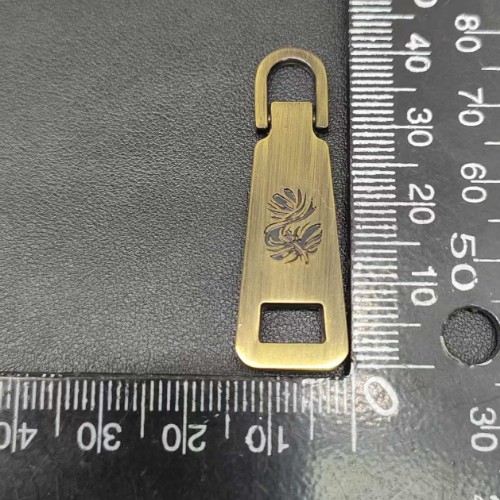
Zinc alloy is currently the most widely used base material for hardware fittings in luggage, leather goods and handbags. It is also the core material for our factory’s bulk supply and custom moulding services. Suitable for the vast majority of luggage categories and hardware fitting types, it offers a balance of performance, texture, value for money and customisability, making it the preferred choice for B2B bulk procurement. Standard zinc alloy materials are compatible with a full range of surface treatments, including electroplated nickel, antique bronze, black gold, electrophoretic black, brushed finishes and spray painting. They comply with ROHS environmental standards for international trade and meet various domestic and international quality inspection standards.
Key Performance Advantages
Zinc alloy offers excellent fluidity and high moulding precision, enabling the production of complex, intricately shaped hardware components. Whether standard D-rings, square buckles, half-round buckles or webbing fasteners, or uniquely designed luggage locks, magnetic fasteners, custom logo hardware tags and custom-shaped corner protectors, all can be produced in a single moulding process. The products feature high surface flatness and smooth, rounded edges, free from burrs or imperfections, meeting the exacting craftsmanship requirements of high-end leather goods.
In terms of physical properties, zinc alloy offers moderate hardness and balanced toughness, making it resistant to brittle fracture, deformation and loosening. It demonstrates excellent stability under daily use involving weight-bearing, opening and closing, and pulling. Following standard surface treatment, the products exhibit excellent resistance to corrosion and oxidation. Under normal usage conditions, they are unlikely to fade or rust, meeting the quality requirements for long-term use in luggage and bags. Furthermore, the eco-friendly zinc alloy material passes standard environmental testing, making it suitable for export and high-volume bulk orders from premium brands.
Products and Accessories Suitable for Various Scenarios
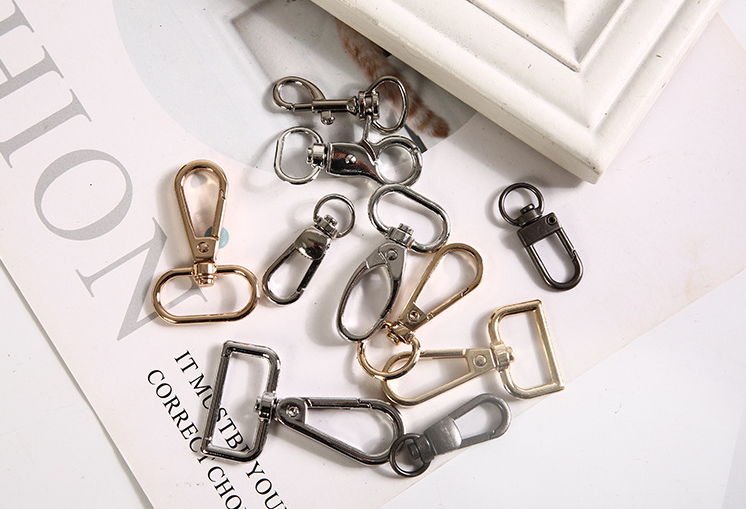
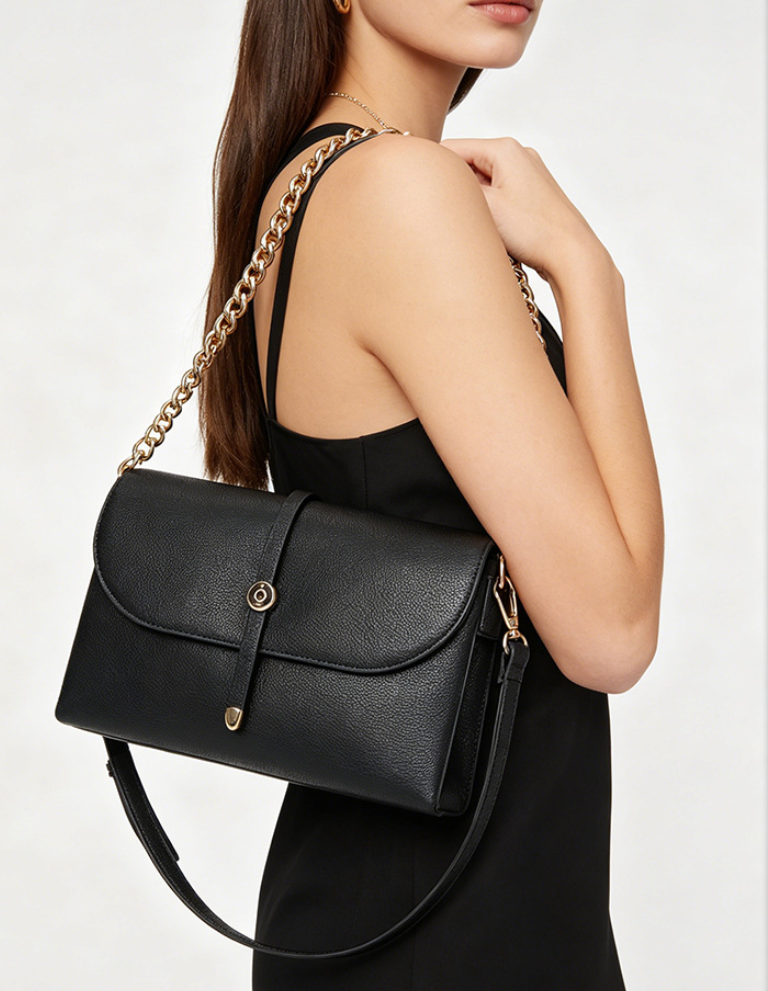
Zinc alloy is suitable for all categories of luggage and bag products, covering high-end luxury leather goods, business briefcases, branded ladies’ handbags, rucksacks, outdoor luggage, pet carriers and more. The core accessories it is suitable for include various bag clasps, magnetic fasteners, dog clips, hanging loops, webbing buckles, custom-shaped corner protectors, customised metal logos, bag bases and other hardware components with complex shapes and high requirements for appearance and texture.
Whether for the wholesale of standardised off-the-shelf hardware components or for bespoke hardware produced to customer drawings or custom moulds, zinc alloy offers a perfect solution. It delivers excellent custom moulding results, high stability in bulk production and a low scrap rate, making it ideal for long-term bulk procurement by brand companies and stable order partnerships in international trade.
Material Limitations and Procurement Considerations
Compared to iron and brass, zinc alloys have relatively average heat resistance and are not suitable for use in extremely high-temperature environments; however, they are perfectly suited to the everyday conditions encountered in standard luggage. Furthermore, inferior zinc alloys are prone to issues such as high impurity levels, susceptibility to oxidation and poor craftsmanship. When procuring, it is essential to verify that the source factory uses compliant base materials and to select zinc alloy raw materials that meet environmental standards and have consistent purity, thereby avoiding problems such as colour variation, colour fading and oxidation leading to blackening in batch production.
Iron luggage fittings: a cost-effective, essential material
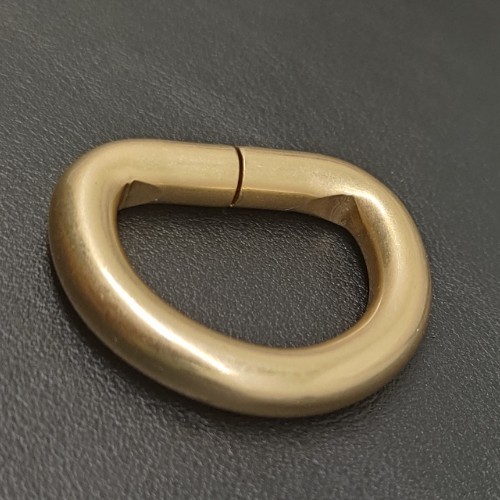
Iron hardware is a fundamental and widely used material in the luggage and bag industry. Thanks to its extremely low procurement costs and consistent hardness, it has become the material of choice for mass-market, affordable luggage and high-volume, essential components, and is also one of the core materials in our factory’s standard product range. Iron hardware benefits from mature manufacturing processes and is compatible with standard surface treatments such as electroplating, spray painting and brushed finishes. Offering outstanding value for money, it is ideal for use in mid-to-low-end luggage, work bags, basic outdoor bags and affordable leather goods.
Key Performance Advantages
Iron hardware offers high hardness and structural stability, with excellent tensile strength and wear resistance, as well as outstanding load-bearing capacity. It is ideal for manufacturing standardised hardware components that require high tensile strength and feature simple structures, such as standard D-rings, square buckles, eyelet rivets, standard webbing buckles, and luggage bases. With low raw material costs and a simple manufacturing process, bulk purchasing offers significant unit price advantages, enabling substantial control over the overall production costs of luggage. This makes it ideal for high-volume luggage products and the essential bulk procurement needs of manufacturing plants.
Furthermore, iron offers high malleability, ensuring precise dimensions and tight tolerances for standardised components. Bulk shipments exhibit high uniformity with no significant dimensional deviations, making it well-suited to the requirements of large-scale assembly line production. Consequently, it is the core material of choice for essential hardware components in the luggage industry.
Suitable Product and Accessory Applications
Iron hardware is best suited to affordable luggage and bags with simple structures, conventional designs and modest aesthetic requirements, including mass-market casual rucksacks, basic handbags, workwear bags, standard pet carriers and budget outdoor luggage. Suitable fittings are primarily standardised basic components, such as various conventional fasteners, rivets, bases and simple corner protectors – hardware that meets essential requirements, is simple in design and capable of withstanding high loads.
For luggage brands with limited budgets that prioritise value for money, low-end export orders and high-volume manufacturing plants, iron hardware is the optimal choice, as it minimises procurement costs whilst ensuring basic functional performance.
Material Limitations and Key Considerations for Avoiding Pitfalls in Procurement
The primary limitation of iron hardware is its relatively poor resistance to corrosion and oxidation. Iron fittings that have not undergone high-quality surface treatment are prone to rusting and discolouration in damp environments, which affects both the product’s appearance and its service life. Furthermore, iron has significant limitations in terms of formability; it cannot be used to produce complex, intricately shaped hardware components, and its suitability for customisation and precision fitting is far inferior to that of zinc alloy.
When selecting materials for procurement, we must ensure that we pair iron hardware with appropriate electroplating, electrophoresis, or spray coating processes to enhance its resistance to rust and oxidation, thereby avoiding post-sale issues arising from rust during subsequent use. Furthermore, we do not recommend iron for high-end leather goods, luxury luggage, or highly customised hardware fittings, as it tends to diminish the overall quality and prestige of the product
Brass Luggage and Bag Hardware: A Premium, Lightly Luxurious Material for Bespoke Designs
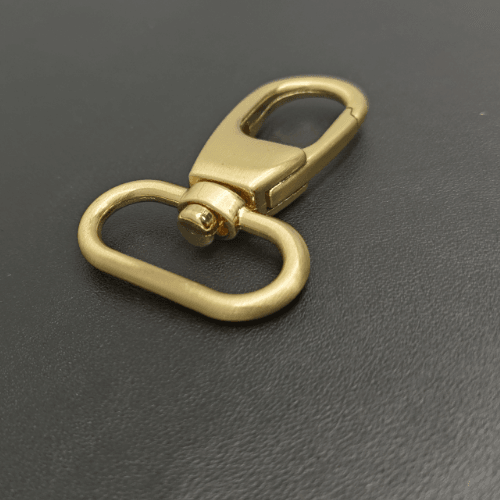
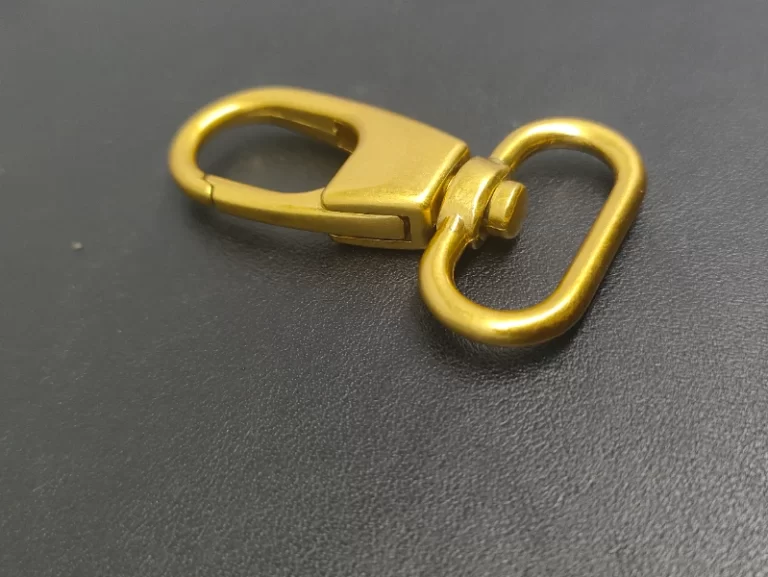
Brass is a premium base material in the luggage and bag hardware sector, ranking first among the three major materials in terms of texture, stability and durability. It is primarily targeted at the high-end, lightly luxurious, vintage-style and bespoke leather goods markets. It is frequently used for hardware components in high-end branded luggage, handcrafted leather goods, lightly luxurious briefcases and premium outdoor luggage, and is also the material of choice for high-end custom export orders. Brass offers exceptional adaptability to various finishing techniques; processes such as brushed, antique bronze and matt finishes produce sophisticated, natural effects, with a texture that far surpasses that of zinc alloy and iron hardware.
Key Performance Advantages
Brass offers excellent resistance to oxidation and corrosion. It is naturally rust-resistant, wear-resistant and oxidation-resistant, maintaining a consistent appearance over the long term without the need for complex surface treatments. Its service life far exceeds that of zinc alloy and iron hardware. The material is highly ductile with a fine grain; once processed, the surface is smooth and even with a refined texture. Finishes such as vintage distressing and brushed matt effects appear natural and sophisticated, offering a substantial feel and high visual distinction, thereby significantly enhancing the overall quality and premium value of luggage and accessories.
Furthermore, brass possesses outstanding environmental credentials, containing no harmful impurities. It effortlessly meets various domestic and international environmental testing standards, including the ROHS export standard, making it suitable for high-end export markets and premium bespoke orders from leading brands, with no risk of non-compliance during quality inspections. The material is highly stable, resistant to deformation and colour fading, and develops a natural patina over time, establishing it as the signature hardware material for high-end leather goods.
Product and Accessory Applications
Brass components target the high-end market segment primarily, serving premium products such as luxury women’s handbags, high-end business briefcases, bespoke leather goods, vintage-style luggage, premium outdoor accessories, and luxury leather accessories.. The range of fittings focuses on core components characterised by precision craftsmanship, aesthetic appeal and high durability. This includes premium magnetic clasps, exquisite buckles, customised brass logo plaques, high-end custom-shaped corner protectors, premium dog-clips, and light-luxury D-rings and square buckles – all serving as both decorative and functional hardware components.
Ideal for bag manufacturers targeting a high-end market segment and prioritising product quality and brand identity, as well as for high-end export customisation and small-batch premium orders, these components effectively enhance product differentiation and competitiveness.
Limitations of the Material and Procurement Recommendations
Brass has two primary drawbacks. First, its relatively high cost—both raw material and processing costs are significantly higher than those of zinc alloy and iron—makes it unsuitable for bulk procurement of affordable, high-volume luggage products. Second, its moderate hardness makes it unsuitable for manufacturing high-strength, heavy-duty fittings; instead, we use it primarily for decorative, high-end hardware components subjected to standard loads
When selecting materials for procurement, we must align our choices precisely with the product positioning. We prioritise brass for high-end premium and light-luxury bespoke orders, but we do not use it indiscriminately for mass-market, budget-priced luggage to avoid unnecessary cost overruns. For high-strength load-bearing fittings, we prioritise zinc alloy and iron materials to ensure operational reliability
Summary of Material Selection and Comparison for Three Major Luggage Hardware Materials (Procurement Quick Reference)
Taking into account the material properties, manufacturing suitability and application scenarios outlined above, and to assist procurement staff in making rapid selections and accurately matching order requirements, we have summarised the key parameters and procurement considerations for the three primary materials: zinc alloy, iron and brass.
Zinc alloy offers the best overall value for money, with balanced performance, comprehensive manufacturing capabilities, high customisation potential and compliance with environmental standards. It is suitable for over 90% of standard luggage, mid-range branded luggage and standard export orders. As the most versatile material with the highest procurement volume, it is ideal for standardised bulk purchasing, customised irregular shapes and moulded production of various hardware components.
Iron materials offer high cost-effectiveness, featuring high hardness and low costs. They suit only standard hardware with simple structures, budget-friendly high-volume luggage, and workwear luggage. They work best for bulk procurement with limited budgets, though we must pay particular attention to the quality of surface anti-corrosion treatments.
Brass delivers a premium feel, offering the best durability, aesthetics, and environmental credentials, though it comes at a relatively high cost. It is suitable only for high-end, light-luxury items, bespoke leather goods and premium export orders, focusing on enhancing product quality and achieving differentiation in the high-end market.
Key Tips for Avoiding Pitfalls When Selecting Materials for B2B Luggage Hardware
1.Avoid selecting materials based solely on price
Many buyers focus exclusively on low prices, opting for inferior zinc alloys and thin-gauge iron hardware. Once shipped in bulk, these materials are prone to issues such as colour fading, rusting, deformation and breakage, thereby increasing after-sales costs and damaging the brand’s reputation. We must align our selection of materials and manufacturing processes with the product’s positioning
2. Prioritise eco-friendly materials for export orders
For export orders, it is essential to confirm in advance that the materials comply with ROHS environmental standards and that relevant environmental testing certifications can be provided. This prevents returns, seizures or fines resulting from non-compliant materials. All our standard materials support eco-friendly processing and meet international export standards.
3. Select materials precisely to match the function of the fittings
For high-strength load-bearing fittings—such as load-bearing snap hooks and large D-rings—we recommend prioritising high-hardness zinc alloy or iron materials. For decorative high-end fittings and logo plates, we recommend prioritising zinc alloy or brass materials to balance aesthetics and practicality
4. For custom orders, zinc alloy moulding is the preferred choice
For irregular shapes, complex designs and customised hardware with personalised logos, zinc alloy is the preferred material due to its low moulding difficulty, high forming precision and excellent batch consistency. It delivers far better value for money than brass customisation, and its texture perfectly meets the requirements of mid-to-high-end products
Advantages of Our Source Factory’s Material Selection and Supporting Services
As a specialist source factory for luggage and leather goods hardware, we specialise in luggage hardware fittings, leather goods hardware and bespoke handbag hardware. Our core product range covers the full spectrum of accessories, including luggage clasps, dog clips, webbing buckles, eyelet rivets, corner protectors, hanging loops, D-rings, square buckles, magnetic clasps, metal nameplates and customised logo hardware. Utilising three mainstream base materials—zinc alloy, iron and brass—combined with mature processes such as nickel plating, antique bronze, black gold, electrophoretic black, brushed finish, spray coating and hypoallergenic eco-friendly plating, we support ROHS-compliant environmental treatment for export, comprehensively meeting all types of B2B procurement requirements.
The factory supports a full range of business models, including stock wholesale, customisation based on provided designs, and bespoke moulding, catering to hardware requirements for all categories of luggage and bags, including high-end leather goods, rucksacks, ladies’ handbags, briefcases, outdoor luggage, and pet carriers. All products meet hardness standards, feature precise dimensions, consistent craftsmanship and colourfastness, and pass official environmental testing. We specialize in brand bulk procurement and long-term export partnerships, where we provide buyers with one-to-one services. We match materials, align processes, and craft bespoke solutions to solve procurement challenges—including material selection difficulties, customization hurdles, quality inconsistency, and export-standard non-compliance.