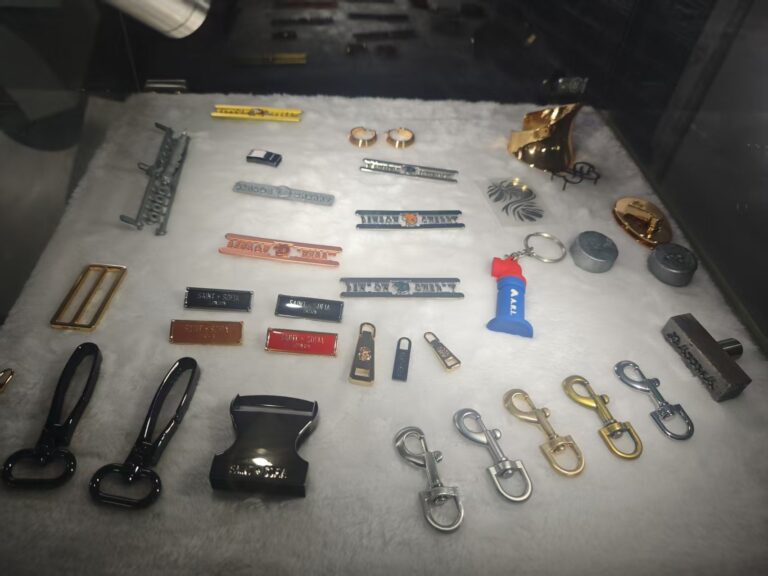
The key to the longevity of plating on luggage hardware: just how important is that Lacquer?
The somewhat unusual name ‘ Lacquer’ actually refers to the final, crucial ‘protective coating’ applied to electroplated products. Essentially a transparent protective coating, it is applied to the surface of the electroplated layer to significantly enhance the product’s durability and tactile feel.
A demonstration of the importance of Lacquer
Core protective functions
1.Corrosion and discolouration resistance
This is the core function of contact oil. It isolates the plated layer from the external air and moisture, effectively preventing metal oxidation, rusting or discolouration. Some high-performance contact oils can even pass salt spray corrosion tests lasting up to 600 hours
2.Chemical Resistance
In everyday use, products inevitably come into contact with substances such as sweat and hand sanitiser. Lacker oil protects the plating from being eroded by these substances; for example, some products can withstand 50% nitric acid for over 480 seconds.
3.Scratch and wear resistance
Electroplated layers are typically very thin and prone to scratching. The transparent film formed by Laka Oil is extremely hard; even when scratched with a 3H–4H pencil, it leaves no marks, significantly enhancing the surface’s scratch resistance
Enhancing aesthetics and texture
Long-lasting shine as new
High-quality lacquer oil has excellent transparency and high glossiness, which can make the metallic luster on the electroplated surface more rich and profound.
Say goodbye to fingerprint troubles
Have you noticed that some cheap metal products leave ugly fingerprints when touched? The surface of the sealed oil lacquer products can effectively prevent fingerprints from adhering, keeping the products always clean.
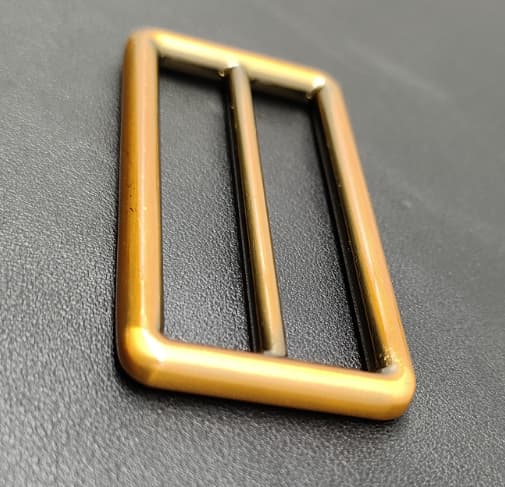 | 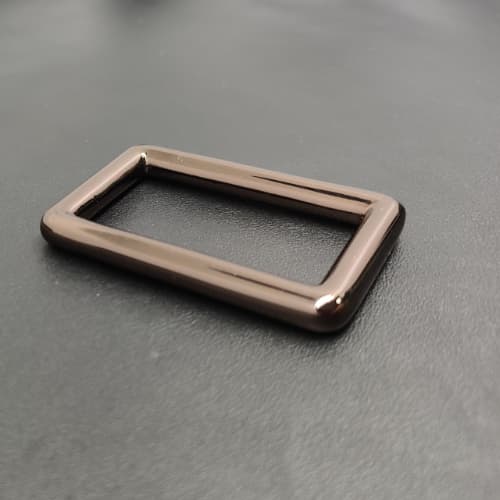 | 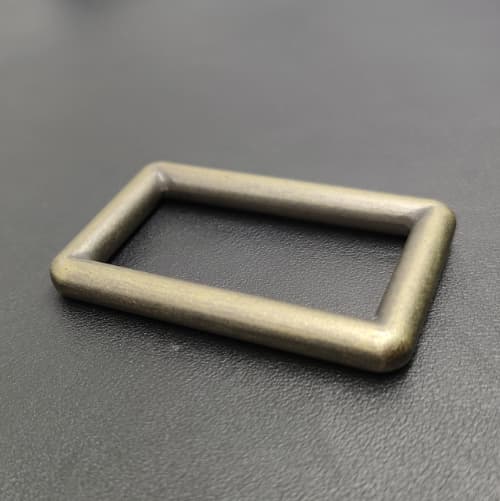 |
How to choose the right Lacquer?
There are many kinds of lacquer in market. To meet different product needs, each one brings its own set of properties. Take a quick look at the table below to get a sense of the differences.”
| Characteristic Classification | Key features | Typical Application Cases |
| High-hardness type | With a hardness of 3H to 4H, it offers excellent scratch resistance. | Products such as mobile phone cases and high-end bathroom fittings, which require extremely high surface wear resistance. |
| Highly corrosion-resistant | It can withstand salt spray for over 600 hours and offers outstanding resistance to acids and alkalis. | Bathroom accessories, outdoor lighting and marine hardware that are constantly exposed to damp conditions. |
| Standard Economy | It offers a good overall balance of performance, dries quickly (just 20 minutes with hot air at 50–60°C), and offers excellent value for money. | Everyday small hardware items such as standard luggage fittings, trimmings and zip pulls. |
| Special Performance Type | Designed for specific requirements, such as resistance to artificial sweat (suitable for spectacles and jewellery) or excellent flexibility (suitable for locks that need to bend). | Spectacle frames, bendable metal fasteners, etc. |
It could be said that electroplating gives products their attractive appearance, the lacquer ensures that this beauty endures. Choosing the right lacquer is a crucial step in guaranteeing product quality and longevity.
I hope that this information can help you. If you have a specific application in mind (such as for luggage hardware or bathroom fittings), I can offer you more tailored advice..
The difference between high-corrosion-resistant Lacquer and standard economy Lacquer
Put simply, the key difference between the high-corrosion-resistant and standard economy versions of Laka oil lies in their maximum performance capabilities and price points.
To use an analogy:
Basically, the standard economy version is just like your go-to pair of sneakers. You know – comfy, does the job well enough, and honestly, you can’t beat the value.”
On the other hand, if you go for the high-corrosion-resistant version, think of it as proper mountaineering boots. They’re designed to take a beating in harsh conditions, perform way better, but unfortunately, you’ll have to pay a bit more for them
Below are the specific differences between them across five key dimensions
1. Corrosion resistance (the key distinguishing feature)
High corrosion resistance
This is its speciality. Salt spray resistance typically exceeds 200 hours, with high-quality variants reaching 600 hours or more. Its resistance to acids and alkalis also far exceeds that of the standard grade.
Suitable applicationsDamp coastal environments, or applications involving constant contact with water or chemicals (e.g. bathroom fittings, outdoor lighting, marine hardware).
General-purpose, economical type
Meets basic requirements, with salt spray resistance typically around 24–48 hours.
Suitable applications: Dry indoor environments, or everyday hardware (e.g. bag fasteners, zips, jewellery).
2.Hardness and Wear Resistance
High Corrosion Resistance Type
To maintain performance in harsh environments, the paint film is typically denser and harder, offering superior wear and scratch resistance.
General-Purpose Economy Type
Moderate hardness, sufficient to withstand minor friction during normal daily use, but less scratch-resistant than the high-performance type.
3. Cost and Price
High Corrosion Resistance Type
As it utilises more expensive special resins and additives, the price is significantly higher. It offers high-end performance and a long service life.
General-Purpose Economy Type
This is the market mainstream, offering an affordable price. It provides basic performance and good value for money.
4. Application and Process Requirements
High Corrosion Resistance Type
Requires high standards of coating thickness and uniformity; may require specific curing temperatures and times; demands greater precision during application.
General-Purpose Economy Type
Offers greater process flexibility and dries quickly (dries in approximately 20 minutes under hot air at 50–60°C); suitable for high-speed production.
5. Applications
High corrosion resistance
Suitable for high-specification, high-value-added products, such as luxury bathroom fittings, automotive exterior trim, outdoor lighting and marine hardware.
General-purpose, cost-effective
Suitable for high-volume, cost-sensitive products, such as standard jewellery, luggage fittings, zip pullers and internal components for small electrical appliances.
Summary table for direct comparison
| Comparison | General-purpose, economy grade | High corrosion resistance |
| Salt spray resistance | ~24–48 hours | 200–600+ hours |
| Coating hardness | Medium (approx. 2H) | High (3H–4H) |
| Chemical resistance | Fair (not resistant to strong acids and alkalis) | Excellent (resistant to acids, alkalis and perspiration) |
| Price/Cost | low | high |
| Application environment | Indoor, dry, normal use | Outdoor, damp, harsh environments |
How should you choose lacquer?
First, consider where the product will be used, then look at the price
Choose the standard economy grade: if your products are mainly sold in dry inland regions, are used for general decorative purposes (such as decorative elements on mobile phone cases), are sold at a low price, and do not require particularly stringent rustproofing. This option offers better value for money.
High corrosion resistance: If your products are sold in coastal cities or are intended for use in bathrooms or outdoors, where they need to withstand prolonged exposure to moisture and salt; or if your products are high-value and your brand is positioned at the premium end of the market, then choosing a high corrosion resistance option is the safer choice to ensure a long service life and protect your brand reputation.
There are four main methods for testing paint film hardness, of which the most common and intuitive is the pencil hardness test (this is also the origin of the ‘H’ grades we mentioned when discussing lacquer). The pendulum impact test, on the other hand, is a more precise method used in laboratory settings.
Each of these methods has its own focus, as detailed below:
1.Pencil Hardness Test
This is the most widely used method in industry; it is simple to carry out and inexpensive, and is the direct source of the hardness designations such as “H” and “2H” that you encounter in everyday life.
- Test principle: Using a set of drawing pencils of known hardness (ranging from the softest 9B to the hardest 9H), the pencil is pushed forward approximately 6.5 mm across the paint film at a fixed pressure (7.35±0.15 N, approximately 750 gf) and angle (45°). The paint film surface is then examined for any scratches or abrasions.
- Result Interpretation: The hardness of the hardest pencil that does not scratch the paint film is taken as the hardness of the coating.
- Advantages: Quick and economical, requiring no expensive equipment; suitable for production sites and QC spot checks.
- Disadvantages: Results are significantly influenced by operating technique; human judgement involves a degree of subjectivity; not suitable for very soft or rough surfaces.
- Compliance with standards: GB/T 6739-2022, ISO 15184:2020, ASTM D3363-22.
2.Pendulum Hardness Test
This is a more precise and objective testing method used in laboratories. Rather than directly scratching the paint film, it measures the film’s ‘damping’ or ‘cushioning’ ability in response to minute vibrations.
Test principle: A pendulum with two steel balls embedded at its base is gently placed on the surface of the paint film and allowed to swing. As the pendulum swings, it gradually slows down due to the viscoelastic properties of the paint film (i.e. damping). The softer the paint film, the greater the resistance to the pendulum, and the faster it comes to a stop; the harder the paint film, the longer the pendulum continues to swing.
Two mainstream methods:
- König Method: Measures the time (in seconds) taken for the pendulum’s amplitude to decay from 6° to 3°.
- Persoz Method: Measures the time (in seconds) taken for the pendulum’s amplitude to decay from 12° to 4°. The Persoz method uses a heavier pendulum with a longer oscillation period, making it more sensitive to softer coatings.
- Interpretation of results: Expressed in seconds (or number of oscillations). The longer the duration, the higher the hardness.
- Advantages: Objective, accurate results with good repeatability; suitable for R&D and product quality control.
- Disadvantages: Expensive equipment, relatively complex operation, and lengthy testing time.
- Compliance with standards: GB/T 1730-2007, ISO 1522:2012, ASTM D4366.
A visual comparison of the two testing methods
To help you understand, I have put together a comparison table of these two most common testing methods:
| Comparison criteria | Pencil hardness test | Pendulum hardness test |
| Core Principle | Scratch the paint film with a pencil lead of a specified hardness | Measure the time taken for the pendulum to cease swinging on the paint film |
| Dimensions of comparison | Pencil Hardness Test | Pendulum Hardness Test |
| Presentation of results | H hardness grades, such as H, 2H and 3H | Number of swings (e.g. 150 seconds) |
| Key benefits | ✅ Quick! Results in seconds ✅ Simple equipment, extremely low cost ✅ Results are clear and easy to communicate | ✅ High accuracy and objective results ✅ Sensitive to minute differences in hardness ✅ Automatic recording, eliminating human error |
| Main drawbacks | ❌ Results depend on the operator’s technique ❌ Manual assessment of scratches is subjective | ❌ Expensive and bulky equipment ❌ Long testing time (several minutes) ❌ Not suitable for rapid on-site spot checks |
Summary
Returning to your original concern regarding the paint:
Now, when we say the General Economy range has 2H hardness, here’s what that actually means. We run a test called the pencil hardness test – you take a 2H pencil, press it on there with normal pressure, and if the paint film doesn’t get scratched, that’s your 2H rating
ow, for the high-corrosion-resistant type, we claim a 3H to 4H hardness. That means it has to stand up to scratching from a harder pencil lead. So what does that tell us? It means the paint film has a denser, cross-linked structure – which makes it not only more scratch-resistant but also more resistant to corrosion. And when our engineers develop these products, they don’t just guess. They use the pendulum hardness test to fine-tune the formulation precisely and get that optimal performance.”