How to make of push locks for handbag
Push locks are widely used in luggage, furniture, precision electrical appliances, and other fields; they feature a compact design but require extremely high precision. For this product, there were no existing physical references available; the redesign and customization were based solely on the design logic and reference dimensions of comparable models. The entire production process—from modifying the drawings, obtaining customer approval, and validating prototype production to the mass production of the final product—is a seamless, interconnected series of steps. This article comprehensively outlines the standardized production process for push-button locks based on the requirements of this customization project, while also summarizing common quality issues encountered during mass production to provide a practical basis for quality control in batch production.
Revised Design Drawings and Client Approval
Structural Design Optimization Based on a Reference Model
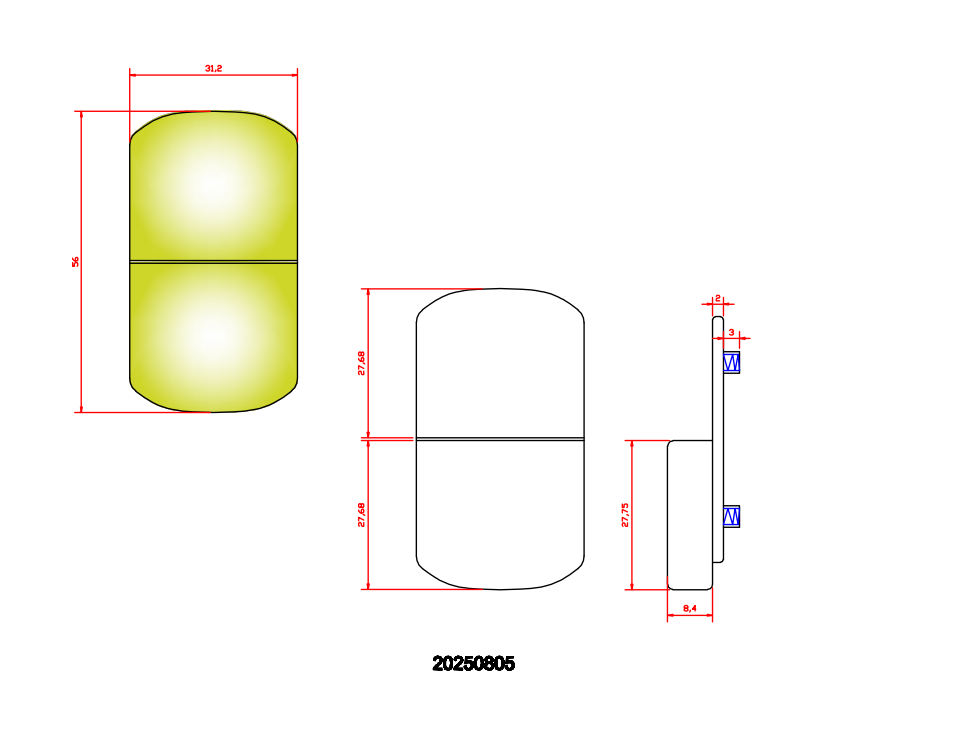
Since there was no physical reference available for this production run, the team relied entirely on the proven design of a similar push-button lock and standard dimensions to carry out the redesign. Based on the customer’s core requirements, we made targeted adjustments to the lock body’s key structural elements. We completely revised the structure of the lock body’s connection points from the original curved design to a straight-line design.
The primary objective of the structural modifications is to align with the assembly structure and aesthetic requirements of the customer’s new product. The straight-line connection improves the fit of the lock body, simplifies subsequent assembly processes, and meets the overall design requirements of the customer’s product. Throughout the redesign process, we maintained the original lock body’s core parameters—including opening and closing travel, spring-return mechanism, and locking force—to ensure the product’s basic functionality remains unchanged.
This confirmation step is crucial for preventing non-conformities in subsequent prototype and mass production runs. If the leather-clamping structure were modified in tandem with the straight-line connection, it would directly lead to issues such as loose clamping, misalignment, and inadequate clamping of the leather. We simultaneously provided the revised 2D dimensional drawings, clearly annotating all key parameters, and submitted them to the client for review and confirmation to finalize the design and eliminate any design deviations.
Finalized Drawings: Sealed and Filed
Once the customer confirms that the structure, dimensions, and clamping methods in the drawings are all correct, we formally finalize the drawings and archive them. The drawings clearly specify key specifications such as dimensions at straight-line joints, tolerances for the clamping slots, overall external dimensions, and assembly hole positions. Subsequent prototype production, mold debugging, and mass production are all carried out strictly in accordance with the finalized drawings, which serve as the uniform basis for production.
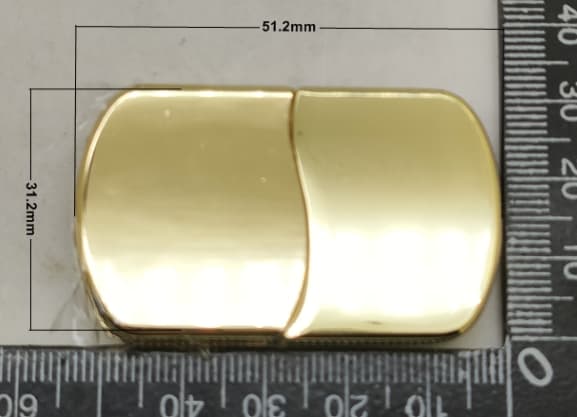 | 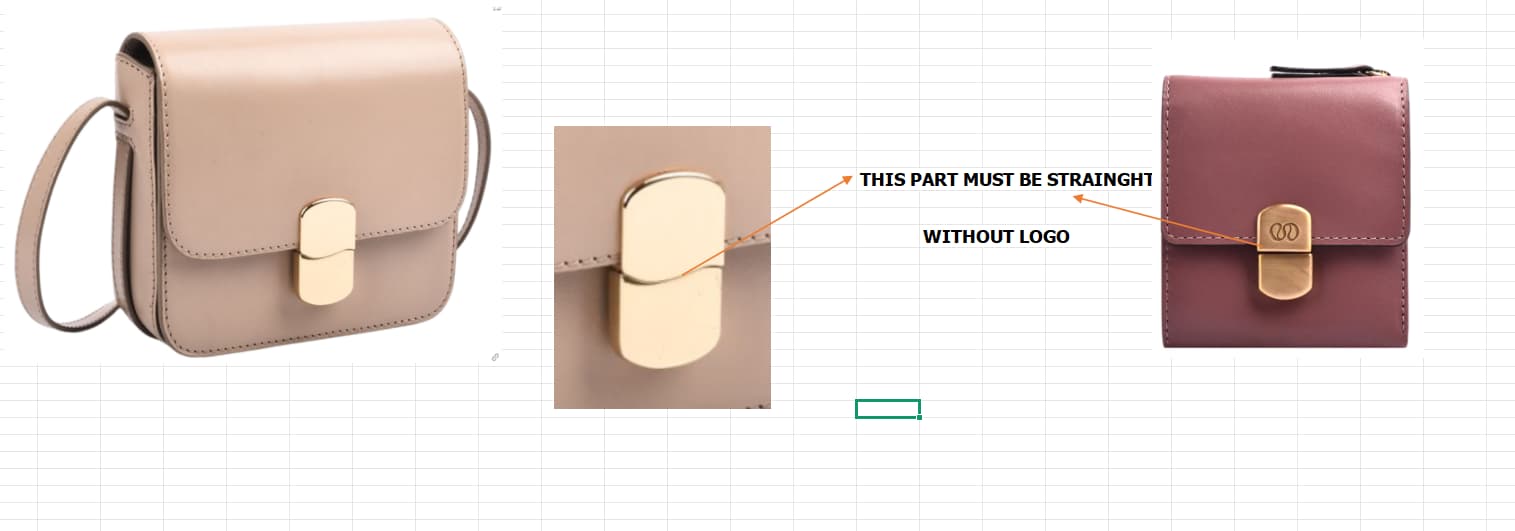 |  |
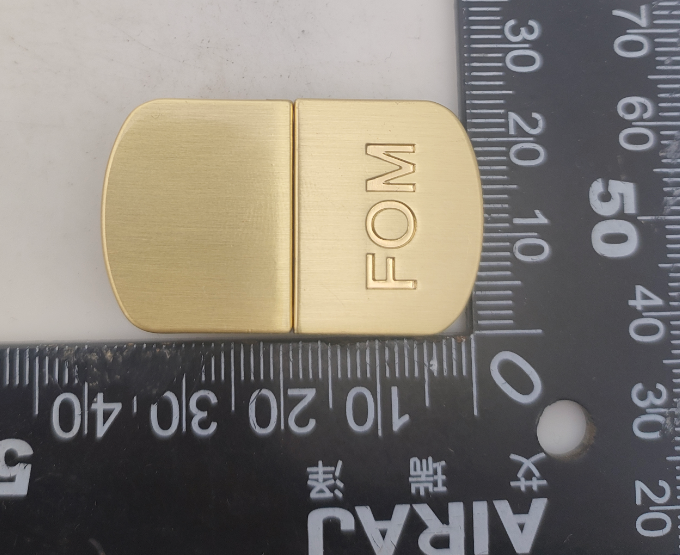
| Original design Lcok | client required design | artwork |
Prototype Manufacturing and Comprehensive Performance Testing
Once the drawings have been confirmed to be accurate, the workshop begins small-batch prototype production. Prototypes serve as the key link between the design drawings and mass production. Through multi-dimensional testing, we verify the feasibility of the revised design, finalize the mass production process standards, and prevent mass scrap.
Precise Measurement of Template Dimensions
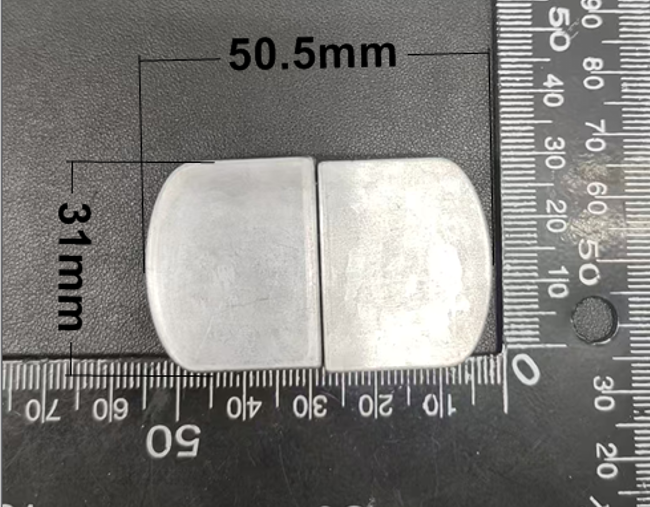
Once prototype production is complete, quality control personnel immediately conduct full-dimension inspections. We focus on measuring the length, width, angles, and flatness of straight joints, and verify the depth and width of the slots for the clamping material. At the same time, we comprehensively inspect all critical dimensions, including the overall shape of the lock body, mounting hole positions, and latch travel.
We strictly evaluate compliance against the tolerance standards specified in the drawings and record each set of measured data. As soon as any dimensional deviation is detected, we immediately adjust the production process and correct structural errors to ensure that all prototype dimensions fully meet the design requirements.
Product Functionality Testing
After the dimensions passed inspection, we conducted specialized functional testing. Our staff repeatedly pressed the lock body to test the smoothness of opening and closing, the rebound speed, and the stability of the locking mechanism. We focused on verifying whether the redesigned straight-line connection caused any issues such as jamming, sticking, weak rebound, or locking failure.
We simulated real-world usage conditions throughout the entire process and conducted multiple cycles of push-to-lock testing to identify hidden issues such as structural interference and improper clearance. This ensures that the redesigned push-to-lock mechanism operates smoothly, locks securely, and springs back responsively, meeting all functional requirements for normal use.
After passing the functional tests, we conduct real-world assembly tests. Our staff match the sample lock bodies with the corresponding products and complete the entire installation process, including securing the components and testing their opening and closing functions. We focus on inspecting the fit at straight joints and verifying the clamping effectiveness of the clamping material structure.
Complete Unit Assembly and Testing
During testing, we inspected for issues such as assembly gaps, misalignment, loose leather clamping, and poor fit. We ensured that the lock body is easy to install and fits snugly, that the leather is securely clamped and does not come loose, and that it fully meets the customer’s assembly requirements for the finished product.
Cyclic Durability Testing
To verify the product’s service life and structural stability, we conducted compression endurance tests on prototype samples. Our staff performed over a thousand uninterrupted opening-and-closing cycles to observe wear and tear at the lock body’s linear joints, latches, springs, and material-clamping mechanisms.
We focused on identifying issues such as deformation, loosening, jamming, and locking failure that may arise after long-term use to verify the durability of the redesigned structure. Only after passing the endurance test can the prototype be deemed structurally stable and ready for mass production.
Final Sample Review and Mass Production Approval
Once all test items have met the requirements, we compile a complete set of prototype test reports and physical samples and submit them to the client for final review. After the client confirms that the prototype’s appearance, dimensions, functionality, and assembly quality all meet the requirements, they sign off on the samples. The production department then formally finalizes the production processes, operating standards, and quality inspection specifications, and begins mass production.
Frequently Asked Questions and Analysis of Causes in Mass Production of Large-Volume Goods
These are divided into four major categories: functional issues, dimensional/mold issues, plating appearance, and assembly. These are commonly used in international trade order tracking and inspection.
Functional Defects (The Most Serious Issue, Leading to the Highest Number of Mass Accidents Involving Large Trucks)
Button won’t stay pressed / Stuttering, weak spring action
- The supplier uses an incorrect wire diameter for the internal spring and does not sufficiently temper it, so the spring force becomes weak; the spring deforms, and workers misalign the assembly; workers do not completely remove the die-cast flash, so the latch scrapes and jams inside the groove
- Symptoms: The button is very stiff to press; once pressed, it does not spring back and must be manually pried up; performance is inconsistent, with noticeable differences between hot and cold environments.
The latch doesn’t lock securely; it opens (unlocks) with just a light pull.
- Insufficient latch engagement depth; excessive clearance between mating parts; incorrect latch angle; insufficient spring force.
- Mass production creates the biggest headache: although the sample engages properly, workers widen the tolerances of mass-produced parts, so some latches fail to engage securely and automatically pop open when someone applies force
Accidental Opening: Opens at the slightest touch
Excessive spring tension or a lock tongue hook that’s too short causes the lock to open with even slight vibrations or pressure, resulting in the bag popping open on its own during shipping.
The feel when pressing the lock is inconsistent, and there are significant variations in operating force within the same batch.
Due to inconsistent spring batches and fluctuating part clearances, some locks open with just a light press, while others require considerable force to open.
Fails to meet service life standards; fails after several thousand opening and closing cycles.
The latch hook wears down quickly, and the spring breaks due to fatigue; after repeated testing, the lock either fails to engage or seizes up completely.
Die Casting & Dimensional Tolerance Issues (Samples Are OK, but Mass Production Often Goes Off Track)
Mismatch Between Male and Female Locks
Workers use a worn mold, so shrinkage becomes inconsistent; the male and female latches become misaligned, and after packaging they do not line up properly—either they won’t snap into place, or they engage crookedly on one side.
Die-casting Defects: Porosity, Sand Holes, Shrinkage Cavities, Cold Shuts
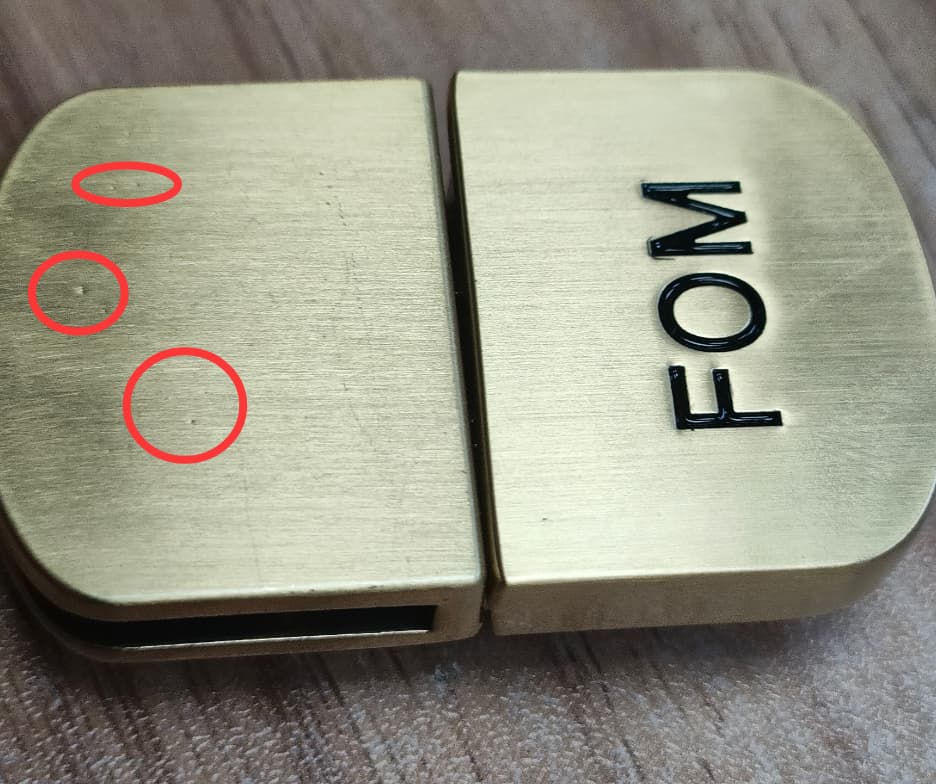
Unstable die-casting speed and temperature during mass production can cause internal porosity. In mild cases, this results in small pits on the surface after electroplating; in severe cases, it leads to fracture under stress.
Burrs on the Edge
Workers have not completely sanded down the burrs along the parting line, so the burrs scratch the material and hands. If the burrs break off and fall into the lock, they can cause the lock to jam.
Defects in the electroplated surface (key inspection points for export goods; affects appearance and salt spray resistance)
- Color Variation: Uneven color within the same batch, with some parts appearing brighter and others duller; color variation is most common in gold plating and sandblasted finishes.
- Pitting, Pinholes, Bubbles, and Peeling: Porosity in die-cast parts; incomplete degreasing during pretreatment; poor coating adhesion, resulting in peeling after bending or friction.
- Scratches and Dents: Caused by collisions during the handling of semi-finished products or on hanging fixtures, or by friction from stacking finished goods; particularly noticeable on high-end sandblasted or brushed surfaces.
- Exposed Base Metal, Darkening, Spots, and Fingerprints: Fails salt spray testing, making the product prone to rust (pay special attention to this for export orders subject to REACH/RoHS compliance).
- Inadequate sealing oil application: The sealing oil layer is too thin, making the surface prone to fingerprints and discoloration.
Assembly Issues (Manual assembly is most prone to defects in mass production)
- Missing Parts: The production line may omit springs or washers, or install springs backwards. A portion of the batch may contain locks without springs, and QC spot checks can easily overlook this issue.
- Rivets/Pins Set Too Loosely or Over-Set: Workers do not rivet the pins tightly enough, so internal parts rattle; when workers apply excessive riveting force, the lock body cracks
- Excessive Clearance and Rattling in the Lock Body: Internal washers are missing or of incorrect thickness, causing the entire lock to wobble from side to side when pressed.
Raw Material Issues
- The high levels of impurities in the impure zinc alloy make the lock body highly brittle, so it breaks immediately when someone applies pressure.
- The manufacturer uses poor-quality material (ordinary iron wire instead of stainless steel) to make the springs, so they rust quickly and lose their elasticity
- The manufacturer uses poor-quality material to make the plastic liners and gaskets, so they harden at low temperatures and soften at high temperatures, affecting the feel of the lock.
Quick Checklist for Inspection (Ready for Use During Mass Production Inspections or Final Checks)
- Take a random sample from each box and press down 20 times repeatedly: Check for rebound and sticking.
- Perform a pull test after fastening: Gently pull on the fastened product; it must not come undone.
- Compare products within the same batch for color differences, surface pitting, and scratches.
- Check the dimensions of the locking tabs and the firmness of the riveting.
- Conduct sample-based endurance and salt spray tests (for export orders)
- Verify male-female pairings to avoid mixing versions
Summary of the Production Process and Key Points for Quality Control
The production of these push-button locks was based on a redesign of a benchmark model, starting with drawing optimization, using customer approval as the standard, and ensuring quality through comprehensive testing of prototypes, ultimately leading to mass production. The entire process followed a standardized workflow of “design modification, mutual confirmation, prototype validation, and stable-volume production.”
The core quality control focus for customized product redesigns lies in early-stage structural confirmation and mid-stage comprehensive prototype inspection. This is particularly critical for redesigns based on reference models without physical prototypes, where key structural fit must be verified in advance to avoid design flaws from the outset. During mass production, the three key areas requiring strict control are functional stability, electroplating finish quality, and assembly standardization. By standardizing processes, strengthening routine inspections, and ensuring standardized operations, we comprehensively reduce batch defect rates and guarantee consistent and stable product quality.