How to choose the right hardware for different types of luggage? A practical guide to combining D-rings, snap fasteners and dog clips
Hardware components for luggage and bags are not a ‘one-size-fits-all’ solution. Take the D-ring, for example: when used on the shoulder straps of a rucksack or as the base for a handbag handle, the requirements for tensile strength, surface abrasion resistance and design style are entirely different. Many buyers report that ‘the samples look good when fitted, but after mass production, they fade, become loose or fail to bear sufficient weight’; the root cause often lies in a failure to consider the actual usage scenarios of the luggage and bags during the selection phase.
Starting with common bag categories, this article breaks down the selection logic and key pitfalls for hardware components—including D-rings, square buckles, dog clips, snap fasteners, magnetic closures, corner protectors and rivets—across different bag styles, helping buyers establish a systematic approach to product selection.
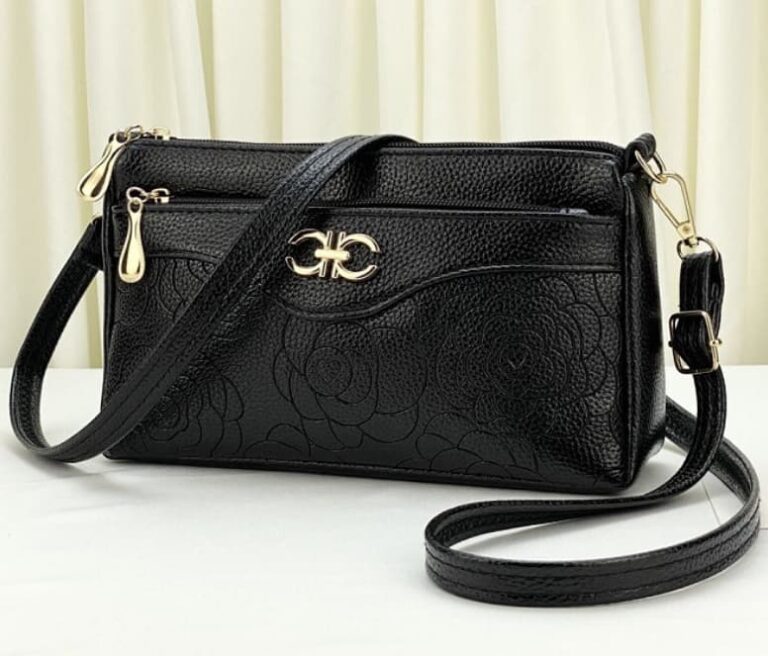
Handbag Hardware: Striking a Balance Between Aesthetics and Durability
Handbag hardware serves as a visual focal point, yet it is also a common source of faults. While designers strive for elegant designs, the frequent opening and closing of the bag, friction against surfaces and contact with hand perspiration place greater demands on the corrosion resistance of the plating.
Latches and Magnetic Clasps: Prioritising the Opening and Closing Experience
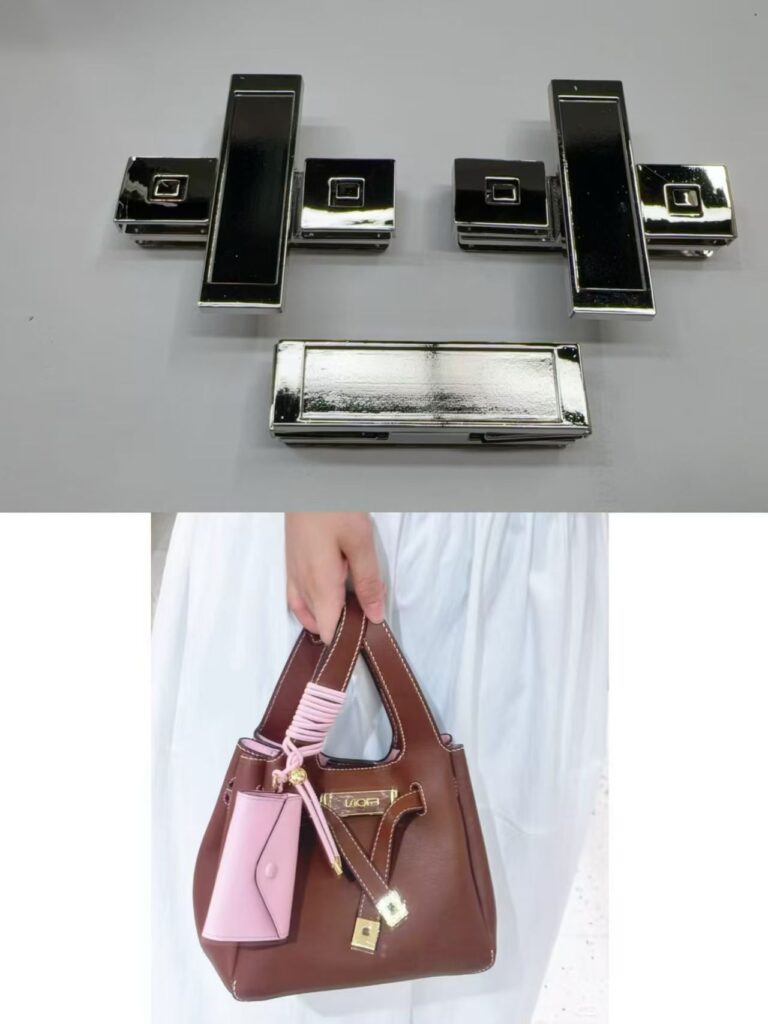
The latches commonly used on flap handbags for women are spring latches and twist latches. Zinc alloy offers a balance between intricate design and structural strength; for the surface finish, we recommend nickel plating or hypoallergenic, eco-friendly plating to prevent discolouration of the coating caused by prolonged skin contact. With magnetic closures, attention must be paid to the strength of the magnet: small, lightweight square bags can use magnetic closures with a diameter of 8–10 mm; large tote bags with a clamshell design require a wider magnetic surface or a dual-sided magnetic closure, otherwise the flap is likely to open spontaneously during use.
D-rings and square buckles: load-bearing capacity is not the primary concern
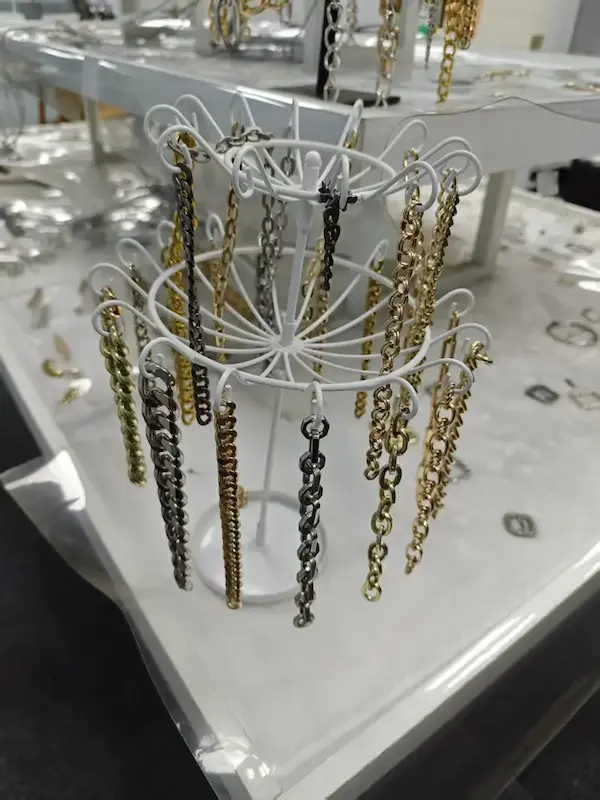
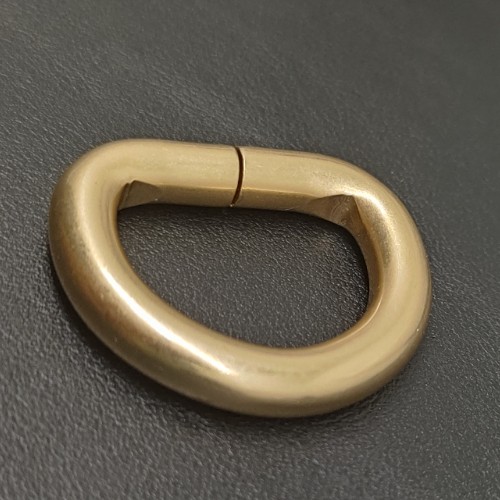
In women’s handbags, we use D-rings mostly to attach shoulder straps, and the actual load they bear is far lower than that of rucksacks. However, as the carrying style of women’s handbags changes frequently (from a single-shoulder carry to a crossbody carry), the inner frame of the D-ring rubs repeatedly against the shoulder strap hook, causing the plating on the edges to wear away more quickly. We recommend selecting D-rings with rounded chamfers for a smoother finish, or opting for a brushed finish—where minor scratches are less visually noticeable.
Corner protectors and bag bases: Structural compatibility is key when replicating luxury brands
Hard-shell handbags or structured bags often use metal corner protectors to safeguard the base corners. A common issue is that, whilst the corner protectors may be beautifully designed, the mounting screws are too short, which causes the protectors to lift up when the bag is knocked during use. When selecting these components, you should ask the supplier for recommendations regarding the appropriate length of rivets or screws. For the base supports (bottom feet), we recommend using brass, as brass offers superior wear resistance compared to zinc alloy
Metal Labels: Logo Clarity Depends on Mould Precision
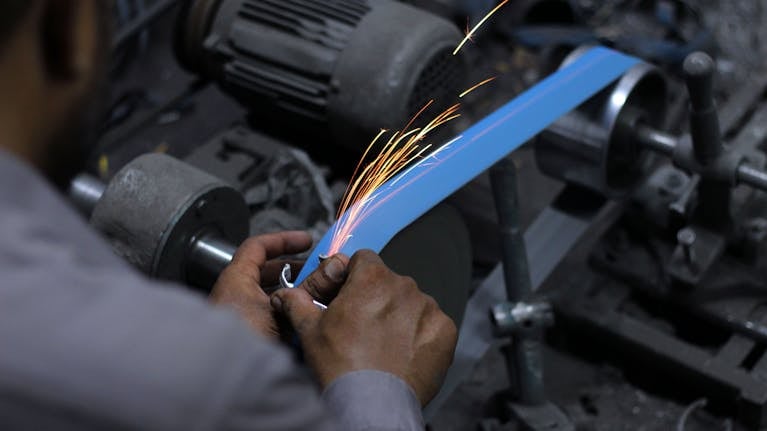
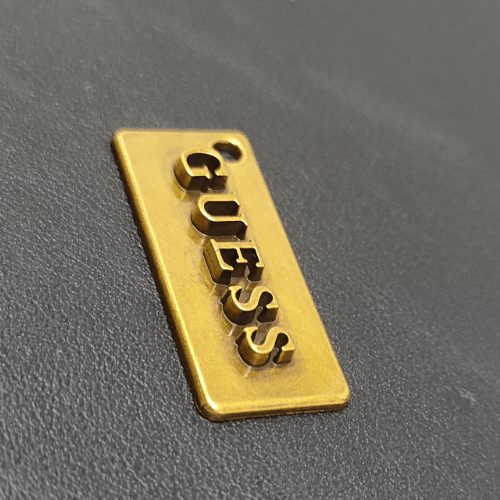
Labels for women’s handbags are often small in size, with fine fonts and intricate strokes. When assessing samples, buyers can run their fingers over the surface of the label—products made with high-precision moulds will have smooth, burr-free edges to the lettering, with no nickel build-up after electroplating. Labels produced using low-precision moulds will show visible smudging of the strokes to the naked eye.
Backpack Hardware: The Tug-of-War Between Strength and Lightweight Design
People use backpacks for commuting, travel, and outdoor activities, so their hardware must withstand frequent stretching, heavy loads, and exposure to the elements. The key to selecting the right hardware is to ‘prioritise strength before considering aesthetics’.
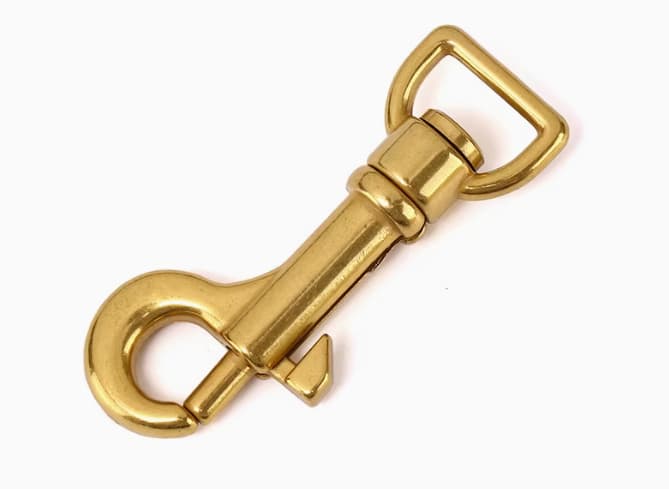
Dog clips (spring hooks): The tensile strength is indicated by the red line.
We use dog clips to connect shoulder straps to the bag body and to attach external accessories Industry standards typically require a single carabiner to have a minimum static tensile strength of 20 kg; some outdoor brands require 30 kg or more. The purchaser should request the manufacturer to provide material specifications: iron carabiners are stronger than zinc alloy ones, but they are also more prone to rust and require a sufficiently thick electroplated or electrophoretic black finish.
Note: The quality of the carabiner’s spring directly affects its service life. Poor-quality springs lose their elasticity after 1,000 opening and closing cycles, rendering the hook unable to close. When requesting a quotation, ask the manufacturer to specify the spring wire diameter and material (stainless steel springs are superior to music wire).
D-rings and D-shaped buckles: Fitting tolerances for webbing
We commonly use D-shaped buckles or rectangular buckles for adjusting rucksack shoulder straps. A common issue is that the internal frame dimensions of the hardware do not match the width of the webbing—if the webbing is too tight, it is difficult to pull; if too loose, it slips out of position after adjustment. When selecting a buckle, the actual width of the webbing must be specified (e.g., 25mm webbing should be paired with a buckle having an internal width of 26–27mm). Zinc alloy buckles offer sufficient strength and are lighter than iron buckles, making them the mainstream choice.
Rivets: No Compromises, Even in Hidden Areas
For rivets in high-stress areas at the base of rucksacks (such as where the shoulder straps meet the base), we recommend using iron or thickened zinc alloy. Some manufacturers use thin-walled hollow rivets to cut costs, which can deform and come loose after prolonged exposure to heavy loads. Buyers can use a simple method to check this: weigh rivets of the same specification from different suppliers; the heavier ones usually have thicker walls.
Briefcase/Business Bag Hardware: The Art of Subtle Sophistication
Hardware for business leather goods aims for a ‘subtle sense of refinement’, with common finishes including antique bronze, black gold and matt nickel plating. This category tolerates colour variation poorly—if significant colour discrepancies appear within a single production batch, we may return the entire batch
Latches and Buckles: Structural Reliability Takes Precedence over Aesthetics
Briefcase latches typically require a key to open and feature a complex internal mechanism. When selecting a model, it is advisable to request that the manufacturer provide durability test data (e.g., 5,000 opening and closing cycles without jamming). Some low-cost latches use a one-piece die-cast zinc alloy linkage spring, which is prone to fatigue failure; a more reliable design employs separate metal spring plates or stainless steel components.
Corner Fittings and Base: Simple in Form but Demanding in Tolerance
The base corners of business bags feature straight lines and small arcs, placing high demands on mould precision. A common issue is that the left and right corner fittings are not at the same height after installation, causing the bag to wobble when placed on a surface. During acceptance inspection, the purchaser should place the bag on a level tabletop and press down on all four corners to check for stability.
Surface Finishing: Colour Variation Control for Antique Bronze and Black Gold
Antique bronze plating involves multiple processes, including a base layer of nickel plating, a top layer of antique bronze plating, and subsequent ageing treatment; colour variations between batches are inevitable. When purchasing in bulk, it is advisable to request colour samples from the manufacturer and agree on an acceptable colour difference range (e.g. ΔE ≤ 1.5). For the black gold process, we must pay attention to the hardness of the plating; a matt black gold surface with insufficient hardness will easily show fingernail scratches
Hardware for Outdoor Luggage and Tactical Bags: Weather Resistance and Rust Prevention
Exposure to rain, mud, sand, and salt spray (especially during seaside use) makes the hardware’s rust resistance a key performance indicator for outdoor luggage
Electrophoretic black coating is the preferred option
Conventional nickel plating may develop white spots or red rust in humid environments. The paint film produced by the electrophoretic black process is denser, offering significantly better salt spray resistance than conventional plating.Our standard electrophoretic black coating passes the 24-hour salt spray test; for export orders, we can increase the coating thickness upon request..
Rivets and Eyelets: Sealing Must Be Verified
For outdoor bags, if the ventilation holes (breathable drainage holes) and eyelets do not fit tightly against the fabric after installation, water may seep in along the edges of the holes. The purchaser should check whether the hem of the eyelets on the sample presses evenly against the fabric and whether removed the rough edges
Webbing buckles: anti-slip design
For outdoor bags, we recommend using buckles with teeth or a locking mechanism for movable fastenings, because standard smooth buckles may slip out of place during vigorous activity.
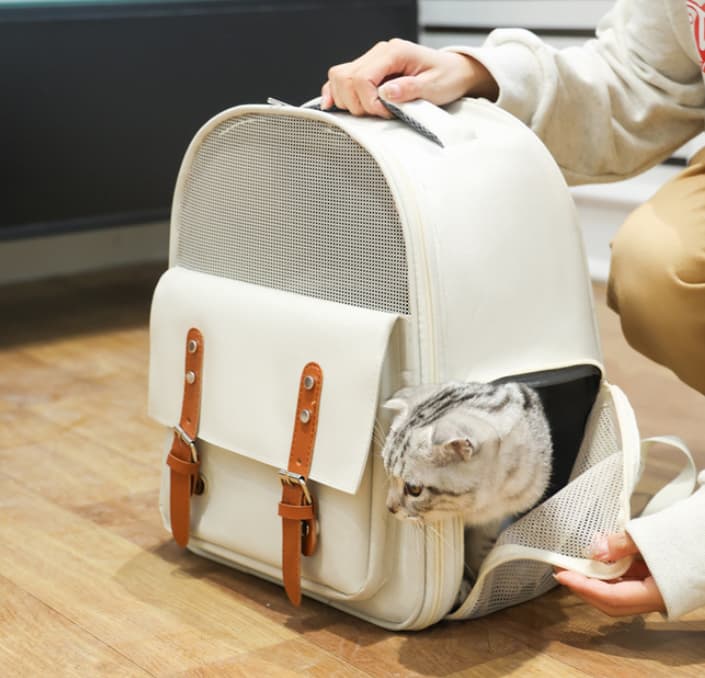
Hardware for pet bags: Higher standards for hypoallergenic properties and smoothness
While export orders for pet bags have grown rapidly in recent years, there are specific requirements regarding product selection
The preferred material is hypoallergenic, eco-friendly electroplating
As pets may chew on metal fittings, the leaching of heavy metals from the plating poses a health risk. Our factory utilises hypoallergenic, eco-friendly electroplating processes that comply with ROHS testing. We do not recommend the use of antique bronze or black gold finishes on pet bags, as the residual treatment agents on the surface contain complex chemical compounds.
All metal fittings must be rounded
Any parts of pet bags that may come into contact with pets—such as D-rings, dog clips and rivet heads—must be explicitly specified to have rounded edges or a spherical finish. Sharp edges may scratch the pet’s skin or mouth.
General Selection Checklist
Regardless of the type of bag, the following five points serve as the basis for evaluation during the selection process:
The material should match the required strength: prioritise iron or brass for load-bearing components, and use zinc alloy for decorative parts.
Is the finish suitable for the intended environment: Electrophoretic black for outdoor use; nickel plating or brushed finish for ladies’ handbags
Have assembly tolerances been verified? Rivet lengths and screw hole positions must be confirmed via prototyping
Are there specified standards for export orders? ROHS compliance and salt spray test duration must be clearly stipulated in writing
Is the same hardware compatible across different bag styles? This can reduce SKU management costs
As a manufacturer specialising in luggage and bag hardware components, we offer customisation based on client-provided designs and mould-making services. Standard materials and surface finishes can be tailored to suit specific bag types, catering to a wide range of applications including handbags, rucksacks, briefcases, outdoor luggage and pet carriers. During the sample stage, we can collaborate with buyers to conduct assembly testing and tensile strength verification.