A Practical Guide to Finding High-Quality Luggage Hardware Suppliers
A single hardware component can often determine the character and lifespan of a bag. The feel of the clasp when opening and closing, the lustre of the pull tab, and the load-bearing capacity of the D-ring—these details are what consumers notice first, and they directly test the calibre of the supplier. To find a reliable source factory, you need a practical screening method.

Step 1: Identify your actual requirements
Before looking for suppliers, you should first clarify your requirements. Different business models require completely different types of factories.
Large-scale standardised procurement Suitable for medium to large-sized luggage manufacturers and foreign trade export companies. You require a comprehensive supplier capable of high output, reliable lead times and holding environmental certifications. Such manufacturers offer a wide product range and can provide a one-stop solution for various components—including telescopic handles, wheels and locks—thereby reducing the costs associated with liaising with multiple suppliers.
High-end bespoke requirements are well-suited to ‘affordable luxury’ leather goods brands and designer studios seeking to differentiate themselves. You should look for specialist hardware manufacturers who specialise in high-precision small hardware components and are capable of carrying out complex surface treatment processes. Such factories may not necessarily be large in scale, but they adhere to rigorous craftsmanship standards.
Small-batch or restocking requirements are ideal for small luggage hardware supplier , repair shops or start-up brands. You can approach stockist distributors or specialist component manufacturers in industrial clusters; they offer low minimum order quantities, a wide range of styles and fast delivery, which can help reduce your stock pressure.
You need to get your requirements straight first before you can decide which luggage hardware supplier are worth spending time negotiating with.
Step 2: Channels for identifying potential suppliers
With a clear direction in mind, the next step is to identify specific luggage hardware supplier. There are several practical channels
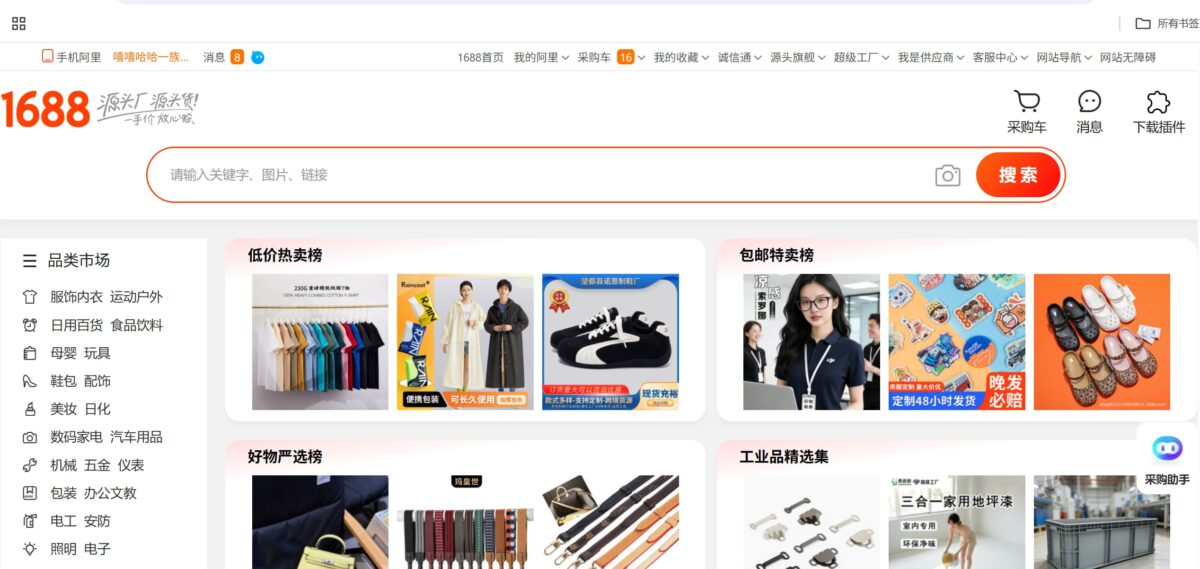
Online platforms are the most convenient place to start. Wholesale platforms such as 1688 bring together a large number of manufacturers. When searching for keywords related to hardware fittings, be sure to filter for shops labelled as ‘manufacturers’ and avoid trading companies or distributors. Check the shop’s business registration details; ideally, it should have been established for at least three years, and its scope of business should include the product categories you wish to purchase.
Trade fairs offer an excellent opportunity for face-to-face inspections. Manufacturers with their own stands, showcasing a wide range of products of exquisite craftsmanship, are particularly worth paying attention to. You can handle the products yourself, examine the fine details of their workmanship, and speak directly to sales representatives—all of which is far more efficient than online communication.
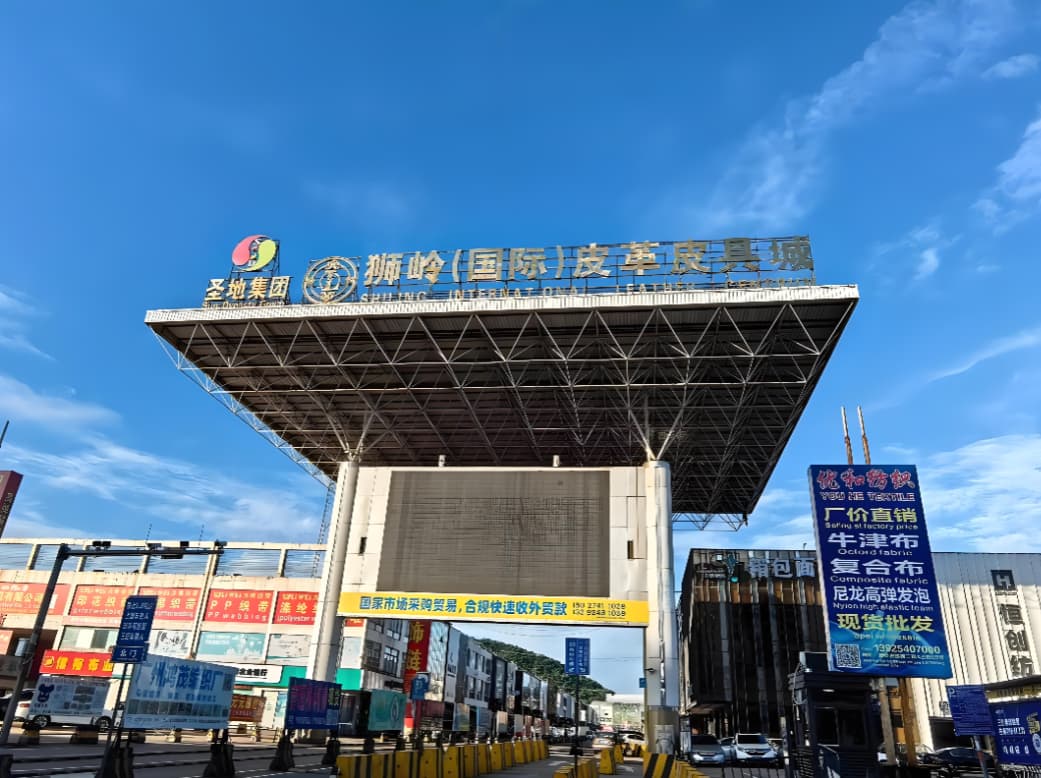
Visiting industrial clusters in person is the most direct and effective approach. China’s luggage hardware industry clusters are concentrated in Guangdong, Fujian and Zhejiang, amongst other places. Shiling Town in Huadu, Guangzhou; Nanhai in Foshan; and Wenzhou and Yongkang in Zhejiang are all well-known production centres. By visiting these places, you can see the factory buildings, equipment and the working conditions of the staff—all of which is real-world information that cannot be found online.
Step 3: Initial online screening to rule out clearly unsuitable candidates
Check the shop’s basic information
Pay particular attention to the business licence to confirm that it is a manufacturer rather than a trading company. Manufacturers tend to have a relatively focused product range, whereas trading companies sell a bit of everything but specialise in nothing. Next, check the shop’s ratings, focusing on the three categories of ‘response speed’, ‘dispatch speed’ and ‘customer service’. Any shop with ratings below the industry average should be ruled out immediately.
Ask three key questions to gauge their quality control capabilities.
First, ask, ‘What are the quality control standards for mass production?’ A reputable manufacturer will provide a clear answer, such as ‘dimensional tolerances within ±0.5 mm and a 100 per cent pass rate on full inspection’. Those who give a vague response, such as ‘the same as the sample’, are likely to have weak quality control. Secondly, ask about the ‘minimum order quantity and lead time’. Reputable manufacturers will provide reasonable figures, such as a minimum order of 500 hardware components with a lead time of 7–15 days. Be wary of suppliers offering excessively low minimum order quantities and extremely short lead times, as they are likely to be middlemen reselling goods. Thirdly, ask how they handle ‘quality issues with bulk orders’. Reliable manufacturers will promise to accept returns and exchanges, cover the shipping costs, and clearly state the warranty period.
Step 4: Analysing quotations to spot the fine details
Quotations contain a wealth of information. Experienced procurement professionals can gauge a supplier’s true nature from a single quotation.
The speed at which a quotation is provided is the first indicator
Factories that are familiar with the product and understand the costs can quote a price very quickly upon receiving an enquiry. This suggests they have a clear understanding of their raw material consumption, labour costs and the complexity of the manufacturing process. Conversely, those who are unable to provide a quote within a day or two, or who are evasive, are most likely unfamiliar with the product and have simply gathered their quotation by asking around.
It is more important that the quotation is clearly structured
A standard quotation should list the following items separately: raw material costs, labour costs, overheads, packaging and transport costs, financial costs and profit. Suppliers who can break down their costs in this way, clearly explaining the cost structure of each stage of production, can generally be identified as physical factories. Those who quote only a total price, without a clear breakdown, may create potential pitfalls for future cooperation. For example, when the price of brass fluctuates significantly, factories with a clear quotation breakdown can reasonably propose price adjustments, facilitating smoother communication between both parties.
It is also worth noting the validity period of quotations
Many experienced Luggage hardware supplier will specify that ‘this quotation is valid for 10 days’ or ‘one month’. This indicates that they keep a close eye on the raw materials market, are keen to earn their fair share of processing profit, and do not wish to bear the risk of fluctuations in raw material prices. Such suppliers are more pragmatic and professional.
Step 5: On-site factory inspection to verify actual capabilities
No matter how impressive the online communication and quotations may be, they are no substitute for a visit to the factory in person. A factory inspection is a crucial step in assessing a supplier’s actual capabilities
Consider the production equipment
Advanced and well-maintained equipment is key to ensuring machining precision. Precision stamping machines, CNC machining centres and automated assembly lines—the number and condition of these machines directly determine the upper limit of production capacity and product consistency. For example, some factories have CNC machines capable of maintaining precision within 0.01 millimetres, ensuring that every component is of uniform dimensions.
Examine the quality control process
From the receipt of raw materials, through processing and shaping, to surface treatment and the packaging of finished products, are there inspections at every stage? Are there dedicated quality control staff? Is there testing equipment? A reputable factory will have established a comprehensive quality control system. For example, some leading companies are equipped with salt spray testers, abrasion testers and tensile testers; every component undergoes ten quality control checks before it leaves the factory.
Assess production conditions
Is the production line operating at full capacity? Are the workers skilled and following standard operating procedures? Is the workshop clean and well-organised? These details reflect the factory’s management standards and delivery capabilities. Factories with excessive idle capacity may have operational issues, whilst those that are chaotic and disorganised are likely to have inconsistent quality control.
Inspect the raw materials warehouse
The quality of raw materials directly determines the quality of the finished product. Take a look inside the raw materials warehouse: are they using high-quality steel that meets national standards, or inferior recycled materials? Only factories that refuse to use inferior recycled materials will use materials of a solid standard.
Step 6: Place a small trial order and let the product speak for itself
No matter how smooth the initial communication or how positive the factory inspection, you should always start with a small trial order. This is the only way to avoid the situation where ‘the sample is good but the mass-produced goods are poor’.
We recommend a trial order of between 50 and 100 items. Upon receipt of the goods, randomly select 10% to 20% of the products for detailed inspection. Check that the materials match the samples, that the dimensions meet the specifications, that there are no colour variations or defects in the surface finish, and that functional components open and close smoothly.
Conduct stress tests. For example, repeated opening and closing of fasteners, abrasion testing of hangtags, and salt spray corrosion testing. Ordinary factories typically only carry out salt spray testing for 24 hours, whereas high-quality factories can manage 48 or even 72 hours. These figures provide a clear indication of the hardware components’ durability.
Only consider placing a bulk order if the pass rate for the trial order is 98 per cent or higher and the quality matches that of the samples. If the trial order reveals inconsistent quality, you should decisively abandon the order, no matter how low the price.
Step 7: Assess the potential for collaboration and consider long-term value
When selecting a Luggage hardware supplier, one should not focus solely on the current batch of goods, but also consider whether a long-term partnership is possible
It depends on how much importance the management attaches to it
In private companies, the owner’s attitude determines a great deal. When communicating with the other party’s representative, gauge how seriously they take the partnership and how committed they are to quality. Attitude is everything.
Consider the platform’s ability to integrate information
Will your company be introducing management systems such as ERP or SCM in the future? Can your suppliers’ systems interface with yours? Seamless data integration can significantly improve collaboration efficiency.
Consider after-sales service
A good supplier does not simply walk away once the sale is complete. If parts go missing during transit, if questions arise during installation, or if problems occur during use, can they respond promptly? Can they provide a solution or send someone to offer on-site support? This level of service is a key guarantee of a long-term partnership.
Step 8: Avoiding Common Pitfalls
There are a number of pitfalls in the industry; if you are aware of them in advance, you can avoid them
It is very common for samples to be of good quality but the bulk order to be substandard.
The solution is to place a small trial order, as mentioned earlier, and carry out random spot checks. Do not rely solely on the samples; inspect the bulk order as well.
Be wary of falsified qualifications
Some manufacturers claim to be ISO-certified, when in fact their certification has expired or is forged. You may ask to see the original certificate, or even contact the certification body to verify its authenticity.
The ‘low-price trap’ is the most common pitfall
Unusually low quotes often conceal compromises in materials or workmanship. When comparing prices, it is essential to make a comprehensive assessment that takes into account quality, service and supply reliability.
There are no shortcuts to finding high-quality suppliers of luggage hardware, but there are methods. Defining your requirements, sourcing through multiple channels, conducting an initial online screening, understanding quotations, carrying out on-site factory inspections and placing small-batch trial orders—by following this process, you can weed out most unreliable middlemen and small workshops, and find source factories truly worthy of long-term partnership. Good hardware is the backbone of luggage, and a good supplier is the foundation of a brand’s confidence. Every minute spent on this selection process is well worth it. We welcome you to visit OYC for an inspection.