Purse Parts: A Comprehensive Guide to Purse Components
Although handbag designs come in all shapes and sizes, they all share common components, differing only in form, color, dimensions, and style. Typically, a handbag incorporates multiple materials for its main body, such as leather, exotic leather, synthetic leather, canvas, and nylon. Beyond these, metal hardware and accessories add a touch of elegance. So, what exactly are the components of a handbag? Below, OYC Bag hardware Manufacturer provides a detailed breakdown of each purse parts:
The Structural Framework of a Handbag: The System Served by Metal Fittings
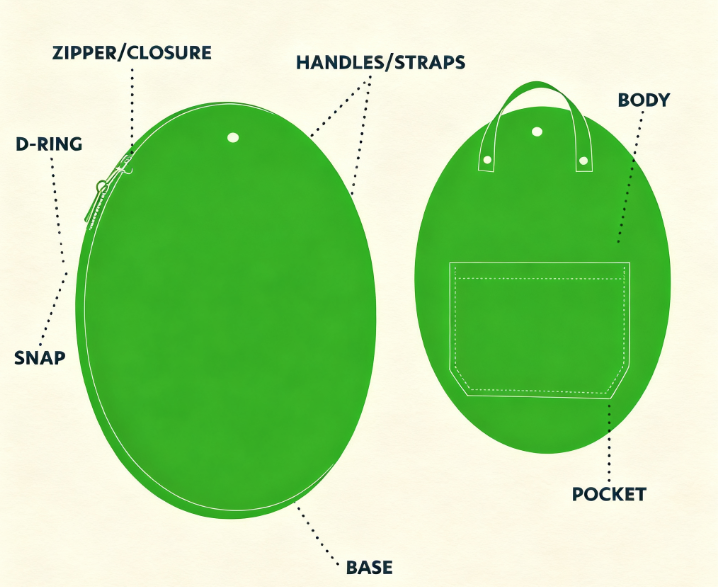
To understand the role of metal fittings, one must first recognise the overall system within which they are embedded—the structure of the handbag. A handbag is not merely a ‘bag’, but a three-dimensional system comprising multiple functional areas that are organically integrated.
The four main functional areas of a handbag’s structure
| Structural Area | Main components | Function Description |
| Support system | Main body, base and sides of the bag | To create storage space and bear the main load |
| Mentoring System | Handles, shoulder straps, back straps | Implement the carrying function and determine the carrying method |
| Closed system | Flap, zip, clasp | Ensuring the safety of your belongings, defining the opening and closing experience |
| Protection and Details System | Base studs, corner protectors, lining | Protects the case, enhancing its durability and refined appearance |
Take the Prada Galleria handbag as an example: this classic design comprises more than 80 individual components assembled by hand and features a three-compartment silhouette, making it a prime example of structural complexity in handbag design. The connection between each component, the reinforcement at every stress point, and the smooth opening and closing of the bag all depend on the precise integration of the metal fittings.
The Dual Role of Metal Fittings in Handbag Construction
Metal fittings play a dual role in handbag construction, serving both structural and decorative purposes:
Structural role: Hardware serves as the mechanical linchpin of a handbag. D-rings and O-rings connect the load-bearing shoulder straps to the body of the bag; rivets reinforce the leather at stress points; and studs elevate the base of the bag off the ground to prevent wear and tear. A handbag without hardware is like a human body without joints; it cannot perform basic functions such as opening, closing, adjusting or carrying.
Decorative role: Hardware is the ‘crowning touch’ of a handbag. From the iconic H-shaped clasp on the Constance bag to punk-style handbags studded with rivets, the material, colour and design of the hardware directly define the handbag’s stylistic DNA. The lustre of metal can complement the warmth of leather or create a striking visual contrast.
A Comprehensive Guide to Handbag Hardware Categories
There is a wide variety of handbag hardware, each with its own name. In this chapter, we have systematically categorised them into six main groups based on their functional logic, and provide a detailed explanation of each.
Connecting hardware: the ‘joints’ of the structure
Connecting hardware is responsible for joining the various components of a handbag together, and one end is usually detachable. They act as the ‘joints’ of the handbag’s structure, bearing the main mechanical load
| Name | Morphological characteristics | Main uses | Common locations |
| D-Ring | It is shaped like the letter ‘D’, with one side straight and the other curved | For attaching a detachable shoulder strap; serves as a mounting point | Both sides of the bag and the ends of the shoulder straps |
| O-Ring | A perfect circle, with no flat surface | Similar to the D-clip function, but more flexible | The point where the shoulder straps join |
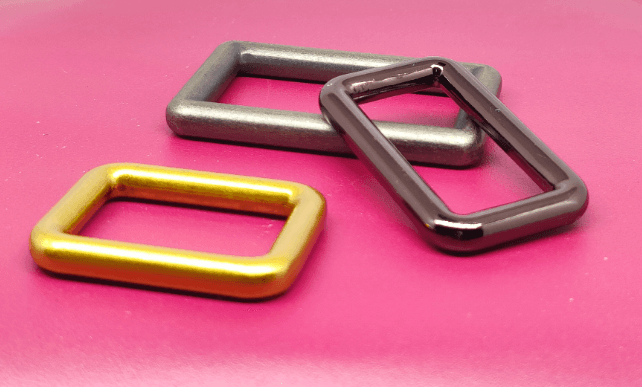
| Rectangular buckle / Square buckle | Rectangular or square metal frames | Connections and Decoration | Envelope connection points |
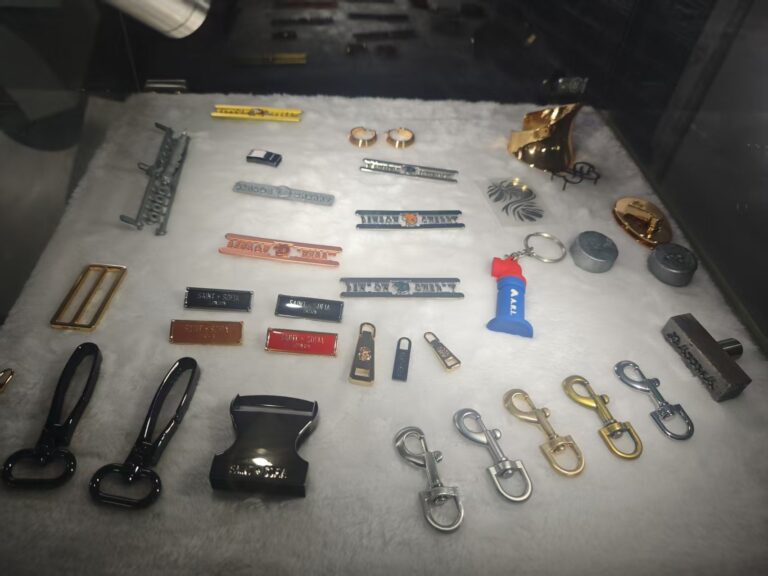
| Lobster Clasp/Snap Hook | Hook-shaped fittings with spring-loaded openings | Quick-release connectors at both ends of the shoulder strap | both ends of the shoulder strap |
| Swivel Clip | A hook that rotates 360 degrees | Preventing shoulder straps from becoming tangled | The point where the shoulder strap meets the body of the bag |
D-rings serve as the most common fastenings on handbags; their flat side typically sews into a small leather loop, while the curved side accepts the hook fastening. O-rings, by contrast, curve throughout, offering greater freedom of movement and therefore providing more advantage in connections that require a wider range of motion
Spring hooks rank as another frequently used fastener; although their shapes vary, they all perform the same function—quickly securing the shoulder strap to the D-ring on the bag Hermès imposes extremely stringent craftsmanship requirements on spring hooks; a single spring hook requires 130 production steps, which clearly demonstrates the importance that top-tier brands place on the reliability of their fasteners.
Closure Fittings: Striking a Balance Between Safety and Convenience
Closure fittings open and secure handbags; they rank among the most frequently used hardware types and directly affect the user experience
| name | Structural Principles | Applicable scenarios | Features |
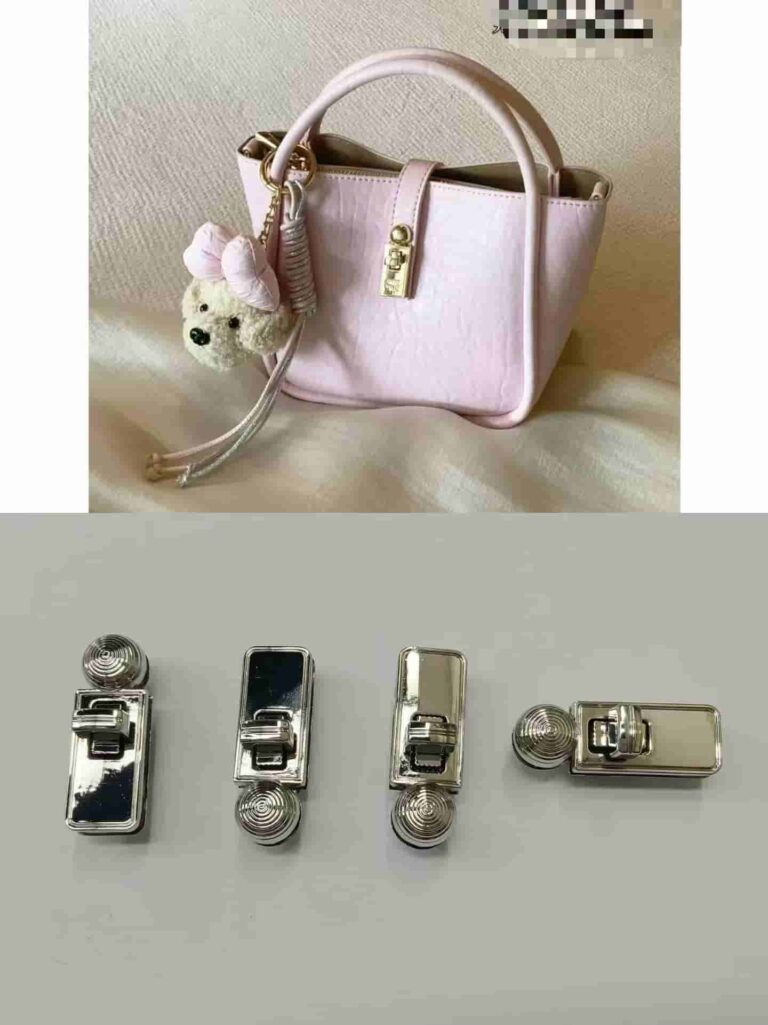
| Turn Lock | Opening and closing is achieved by rotating the latch 90 degrees | The main clasp on a clamshell bag | Sturdy construction, straightforward operation |
| Press Lock | Press down on the latch to release it from the base | Closing a clamshell bag | Opens and closes quickly, with a distinct feel |
| Magnetic Snap | Closes by means of magnetic attraction | A bag opening that is easy to open and close | It is the easiest to use, but the suction power will diminish |
| Invisible Magnetic Snap | The magnet is concealed beneath the leather | A design that prioritises a clean, minimalist aesthetic | Completely invisible, preserving the integrity of the skin’s surface |
| Frame Clasp | Consisting of two arched metal frames | Evening bags, coin purses | Classically elegant, with a crisp opening and closing sound |
| Zipper & Puller | The opening and closing are achieved by the interlocking of the tooth chains | Main pocket, inner pocket, outer pocket | The most common method of closure |
Twist locks and push-button locks are the most common solutions for fastening handbag flaps.
Twist locks engage when the locking tongue rotates, while push-button locks release when the user presses them; each design carries its own advantages and drawbacks. Magnetic fastenings, by contrast, offer the ultimate convenience and perform particularly well on bag openings that demand frequent opening and closing. Concealed magnetic fastenings, in particular, hide the hardware entirely beneath the leather, satisfying the aesthetic preferences of minimalist design.
The zip system itself is also a vital component of the hardware.
Aside from the zip teeth themselves, the zip pull is the part with which the user comes into contact most frequently, and it is here that a brand can demonstrate its attention to detail. A high-quality zip (such as the industry benchmark YKK) paired with an exquisite zip pull serves as a clear indicator of a handbag’s quality.
Adjustable Hardware: Achieving Adaptability
Adjustable hardware enables handbags to adapt to different body types and usage scenarios, reflecting a ‘user-centred’ approach to handbag design.
| name | Structural Principles | Main uses |
| Pin Buckle | Thread the needle-shaped fastener through the belt loop to secure it | Adjusting the length of the belt-style shoulder straps |
| Strap Slide/Slider | Secured with a sliding fastening strap | Adjusting the length of the webbing shoulder straps |
Designers commonly use pin buckles on belt-style shoulder straps, threading the pin through different holes to adjust the length. For woven shoulder straps, they prefer slider fastenings, which employ a metal frame’s friction to secure the webbing and enable either continuous or stepped adjustment. In handbag design, manufacturers often combine these two fastenings to build a complete adjustable shoulder strap system
Fastening and Protective Hardware: The Philosophy of Durability in the Details
Although fastening and protective hardware may be inconspicuous, they are key to a handbag’s durability.
| Name | Morphological characteristics | Key Features |
| Rivet | Consisting of a crown and a heel, they are available in single-sided and double-sided versions | To reinforce stress points; for decorative purposes; to secure the leather layer |
| Metal Feet | A hemispherical or conical metal fitting fitted to the base of the bag | Isolates the base of the bag from the contact surface to prevent wear and tear |
| Corner Guard | L-shaped metal fitting, corner wrap | Protects the corners, preventing wear and impact damage |
| Eyelet/Grommet | A circular metal fitting to reinforce the edges of a hole | Reinforce the holes through which drawstrings and straps pass |
Rivets can be used both for structural reinforcement and purely for decorative purposes. Designers often arrange large numbers of rivets to form patterns or brand logos, creating a striking visual statement. Foot studs serve as a ‘standard feature’ on large handbags; typically, four of them raise the bag’s base off tabletops and floors, protecting the precious leather bottom. The Prada Gallerie handbag utilises rivets as a decorative element running the length of the bag, forming its most recognisable design feature; meanwhile, the four rivets on the base of a classic Louis Vuitton handbag form a triangular support structure, combining aesthetics with functionality.
Decorative and signage hardware: a brand’s visual calling card
This type of hardware directly embodies a brand’s visual identity system and is the quintessential expression of its brand ethos.
| Name | Form | Key Features |
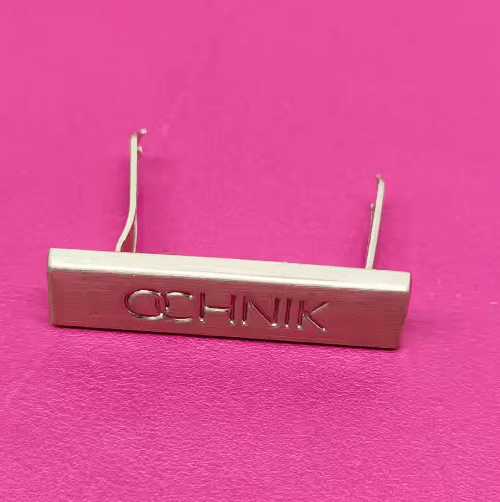
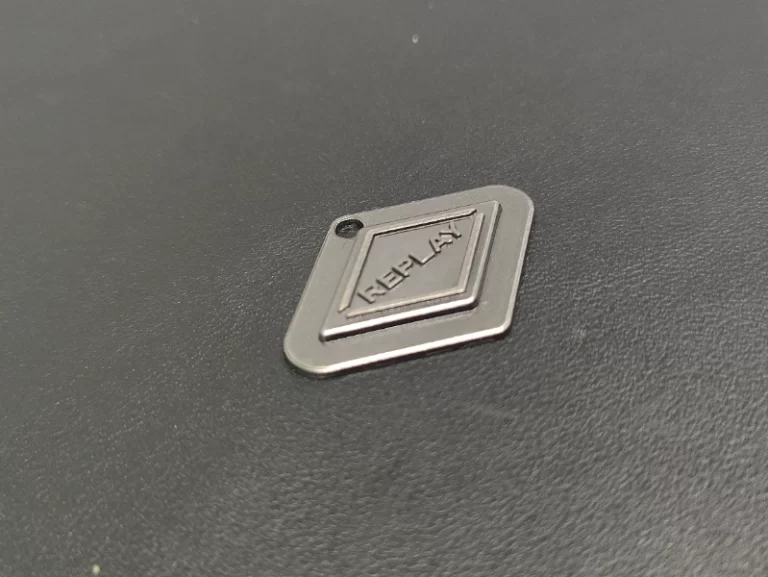
| Metal Label/Tag | Metal plaques bearing a brand name or logo | Brand identity; enhancing a sense of sophistication |
| Chain | Metal chain | As a shoulder strap or purely for decorative purposes |
| Tassel Cap | Metal caps for the ends of decorative tassels | Decoration; securing the tassel |
| Charm/Ornament | Metal trims in various designs | Purely decorative |
Metal logo plaques directly represent a brand’s image; they typically feature a die-cast zinc alloy body with mounting tabs on the reverse. The chain can serve as either a shoulder strap or a dangling ornament on the bag itself; the chain’s thickness and styling directly shape the bag’s overall character—a chunky chain projects individuality, while a delicate, fine chain radiates elegance
Concealed Hardware: Invisible Craftsmanship
In addition to the exposed hardware, the interior of a handbag conceals a wealth of ‘invisible’ metal fittings. Take the Hermès Kelly bag, for example: Hermès conceals 20 metal fittings beneath the leather to secure structural elements such as the strap buckles and spindle clasps. Although these hidden fittings are not directly visible, they are the true guarantee of the bag’s structural integrity.
The most representative of these is Hermès’s unique pearl-finish stud technique.Craftsmen cut, hammer, round and hand-polish each stud that secures the hardware, giving the stud heads a smooth, pearl-like finish. This process not only pleases the eye but also anchors the hardware as firmly as welding would It is precisely this ‘craftsmanship behind the scenes’ that sets top-tier handbags apart from ordinary products.
A Guide to Assessing and Selecting Hardware Components
Five Key Standards for Assessing the Quality of Hardware Components
| Test items | Test Methods | Pass mark |
| Salt spray testing | Leave in the salt spray chamber for 48–72 hours | No corrosion, no blistering (luxury-grade standard: ≥72 hours) |
| Tensile Strength Test | Apply tension to D-rings and snap hooks | Can withstand 30–50 kg without failure (a travel bag requires 80 kg or more) |
| Cycle testing | Opening and closing the twist lock and magnetic clasp repeatedly thousands of times | Functions normally after 5,000–10,000 cycles |
| Magnet Test | Attach to the surface of metal fittings using a strong magnet | No strong adhesion (except inside the spring) |
| Visual inspection | Visual inspection of surfaces and edges | No orange peel texture in the mirror-like reflection; no sharp parting lines at the edges |
Common Pitfalls When Selecting Hardware
Pitfall 1: Being misled by the ‘gold’ finish and overlooking the base material
Cheap iron hardware plated in gold may resemble zinc alloy in appearance, but iron is prone to rust; once the plating wears off, it will leave rust stains on the leather. Testing with a magnet is a simple and effective way to identify the material.
Pitfall 2: Ignoring colour variations between different hardware components
All hardware components on the same handbag should match same color . Zipper pulls and D-rings produced by different suppliers may exhibit colour variations; when purchasing, you should specify ‘plating from the same batch’ to ensure colour consistency.
Pitfall 3: Neglecting protective sealing
High-quality metal fittings should undergo a sealing process after electroplating to form a transparent protective film on the surface of the plating, significantly enhancing resistance to wear and discolouration. Unsealed metal fittings oxidise and fade after several months of use
Conclusion
Although handbag hardware may be small, it is a concentrated embodiment of a handbag’s quality, taste and brand identity. From the 45 visible and concealed fittings in a Kelly bag to a single spring hook polished through 130 production stages; from the affordability of zinc alloy to the warm heritage of brass, the world of hardware is far more profound than meets the eye.
For handbag owners, understanding the different types and craftsmanship of hardware helps them ‘recognise’ a bag’s true value when making a purchase—whether it lies in a glamorous exterior or in内在 quality that stands the test of time. Every choice a handbag manufacturer makes about hardware defines the brand’s ethos—it signals the materials, techniques, and standards they employ to withstand every opening, closing, and carrying by the consumer
Hermès proves that hardware, like leather, must meet jewellery-grade standards to create heirloom-quality handbags. Ultimately, true excellence in a handbag reveals itself through its finest details