Top 5 Custom Bag Hardware for Luxury Leather Handbags
In luxury handbags, leather determines feel, craftsmanship determines longevity, and hardware defines style and status. However exquisite the calfskin or alligator, mediocre hardware dulls the whole piece, while meticulously customized hardware imbues unmistakable luxury in the finest details. More importantly, when a brand deeply integrates hardware with its logo, hardware becomes a vessel of brand identity and aesthetic. This article examines five key custom hardware elements—logo-embossed locks, proprietary brand logos, logo-embossed dog clasps, pull tabs, and D-rings—analyzing how each forges the brand’s soulful imprint in a small space, with customization processes and benefits..
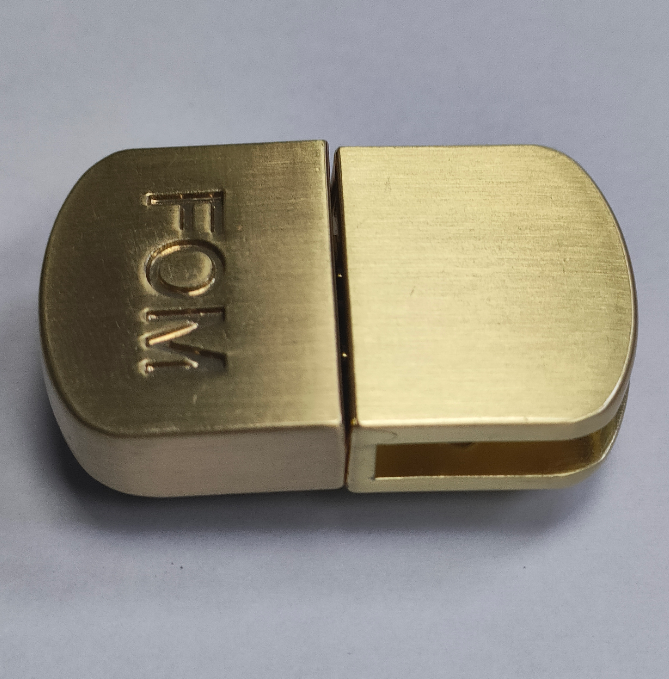
Logo-Emblazoned lock: The “Heart” of a Handbag and the Brand’s Calling Card
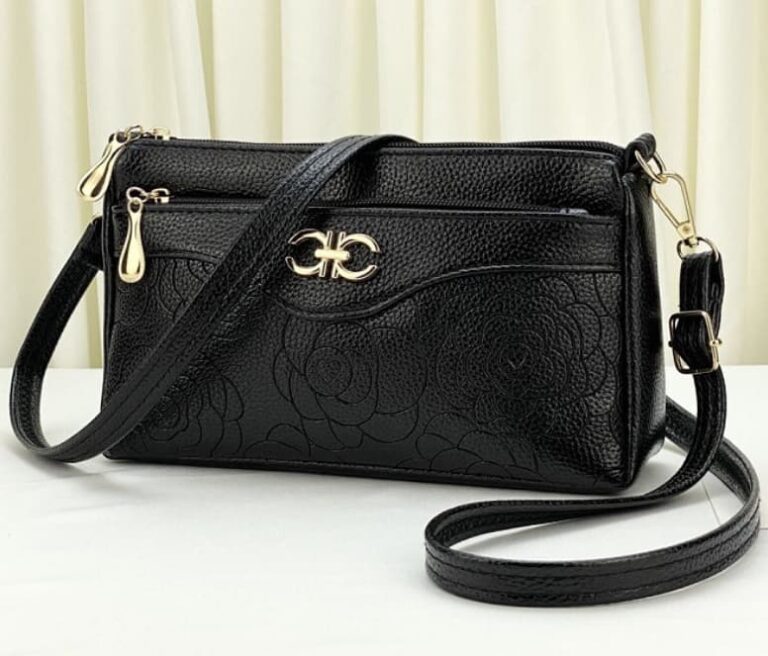
Locks are among the most essential hardware components of luxury handbags; they not only serve the functions of opening, closing, and security but also serve as the visual focal point of the entire bag. A custom lock bearing the brand’s logo often sits at the very center of the bag—the first place the viewer’s eyes land—and therefore people refer to it as the “heart” of the handbag and the brand’s most direct calling card.
In the history of luxury handbags, custom-made clasps have long been a tradition. Hermès’ Kelly clasp is renowned for its iconic twist-knob mechanism; though understated, it blends seamlessly with the bag’s body, becoming a symbol of identity. Meanwhile, many ultra-luxury brands meticulously engrave their initials, family crests, or exclusive motifs onto the clasp’s surface, transforming it into a tangible brand calling card. In truly high-end custom locks, the logo isn’t simply “stuck” onto the lock; rather, the brand seamlessly integrates it into the lock’s design, as if the lock were meant to look that way from the very beginning. When a consumer’s fingertips touch the clasp and hear that steady “click,” that very moment firmly etches the brand’s presence into their memory
Customization Process
Requirement Discussion and Bag Style Matching
Confirm with the brand the lock’s position on the bag, the bag’s structural design (flip-top push-button lock, handbag padlock, chain magnetic lock), and the opening/closing mechanism; clarify functional requirements and visual positioning.
Standardization of Logo Files
Convert the brand logo into a vector file. Determine the presentation method—embossed, engraved, or laser-etched—based on the curvature and dimensions of the lock face, and ensure adequate draft angles and minimum line widths are maintained.
3D Modeling and Structural Design
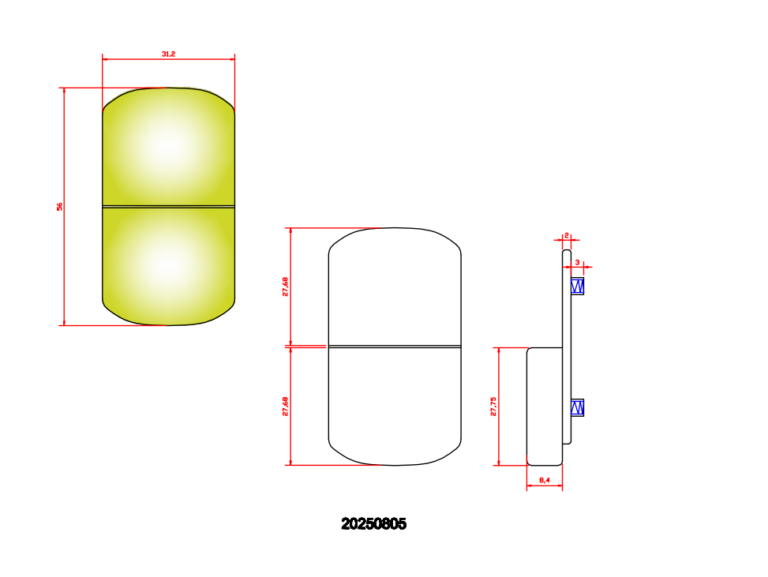
Hardware engineers create a 3D model of the lock body, perform stress analysis and simulate the opening and closing mechanisms, and generate structural drawings.
Mold Making and Prototyping
Produce molds and conduct trial runs to create the first-run samples, verifying the lock body dimensions, logo clarity, and the feel of the opening and closing mechanism.
Surface Treatment and Approval
Apply surface treatments such as gold plating on brass, antique bronze patina, or brushed stainless steel; compare the results against color swatches and texture samples; and obtain written approval from the brand.
Mass Production and 100% Inspection
During mass production, each unit undergoes opening and closing tests, plating adhesion tests, and random inspections for logo consistency; upon passing these checks, the units are delivered for assembly.
Competitive Advantages
Visual Focus, Enhanced Recognition
The lock is positioned at the visual center of the bag, where the logo is displayed, ensuring the highest brand recognition and strongest memorability.
Exclusive Design, Difficult to Reproduce
The mechanism and design of the custom lock are unique to the brand, creating a natural anti-counterfeiting barrier and making replication extremely costly.
Functionality and Aesthetics Combined
Custom locks are optimized simultaneously in terms of the feel of opening and closing, security, and visual appeal, enhancing the overall user experience and perceived value of the bag.
Increased Premium Potential
A meticulously crafted custom logo lock is a key pillar of the “premium for detail” strategy in luxury goods, directly elevating the product’s positioning.
Private-Label Logos: Comprehensive Integration from Accessories to Identity
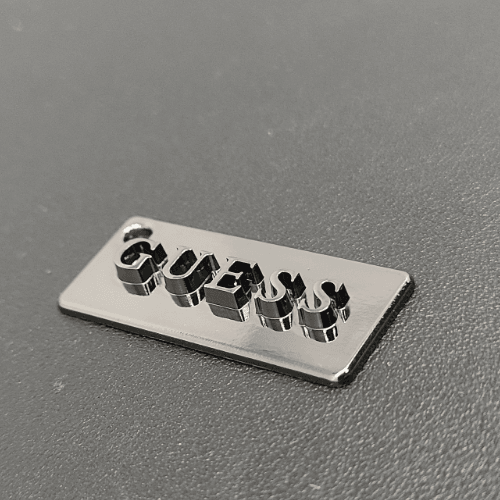
If a logo-embossed lock is the heart of a leather bag, then the theme of “proprietary brand logos” explores how the logo serves as a unifying thread running through the five major hardware components to create a cohesive brand language. The sophistication of custom hardware lies not in the size of a single logo, but in how the logo appears consistently across the lock, dog clip, pull tab, and D-ring—with appropriate proportions and a unified style—creating an overall sense of “harmony in diversity.”
Behind this lies the extension of the brand’s visual identity (VI) system to hardware components. A mature brand establishes specific guidelines for customizing hardware: strict standards govern the logo’s typeface proportions, line thickness, corner radius, minimum size, and even how it adapts to curved surfaces. Being unified without being identical, and repetitive without being monotonous—this is the essence of customizing a private-label logo. On a deeper level, the integration of the logo into hardware components represents an intangible accumulation of brand equity. When the same logo appears on a bag’s lock, dog clip, pull tab, and D-ring, consumers engage in a subtle “dialogue” with the brand every time they open or close the bag, adjust the shoulder strap, or pull the zipper. This high-frequency, low-interference brand engagement is far more subtle and enduring than large-scale printing.
Customization Steps
Brand VI Review
Systematically organize the brand logo’s standard font, proportions, line thickness, corner radii, and safe margins to establish logo application guidelines specifically for hardware products.
Hardware Application Adaptation
Develop separate logo deformation, scaling, and manufacturing solutions tailored to the distinct curved surfaces, dimensions, and stress characteristics of locks, latches, pull tabs, and D-rings.
Process Selection and Prototyping
Select embossing, engraving, laser etching, or lettering processes based on the characteristics of each hardware component, and produce samples of each category for comparison.
Comprehensive Review and Standardization
Place samples of the four hardware categories on the same packaging to conduct a comprehensive visual review; finalize the design after confirming consistent style and harmonious proportions.
Standardization and Mass Production
Output the hardware logo process specification document to guide mass production and incorporate it into incoming material inspection standards.
Benefits of Customization
Establishing a Unified Brand Language
The repeated appearance of the logo on hardware components builds a cohesive visual identity system, ensuring high consistency in the brand image down to the finest details.
Building Brand Equity
Every time the product is opened, closed, or touched, it serves as a low-intrusion brand touchpoint; over time, this accumulates into brand recognition assets that are difficult to quantify.
Subtle and Sophisticated Expression
Compared to printed designs and foil stamping, logos on hardware better align with the “understated luxury” aesthetic of high-end goods—discreet yet ever-present.
Enhancing Overall Quality and Anti-Counterfeiting
Standardized customization makes the hardware a testament to the brand’s craftsmanship while making counterfeiting more difficult.
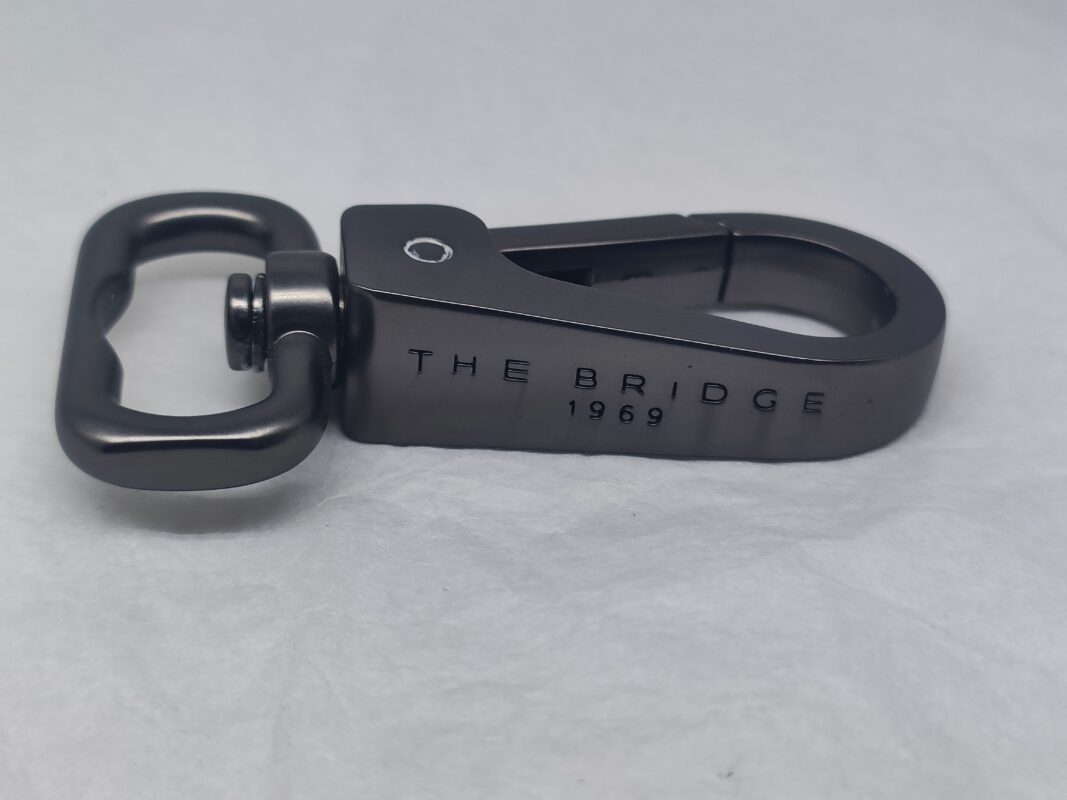
Dog Collar Clips with Logos: A Sophisticated Statement at the Point of Connection
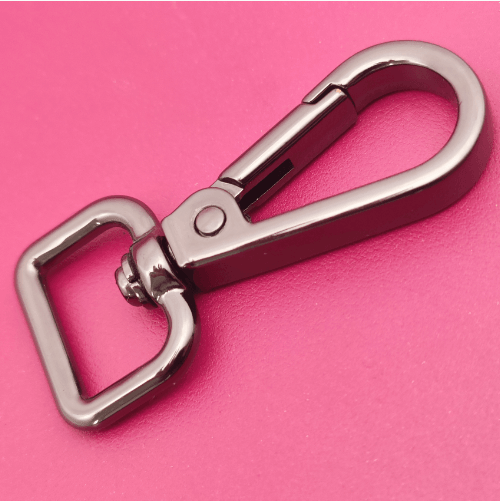
Dog clasps (also known as lobster clasps or spring clasps) are among the most inconspicuous yet indispensable hardware components on a leather bag. They connect the shoulder strap to the bag body and the chain to the charm, serving as the bag’s “hinge.” Precisely because they are located at these connection points and endure the tension of repeated opening and closing, their quality directly affects the bag’s lifespan and user experience.
Custom logo dog clasps must balance function and aesthetics: proper spring tension and opening size ensure a secure fit, while the surface serves as a canvas for the logo. High-end designs emboss or laser-engrave the logo on the front and chamfer and polish the edges for a smooth, rounded feel that won’t scratch and gives the logo layered depth in light. Solid brass outlasts hollow zinc alloy in durability and heft; plating thickness and adhesion determine wear and fade resistance. Though small, the clasp tests a brand’s attention to detail—each fastening lets fingertips feel its weight and raised logo texture, the subtle tactile quality that sets luxury apart from ordinary goods.
Customization Steps
Load-bearing Capacity and Specification Confirmation
Determine the opening size, wire diameter, and spring tension rating of the dog clip based on the bag’s weight and the shoulder strap attachment method.
Logo Design
Plan the logo’s position and dimensions on the front of the clasp; select either embossing or laser engraving; and design chamfered, polished edges to ensure a smooth feel.
Material and Plating Selection
Prioritize solid brass or high-quality zinc alloy; determine the type and thickness of the plating; and specify wear resistance and colorfastness standards.
Mold Making and Prototype Testing
Produce molds and create prototypes; conduct tensile strength tests, repeated opening/closing fatigue tests, and salt spray tests.
Hand Feel Evaluation and Final Approval
The brand evaluates and confirms the buckle’s weight, the logo’s embossed texture, and the smoothness of opening and closing.
Mass Production and Random Inspection
Proceed with mass production and conduct random inspections of each batch for spring tension, plating adhesion, and logo clarity.
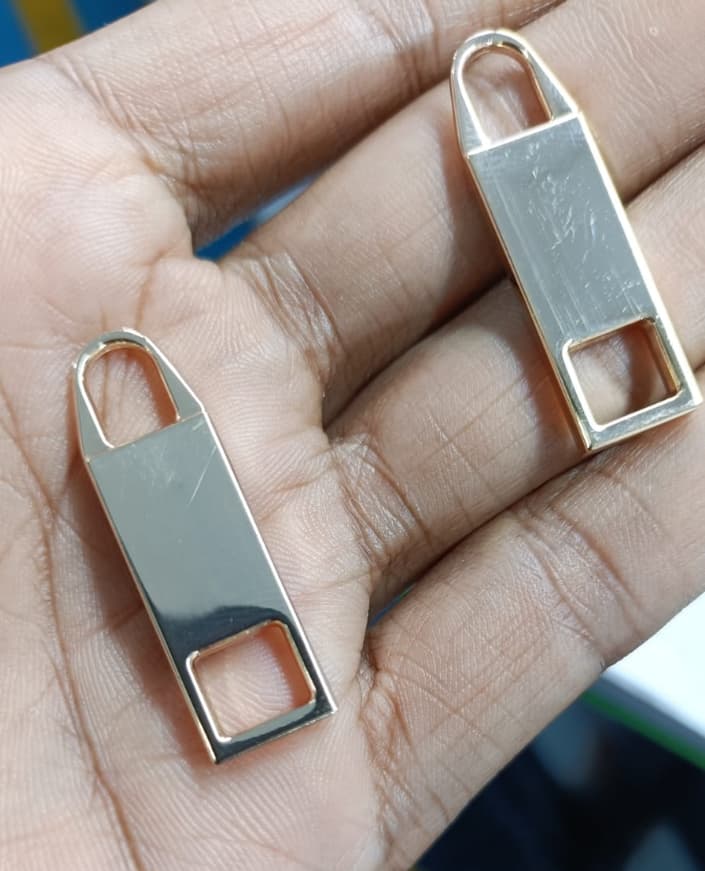
Logo zipper puller : A Brand’s Calling Card at Your Fingertips
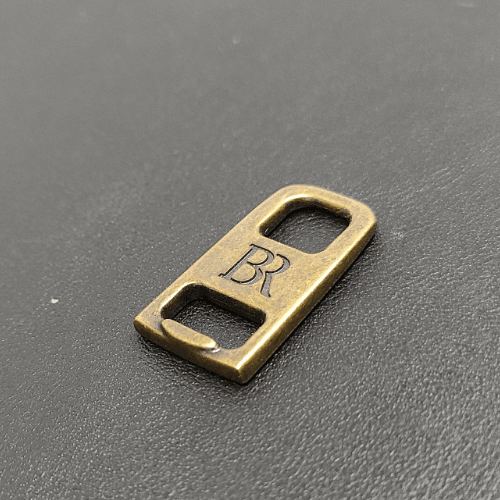
The zipper pull is the hardware component with which users interact most frequently when using a handbag—opening the bag, retrieving items, and closing it. Fingers grip it countless times throughout the day. As such, the zipper pull is often referred to as the “brand’s calling card at your fingertips” and is the aspect of custom hardware that best showcases a brand’s ingenuity.
Zipper puller offer vast customization: shapes can be brand initials, geometric blocks, teardrop forms, or curves echoing the bag’s silhouette; craftsmanship can include die-cast relief, stamped lettering, two-tone plating, or inlaid enamel and leather. For logo pull tabs, the key is balancing legibility with tactile feel—the logo must read clearly in the small grip area, edges must be smooth and rounded to prevent chafing, and thickness must allow a firm grip. Many luxury brands engrave a discreet logo on the back while keeping the front clean—”the front for the world, the back for oneself”—embodying understated luxury. Pull tabs must also harmonize with zipper teeth and the pull head: too heavy affects zipping feel, too light appears cheap.
Customization Steps
Interaction Habits Research
Analyze the target users’ frequency of opening and closing the zipper and their gripping methods to determine the pull tab’s shape, thickness, and point of force application.
Shape and Logo Design
Design the pull tab shape incorporating brand elements, and plan how the logo will be displayed on the front or back, balancing readability with subtlety.
Zipper System Matching
Select the zipper tooth profile and slider specifications; evaluate how the pull tab’s weight affects the feel of opening and closing the zipper to ensure smooth, jam-free operation.
Process Confirmation
Determine the manufacturing processes—such as die-cast embossing, stamped engraving, or two-tone electroplating—and verify the surface texture by comparing it to color swatches.
Mold Making, Prototyping, and Hand Feel Testing
Produce prototypes and conduct tests on the feel when gripped, the roundness of the edges, and the smoothness of opening and closing.
Mass Production and Consistency Inspection
During mass production, conduct random inspections to verify logo clarity, check for burrs on the edges, and ensure weight consistency.
Customization Benefits
High-Frequency Exposure, Lasting Impression
Pull tabs are the most frequently used hardware components; the logo naturally etches itself into users’ memories through daily interaction.
Feel Equals Quality
Rounded edges and moderate thickness provide a smooth grip, directly influencing users’ perception of the bag’s overall quality.
Thoughtful Design Highlights Brand Personality
The thoughtful design of the pull tab’s shape and the logos on both sides directly express the brand’s aesthetic philosophy.
Balancing Aesthetics and Functionality
Seamless integration with the zipper system ensures smooth opening and closing, avoiding the awkward situation of a product that “looks good but doesn’t work well.”
Logo-Emblazoned D-Rings: Elevating Functional Components Through Branding
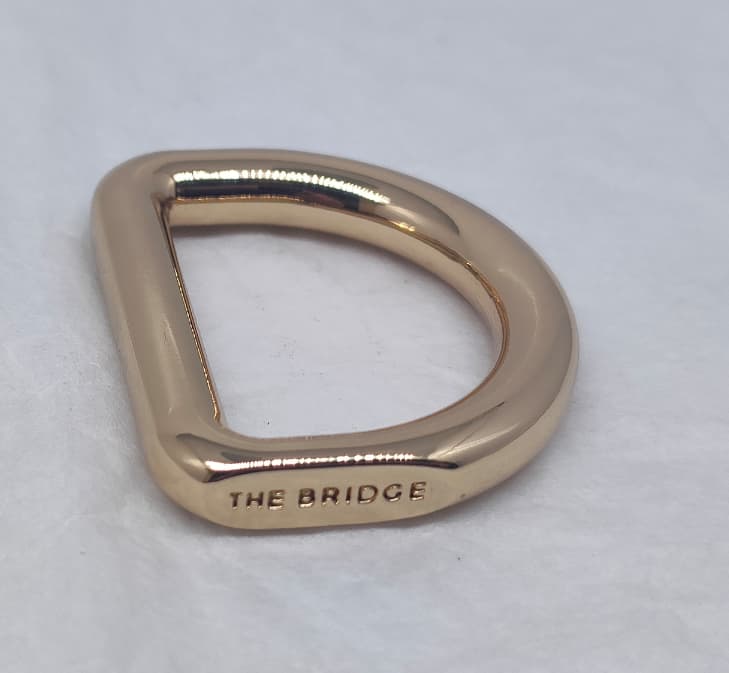
The D-ring is a classic “functional component” on leather bags, used to attach shoulder straps, chains, and charms; it gets its name from its resemblance to the letter D. Though it appears simple, it is one of the components in custom hardware manufacturing that demands the highest precision: the D-ring must bear the weight of the entire bag and its contents, so the welded joints must be secure, the surface must be smooth and free of burrs, and the fit between the opening and the connecting ring must be precise.
A logo D-ring turns a functional part into a branded detail: common approaches emboss or laser-engrave the logo on its straight or curved surfaces, or create a brand-specific design on its base. When customizing, match wire gauge to bag weight—too thin deforms, too thick looks bulky; engraving must not weaken structural strength, so avoid deep cuts near stress points; finishes should match the lock, clasp, and pull tab for a cohesive look. This embodies luxury leather goods’ logic of “function as aesthetics”: nothing is purely decorative or purely functional—every component expresses the brand’s philosophy
Customization Steps
Stress Analysis
Calculate the required wire diameter and opening size for the D-ring based on the bag’s weight and attachment method, and determine the positions of the weld points and strength requirements.
Design and Logo Planning
Design the straight and curved sections of the D-ring and plan the logo engraving area, avoiding stress points and weld locations.
Structural and Strength Verification
Perform 3D modeling and stress analysis to ensure that logo engraving does not compromise structural strength, then generate drawings.
Mold Making, Prototyping, and Strength Testing
Produce prototypes and conduct static tensile tests, weld strength tests, and surface burr inspections.
Consistent Overall Color Scheme
Compare the color palette and texture of the surface finish with those of the lock, dog clip, and pull tab to ensure the overall harmony of the hardware components.
Mass Production and 100% Inspection
During mass production, inspect each batch for wire diameter, weld strength, logo clarity, and plating quality.
Customization Advantages
Function Meets Aesthetics
Branding purely functional components embodies the brand’s “design in every detail” philosophy and elevates the overall style.
Structurally Safe and Reliable
Custom D-rings, subjected to stress analysis and strength testing, ensure load-bearing capacity and secure welds, providing greater peace of mind during use.
Unified Hardware System
Matching the locks, buckles, and pull tabs in both color and texture, creating a cohesive and unified hardware aesthetic.
Subtle Brand Accent
A logo that’s barely visible on the shoulder serves as the most understated expression of the brand while on the move, aligning with the essence of luxury.
Conclusion
Logo-embossed locks, proprietary brand logos, logo-embossed dog clips, logo-embossed pull tabs, and logo-embossed D-rings—these five major custom hardware components collectively form the hardware system of a luxury leather bag. Their roles are clearly defined: the lock is the heart, the dog clips and D-rings are the joints, the pull tab is the calling card, and the brand logo that runs through them all is the soul. Every customization project undergoes a rigorous process—from requirements discussion, logo standardization, structural design, mold making and prototyping, review and approval, to full inspection during mass production. Each step is dedicated to achieving the harmonious integration of “functionality, aesthetics, and brand.” The logo’s proportions must blend seamlessly with the hardware’s design; the materials and plating must withstand the test of time; and the texture must convey a sense of quality with every touch.
In today’s increasingly homogenized luxury market, where leather and silhouettes can be imitated, only meticulously crafted custom hardware—along with that recurring, perfectly placed brand logo—can truly endow a leather bag with an irreplicable identity. Though small, these hardware components, within their limited space, are sufficient to forge the brand’s soul—and this is precisely the value of the five key custom hardware elements in luxury leather bags.