Protect Handbag Hardware Effectively – The Protective Film Guide
At the same price point, how do you pick a bag that looks high-end and luxurious? It’s not about the leather—it’s about the hardware! (Quality hardware requires intricate and complex craftsmanship, which most bags won’t invest heavily in.)
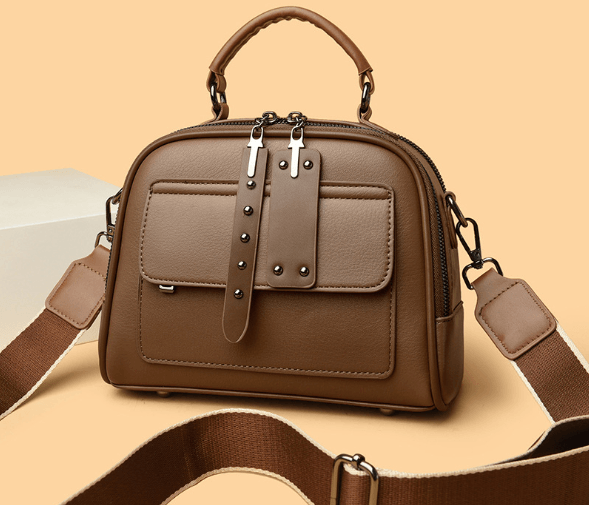
Hardware Best Reflects a Bag’s Quality
Therefore, hardware is the part of a bag that best reflects its quality. Many assume that since luxury bags have high-quality hardware, it must be durable. Not necessarily—hardware is primarily made of metals like copper and zinc alloys.
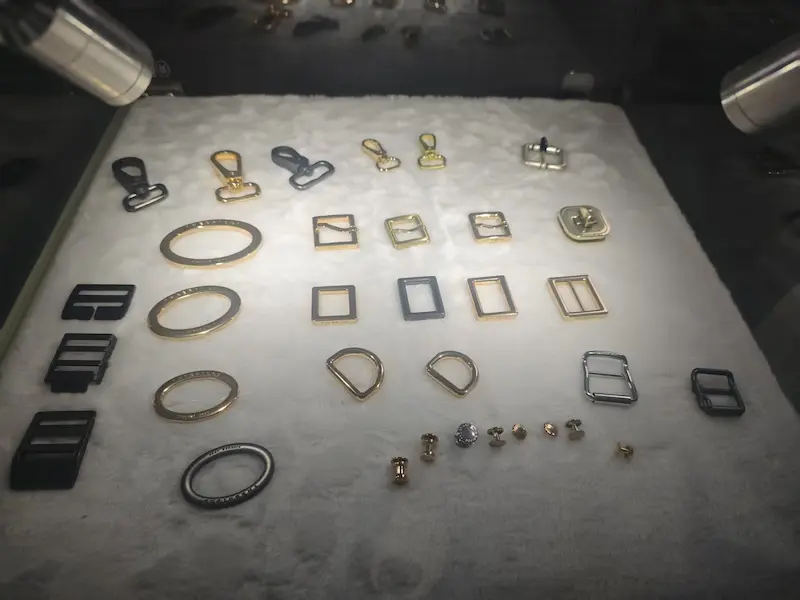
Neglect Leads to Faded Hardware, Even for Luxury Bags
Even luxury bags will see their hardware fade if neglected. This isn’t a minor issue: if leather represents a bag’s substance, hardware is its face—and appearances matter.
Poor Hardware Ruins the Value of Fine Leather
If the hardware looks cheap, even the finest leather loses its value! Take this luxury bag priced at 30,000 yuan—because its hardware oxidized and faded, doesn’t it look like it’s not even worth 300 yuan? Therefore.
We has decided to summarize effective hardware restoration techniques and share a few tips for daily maintenance. The more you use your bag, the newer it should look.
summarize effective hardware restoration techniques
1. Hardware Oxidation Is Natural—Humidity Is the Main Culprit
No matter how prestigious the brand, hardware inevitably follows its natural properties. Its inherent instability makes it prone to oxidation and rust in humid environments. Tarnishing, discoloration, and copper rust are inevitable processes.
The key to extending hardware longevity is keeping it dry. During hot summer months, avoid exposing hardware to sweat and oils from your hands. Otherwise, these substances will gradually corrode the metal, leading to unstoppable oxidation and discoloration…
2. Daily Maintenance: Simple Steps to Slow Oxidation
Beyond maintaining a dry environment, regularly wipe hardware with a dry cloth to slow oxidation.
When wiping, use fabrics that won’t damage the hardware. Gold-toned hardware can be cleaned with a silver polishing cloth. If the hardware becomes dirty, gently scrub it with a toothbrush dipped in a neutral detergent.
Avoid prolonged cleaning—quick and decisive action is best!
Beyond prolonged exposure to air, cosmetics and perfumes can also affect hardware.
3. Luxury Bag Hardware Also Oxidizes—Professional Repair Is Needed
Even luxury handbag hardware isn’t immune to oxidation. Take this Hermès “Big H” bag, for instance—it’s already showing signs of oxidation and wear. Repairing it isn’t straightforward; it requires gold plating to restore its original luster.
4. Ultimate Protection: Apply Protective Film to New Bags First
What’s the best way to protect hardware? Apply protective film right from the start. Many seasoned handbag buyers won’t wear a new bag immediately; they’ll protect key areas first.
Understanding hardware protective film: it is not ‘cling film’
Metal protection film is not ordinary adhesive tape or plastic film, but a transparent polymer film specifically designed for the metal components of luxury handbags. It is characterised by precise technical specifications and design considerations.
Core material: High-end screen protectors typically use optical-grade TPU (thermoplastic polyurethane) or PE (polyethylene) substrates combined with a nano-coating. These materials offer excellent elasticity, light transmission and flexibility, enabling them to conform to irregularly shaped metal surfaces.
Key thickness: The thickness of high-quality films is typically controlled between 0.06 mm and 0.08 mm—thinner than a sheet of A4 paper (approximately 0.1 mm). If too thick, it can affect the feel and cause the edges to curl up; if too thin, it offers insufficient protection.
Hardness and light transmittance: High-quality protective films can achieve a hardness of up to 3H (pencil hardness) and a light transmittance of over 92 per cent. Once applied, they are virtually invisible and do not affect the original mirror-like finish of the metal fittings.
Main Function: It is not intended to provide ‘lifetime protection’, but rather to delay the onset of visible damage caused by oxidation, acting as a buffer against everyday wear and tear. Actual test data shows that hardware without a protective film typically develops visible oxidation spots after an average of three months, whereas the group with the film delayed the appearance of similar spots until the eighth month.
Step-by-Step Guide: How to Apply a Screen Protector Correctly?
The success of applying a screen protector depends 80 per cent on the working environment and technique, rather than the protector itself. Incorrect application can lead to air bubbles, curling edges, or even accelerated oxidation due to residual moisture. Below is the correct procedure, as recommended by professionals
Step 1: Cleaning the metal fittings
Using a lint-free cloth dipped in a small amount of isopropyl alcohol or a specialist metal cleaner, thoroughly wipe the surface of the metal fittings to remove grease, sweat and dust. Under no circumstances should you spray alcohol directly onto the fittings, as this may damage the surrounding leather.
Step 2: Drying and Preparation
Allow the metal fittings to air-dry naturally for at least 10 minutes in a dust-free environment at a constant temperature (20–25°C). Ensure the surface is completely dry, as this is essential for a secure bond.
Step 3: Precise Application
Use tweezers to pick up the screen protector and gently position it over the hardware. For low-tack screen protectors, take advantage of the positioning adhesive to adjust the position repeatedly until it is perfectly aligned. Use a stiff card or squeegee to smooth the film from the centre outwards, removing any tiny air bubbles.
Step 4: Edge Finishing and Setting
For curved surfaces or edges, gently heat the film with a hairdryer set to a low heat setting (keeping it at a distance) to further soften it and ensure a snug fit. Films from brands such as Xifengji feature a 0.1mm micro-curved edge finish, which effectively prevents snagging and lifting.
An Overview of Popular Products: How to Choose the Right Screen Protector for Your Phone?
There is a wide variety of screen protectors available on the market. These can be broadly categorised by material and function, with each category having its own specific focus.
| Product Type | Name of representative | Key Features | Applicable scenarios | Guide price |
| Electrostatic adsorption membrane | Anti-static crystal film | It relies on electrostatic adhesion, is adhesive-free and offers high light transmission, but adheres slightly less well to curved surfaces and tends to peel away at the edges. | Smooth, large-surface hardware | lower |
| Low-tack positioning film | Green Shield film, 9D/7D film | Features a slightly tacky silicone layer for a secure fit and to prevent the edges from curling up; however, care should be taken when removing it. | Non-standard, curved and movable fittings | Medium (approx. 69–300 RMB) |
| Thermoforming film | Branded custom films (such as Xifengji) | Precisely fitted to the curvature of the hardware using a hot-pressing process, with accurate cut pieces and virtually no visible seams | Luxury handbags, complex structural hardware | Higher (in the hundreds of RMB) |
When choosing a protective film, it is advisable to prioritise products custom-made for specific bag models. Universal protective films often require cutting to size, which can easily result in a poor fit or uneven edges. Currently, third-party brands offer protective films specifically designed for popular bag models such as the Hermès Herbag, Birkin and Bolide; the Gucci Zumi and Padlock; the Louis Vuitton Express and Neverfull; and the Céline Arc de Triomphe.