Time-Refined, Craftsmanship at Its Core: Decoding the 13-23 Day Production Lead Time for Luggage Hardware Components
In the world of luggage, where form meets function, hardware may be small, but it is large in terms of style and the fine print. A cool, hand-finished zipper pull, a rivet that can take tons of punishment, and a beautifully turning buckle—all these details absolutely serve their functional duties while subtlely telegraphing the quality and attractiveness of the product. So, when you hold a sharp-looking new bag and run your fingers over the cold smooth metal that is glistening back at you have you ever thought about? Its journey as formless raw metal to being an intricate part of how you travel whether it’s just to work in the morning or trying to find yourself on some Bangkok back street. The metamorphosis will last from 13 to 23 days.
This is not an arbitrary figure, but the inevitable projection of an interlocking, meticulously precise production chain across the temporal dimension. It embodies the wisdom of craftsmanship, the warmth of human touch, and the rhythm of industry. Let us delve into this “metal kingdom” together and unravel the mystery behind this seemingly lengthy yet second-by-second production lead time of luggage hardware
Blueprint and Melting—Laying the Foundation of Order (3-5 Days)
Keywords: Die-casting production scheduling, molds, melting, forming
The prelude to production begins with the 3-5 days of “die-casting production scheduling.” This is not mere waiting, but a meticulous planning process centered on order and efficiency.
The Art of Production Scheduling
Factories do not run for one order only. Just as hospital emergency departments practice triage, production scheduling centers also need to decide systematically which orders are more urgent on the basis of criteria and priorities such as mold flexibility, raw material stocks, equipment availability. Over this 3-5 day period, production planners make a series of moves on the time/resource chessboard such that overall efficiency will be maximized. The rhythm of the production line is in danger from any impulsive interruption, which may then turn into chaos further down the line.
The Moment of Casting
Once the production schedule is finalized, the true physical transformation begins. Metal raw materials like zinc alloy and copper melt into molten liquid within high-temperature furnaces, then are rapidly injected into precision mold cavities. Within mere seconds, the molten metal rapidly cools and solidifies under immense pressure, forming a primary product known as a “blank.” This process gives hardware components their initial shape and structure, yet leaves behind rough traces—flash, gate marks, and other imperfections.
These 3-5 days represent the creative phase of “from nothing to something,” establishing order and revealing initial form. This stage lays a solid physical foundation for all subsequent meticulous refinement.
Precision Carving and Meticulous Finishing—The Emergence of Sharpness (1-2 Days)
Keywords: Roughing, Tapping, Pressing, Burr Removal
Just molded, the unsmoothed blank is a wild piece, unusable until rough. During the next day or two, artisanship and mechanical precision meld for the first time as they work together to smooth its unruly edges.
Deburring
This is the most primitive and patience-trying step. Skilled operators work with precision tools, carefully cutting or grinding any excess (flash) that has formed where the mold halves meet during the die casting process. This meticulous process ensures no sharp edges on products which first and foremost protects your children from possible hurts.
Tapping (Thread Cutting)
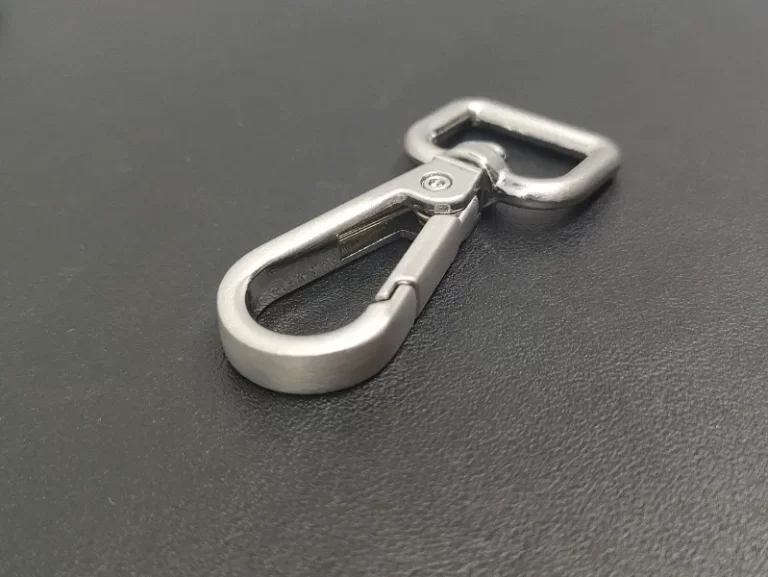
To create precise threads in a hole, a dedicated tap cuts the threads. Therefore, the tap becomes the best tool for components that need to be screwed and tightened together, such as buckle bases and lock mechanisms.They’re the tiny coil grooves that keep everything from failing after a zillion rounds of torquing and untorquing. Everything must be precise, as with just a slight imbalance screws will strip and all work undone.
Pre-assembly (Riveting or Assembly Preparation)
For modular components like D-rings or buckles, this step may involve preliminary assembly or compression to ensure structural integrity.
These 1-2 days mark the refinement period where roughness transforms into precision. It shapes the clumsy blank into a functional prototype, preparing it for the magnificent metamorphosis to come.
The Magic of Light and Shadow—The Art of Polishing (2-3 Days)
Keywords: Polishing, Buffing, Mirror Finish, Texture
If the first two stages shaped the “bone” and ‘flesh’ of the accessory, then polishing is the crucial step that gives it its “skin.” These 2-3 days are a magical moment where light, shadow, and friction dance together.
Progression from Coarse to Fine:The process of polishing also basically involves three stages(rough, middle and fine) using varying wheels and compounds. The continuous and high speed rotation of buffing cloth wheel is in contact to the parts with surface film while removing scratches and oxidized layers from the metal. This slow process reveals beautiful texture, enhancing the inate beauty of the metal.
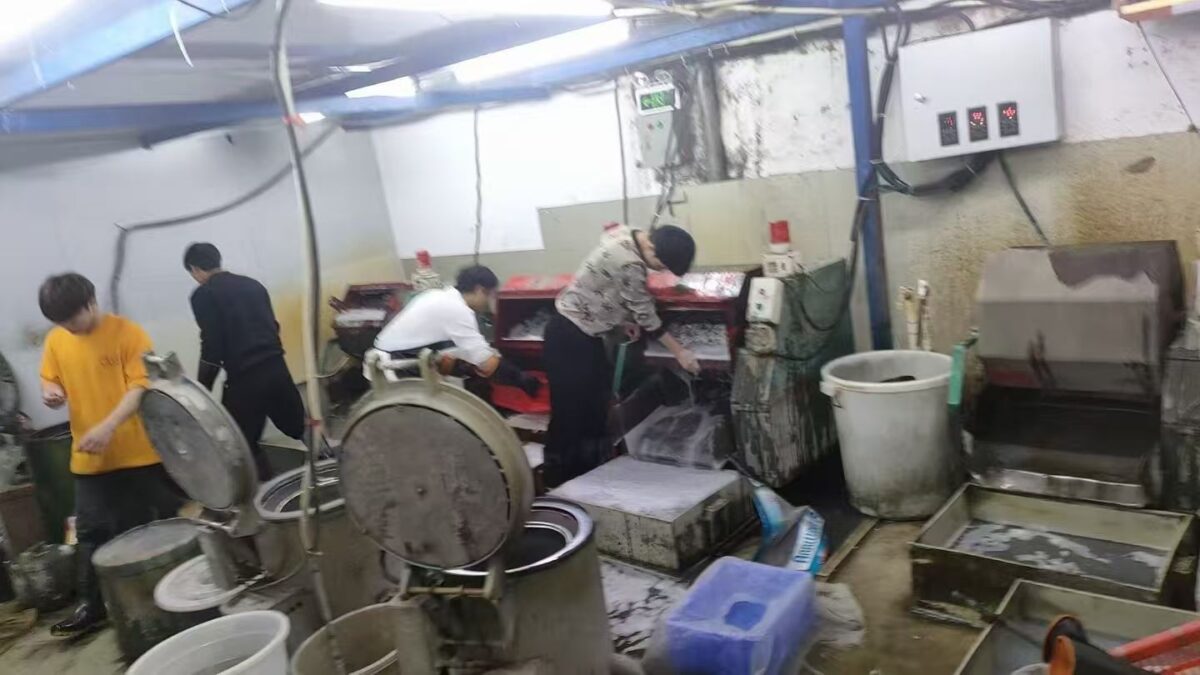
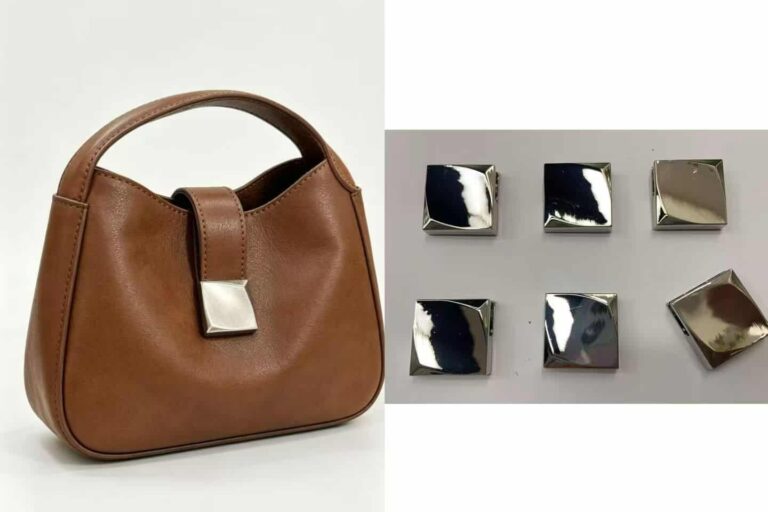
The Warmth of Human Touch: In an increasingly automated age, the fine edges and creative angles of deluxe hardware are still highly dependent on the skills of experienced polishing apprentices。Using their delicate fingers and sharp eyes, the craftsmen make sure all the edges and curves get even treatment.Their craftsmanship leads to finishes that vary from a mirror-like sheen to a silken, smooth, silk matte appearance – these glosses insist on the irreplacable human skill in the polishing phase.
These 2-3 days mark the aesthetic period of “rebirth.” They erase the cold traces of industrial production, infuse the soul of craftsmanship, and awaken the metal to radiate a captivating luster.
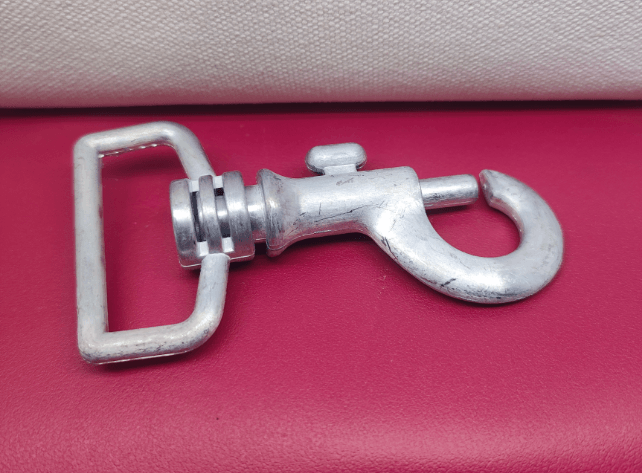
The Coronation of Color—The Sublimation of Electroplating (5–10 days)
Keywords: Electroplating, Corrosion Resistance, Decorative Properties, Plating Layer
Though polished components gleam, they remain unprotected—vulnerable and prone to oxidation. Electroplating, the most technologically advanced and variable stage of the process, will cloak them in a robust and lustrous “outer layer.” The 5-10 day duration underscores its complexity.
Pre-treatment
Eighty percent of the efficiency of electroplating depends on a good pre-treatment. Because they have to be ultra clean, completely free of contamination, components need thorough degreasing, acid etching and activation in order to achieve a perfect surface. If this important step is omitted, it can lead to plating flaws such as bubbling and flaking of the coating.
Electroplating Process
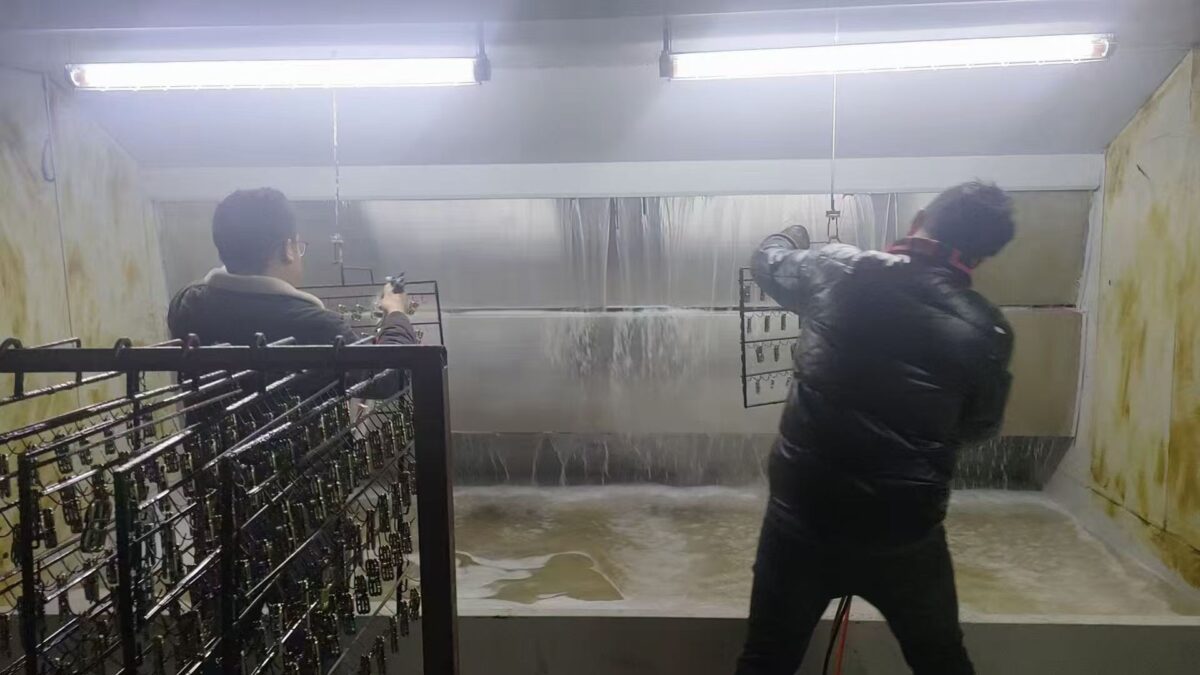
In the electroplating process, manufacturers use the accessory as a cathode and dip it into an electrolyte solution containing metal ions such as copper, chromium, nickel, or pure gold. An applied direct current then reduces these metal ions to atoms, which plate out on the surface of the accessory. As a result, there is provided a metal coating of compact and tight bond density. In addition to meeting all of the aesthetic requirements between bronze, gun metal, silver grey, yellow and rose gold coloring that you likely want in your parts the process offers other benefits for both corrosion resistance as well component wear and hardness due to smoothing out surface imperfections.
Time Variables
Plating duration depends on the type of plating, required coating thickness, and the factory’s order queue. Special colors or thick gold plating involve more complex processes and take longer. Additionally, electroplating facilities typically process orders from multiple hardware manufacturers simultaneously, making queuing a common occurrence. Thus, the 5-10 day timeline encompasses transportation, queueing, and actual processing time.
These 5-10 days represent the transformative period of “turning stone into gold.” It endows hardware components with armor against the ravages of time while also granting them a fashionable exterior that harmonizes with the soul of luggage design.

Upholding Quality (2-3 days)
Key words: Quality inspection, packaging, warehousing
After nearly twenty days of refinement, the hardware accessories have reached perfection. But before delivery, it must also pass the final and most stringent checkpoint – quality inspection and packaging.
Scrutinizing Inspection
Quality auditors to do Random or 100% inspection for every shipment which guaranted the consist quality. We make these assessments under proper lighting and with tools such as magnifying glasses to ensure accuracy.Primary inspection guidelines include a uniform shade of colour, surface defect such as flattening or scratches (including plating completeness), polishing quality adapted to specified tolerance dimensions, and functional reliability that includes checking for springs and clips. Items that don’t pass these tough standards get purged within our power system.
Meticulous Packaging
We carefully package qualified components. To prevent scratching their hard-earned surfaces during transport and storage, we typically wrap each component individually in PE bags or bubble wrap. Then, we neatly arrange them in dedicated blister trays or compartmentalized paper boxes to prevent mutual impact.Labeling, boxing, system entry—finally, they enter the finished goods warehouse awaiting shipment to bag assembly plants.
These 2-3 days mark the “nitpicky” protection period. It represents the final acceptance of all preceding processes—a quality commitment from the factory to the brand owner and, ultimately, to the end consumer
Conclusion
As we look back at this journey of 13 to 23 days, we understand that it is more than just a day count. It is an industrial symphony of a place, one marked by obsessive order, hand skill to die for, lifelong patience and rampant perfectionism. Any part of this process shortened compromises the quality as a whole – Each deadline met represents an unwavering commitment to excellence..
In our fast-paced modern world, we often crave instant gratification. Yet some true beauty requires time to mature. The production lead time for luggage hardware exemplifies this modern interpretation of “slow work yields fine results.” It reminds us that genuine quality stems from reverence for every detail and a profound understanding of natural laws and industrial processes.
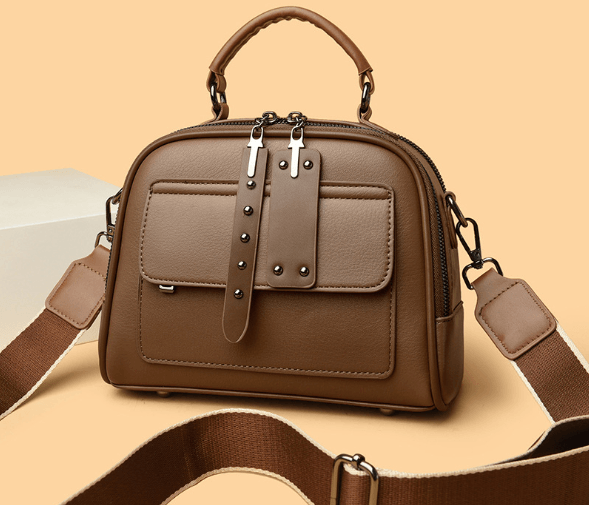
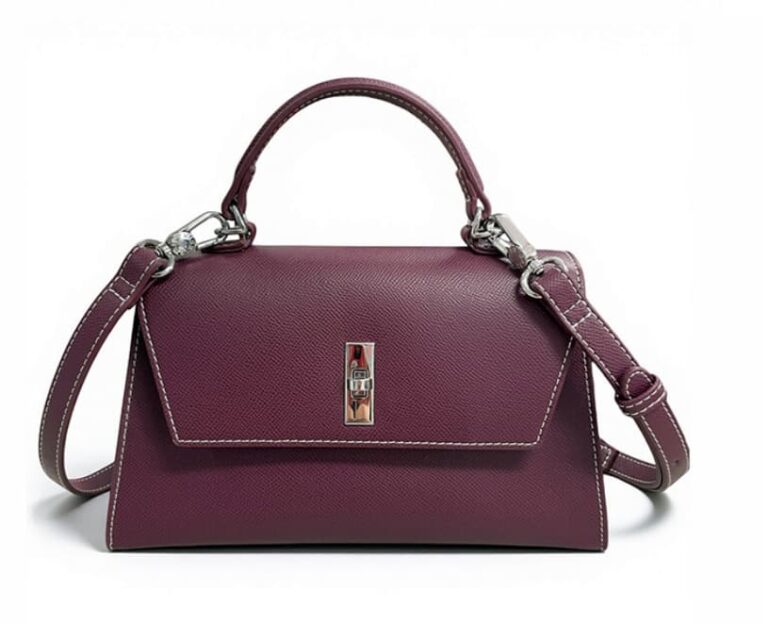
So, when you actually pick up a piece of luggage, admire the finely crafted hardware for a moment. BAGGAGE & ACCESSORIES Not only does it carry your entailments for the journey forward, this piece carries an intriguing tale of time and progression—a twenty day odyssey that has been meticulously woven together with the hands of many.