A Guide to Sourcing Luggage Hardware: Avoid These 8 Common Pitfalls to Make Your Supply Chain More Efficient
In the luggage, handbag and leather goods industry, although hardware fittings are small, they have a direct impact on a product’s perceived quality, durability and overall image. Many procurement officers at luggage manufacturers, leather goods designers and brand companies have, to varying degrees, encountered issues such as incorrect dimensions, surface discolouration, excessively long moulding lead times and failure to pass environmental testing during the procurement process. These issues not only delay production but may also damage a brand’s reputation.
Drawing on practical B2B procurement experience, this article identifies eight common issues encountered during the procurement of luggage hardware fittings and offers actionable strategies to mitigate them, helping buyers to select hardware more accurately and coordinate effectively with suppliers.
Details that are easily overlooked during the sample verification stage
Discrepancies between physical samples and bulk deliveries
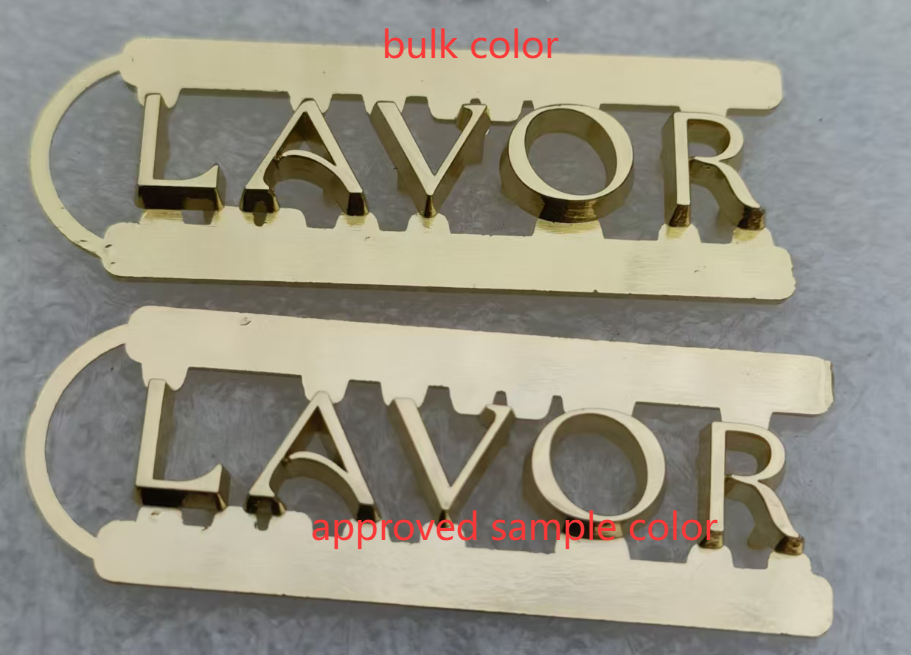
Many buyers have encountered the following situation: during the prototyping stage, the few samples received are finely crafted, with a glossy finish and precise dimensions; however, upon arrival of the bulk order, they discover that the plating is uneven, there are burrs on the edges and corners, and the fasteners do not open and close smoothly.
Reason
During the prototyping stage, technicians typically carry out manual finishing and inspect each item individually, whereas mass production relies on mould precision and process control. If a supplier’s moulds lack sufficient precision or their quality control procedures are inadequate, discrepancies between prototypes and mass-produced items are likely to arise.
Recommendations for mitigation
- Require suppliers to provide a sample approval form, signed by both parties, and retain a physical sample
- Clearly stipulate that the quality standards for bulk deliveries shall be based on the approved sample
- Select source factories with in-house moulding facilities and full inspection capabilities, rather than mere trading agents
Judging surface finishes from photographs alone
It is easy to misjudge the finish of hardware fittings based solely on photographs or WeChat videos. For example, an electrophoretic black finish may appear uniform and rich on screen, but the actual item may be too dull or too reflective; an antique bronze finish may appear reddish or yellowish depending on the batch.
Recommendations for avoiding issues
- Request physical colour swatches or samples of similar completed orders to be sent
- Specify the process code or colour code clearly to ensure consistency for future repeat orders
- For important orders, we recommend visiting the factory in person to inspect the production line or requesting a video call for confirmation
Common misconceptions about materials and craftsmanship
Mismatch between material selection and intended use
Common materials used for luggage hardware fitting include zinc alloy, iron, brass and eco-friendly alloys, each offering different levels of strength, corrosion resistance and cost. Purchasers sometimes opt for zinc alloy to reduce costs, but when used in fastenings for rucksacks—which require high load-bearing capacity—or in lead clips for pet carriers, prolonged stress may cause deformation or breakage.
A brief comparison of hardware fitting material properties:
| material | advantage | Suitable scenarios |
|---|---|---|
| Zinc Alloy | Capable of die-casting complex patterns with high dimensional accuracy | Snap fasteners, nameplates, decorative fasteners, magnetic fastener casings |
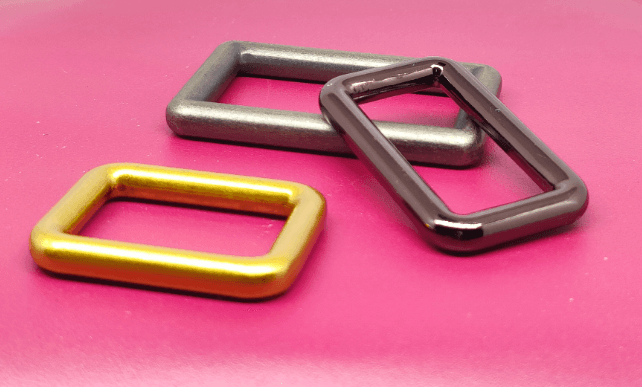
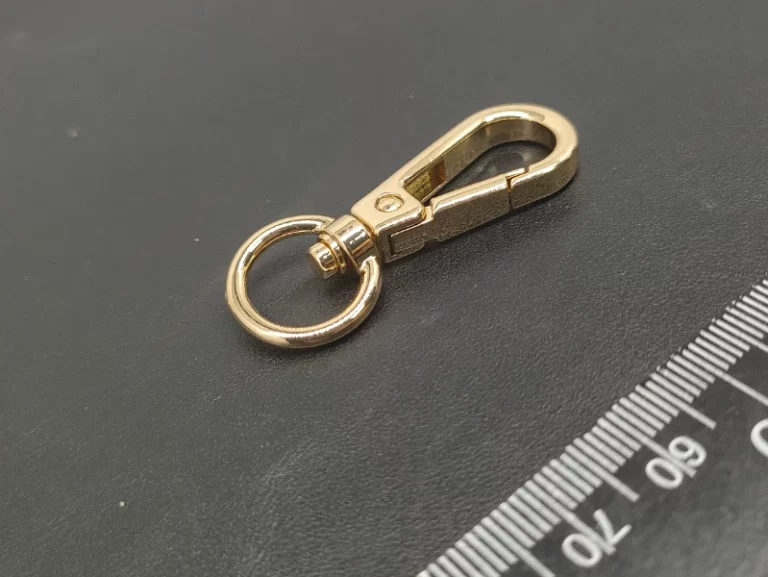
| Brass | High ductility, substantial texture, corrosion-resistant | High-end handbag hardware: D-rings, square buckles, dog-clips |
| Iron | High strength, relatively low cost | Luggage bases, corner protectors, load-bearing structural components |
| Environmentally friendly alloy | Complies with RoHS standards; hypoallergenic | Export orders, children’s bags and luggage, personal accessories |
Recommendations for mitigation
- Clarify the actual purpose and load-bearing conditions of the hardware components, and explain the intended usage scenarios to the supplier
- Request that the supplier provide a material composition specification or a third-party test report of hardware fitting
- For load-bearing hardware (such as D-rings, snap hooks and bag bases), give priority to brass or iron components
When selecting surface finishes, some focus solely on appearance rather than durability
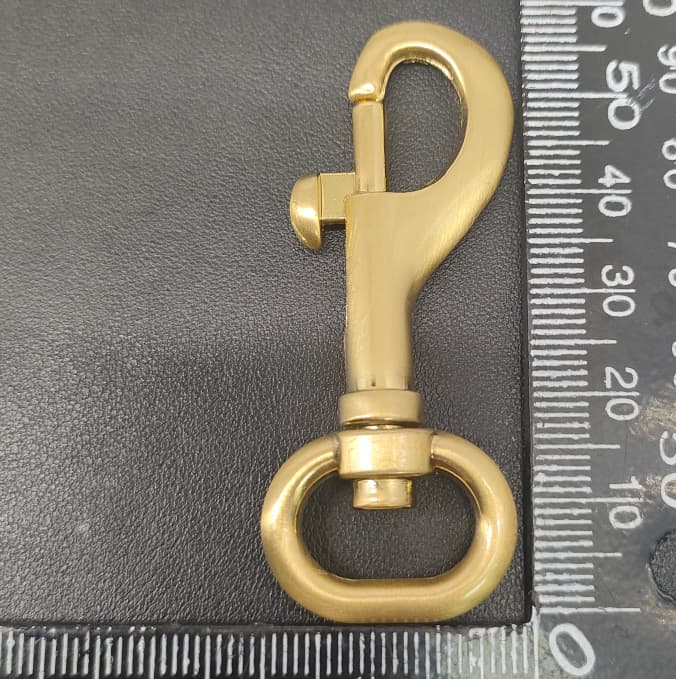
Electroplated nickel has a bright, white finish and is moderately priced, but its wear resistance is average; electrophoretic black coating offers strong adhesion and good coverage, but the base material may become visible if the surface is knocked or scratched; the brushed finish has a fine texture, but scratches are quite noticeable once the surface is damaged.
Some buyers focus solely on ‘aesthetics’, overlooking the requirements for wear resistance, sweat resistance and salt spray resistance that hardware components must meet in practical use.
Recommendations for common surface treatments
- Nickel plating: Suitable for mid-range luggage for the domestic market and accessories not used frequently
- Antique bronze/black gold: Suitable for vintage-style leather goods; note that a sealing layer is required to enhance wear resistance
- Electrophoretic black: Suitable for outdoor luggage and tool bags; offers excellent corrosion resistance
- Brushed finish: Suitable for business briefcases and nameplates; requires a transparent protective coating
- Hypoallergenic eco-friendly plating: Standard for export orders; particularly suitable for shoulder strap buckles and handle buckles that come into contact with the skin
Recommendations for compliance
- Clearly define the product’s operating environment and expected service life
- Specify in international trade orders that ROHS-compliant manufacturing processes and the duration of salt spray testing are required
- Require suppliers to provide written documentation of process safeguards, rather than merely verbal assurances that the product will not fade
Process risks during the custom moulding phase
Unclear Agreements on Mould Ownership and Costs
In the customisation of luggage hardware fitting, tooling costs can range from a few hundred to tens of thousands of yuan; however, many buyers fail to clearly stipulate the ownership of the moulds and responsibility for their safekeeping at the outset of the partnership. Should they subsequently switch suppliers, they may find themselves unable to retrieve the moulds or be required to pay for new tooling.
Recommendations for mitigating risks
- Sign a written agreement prior to mould production to clearly define ownership of the mould
- Specify the mould’s service life, the party responsible for maintenance, and the storage location
- It is recommended that mould costs be itemised separately rather than included in the unit price, to facilitate the clarification of ownership rights at a later stage
Non-standard drawing annotations leading to manufacturing deviations
Some drawings provided by purchasers lack key information such as dimensional tolerances, surface treatment requirements and material grades. For example, a drawing that simply states ‘D-ring 30mm’ without specifying the internal width, wire diameter or chamfering requirements may result in a finished product that cannot be threaded through the webbing.
Information to be included in standard drawings
- Three-view drawings and key dimensions (including tolerance ranges)
- Material grade
- Surface finish type and colour code
- Special requirements (salt spray test duration, hardness values, environmental standards)
- Assembly relationship diagrams (e.g. clearance between latch and base)
Recommendations for mitigation
- If professional engineering drawings are not available, please provide a physical sample or photographs of competing products, clearly marking the key dimensions.
- Require the supplier to provide manufacturing drawings and ensure these are mutually agreed upon before proceeding with mould making.
- For complex structures (such as the internal mechanisms of bag fasteners), it is recommended to produce a prototype for validation.
Batch Delivery and Quality Control Acceptance
Lack of standardised procedures for goods inspection
Many procurement disputes stem from ‘inconsistent acceptance criteria’. The purchaser considers pitting in the coating to be a defect, whilst the supplier maintains that it falls within the industry’s acceptable limits. With both parties sticking to their respective positions, this affects future cooperation
Recommended acceptance inspection items
- Appearance: Visual inspection under normal lighting from a distance of 30 cm; no bare spots, bubbles or obvious pitting
- Dimensions: Random sampling of key dimensions; measured using a calliper and checked against drawing tolerances
- Function: Smooth opening and closing of snap fasteners; magnetic fasteners meeting required holding force; normal spring return of dog clips
- Adhesion: Cross-hatch test or adhesive tape test (applicable to electrophoresis and spray-painted parts)
- Environmental Compliance: Random samples to be sent to a third-party laboratory for testing in accordance with ROHS standards
Recommendations for Mitigation
- Clearly define acceptance criteria and sampling ratios in the procurement contract
- Include provisions regarding the handling of non-conforming products (returns, rework, deductions)
- It is recommended to apply stricter inspection standards to the first batch of production runs, and to relax these standards only once stability has been confirmed
Delays in delivery times affect finished product dispatch schedules
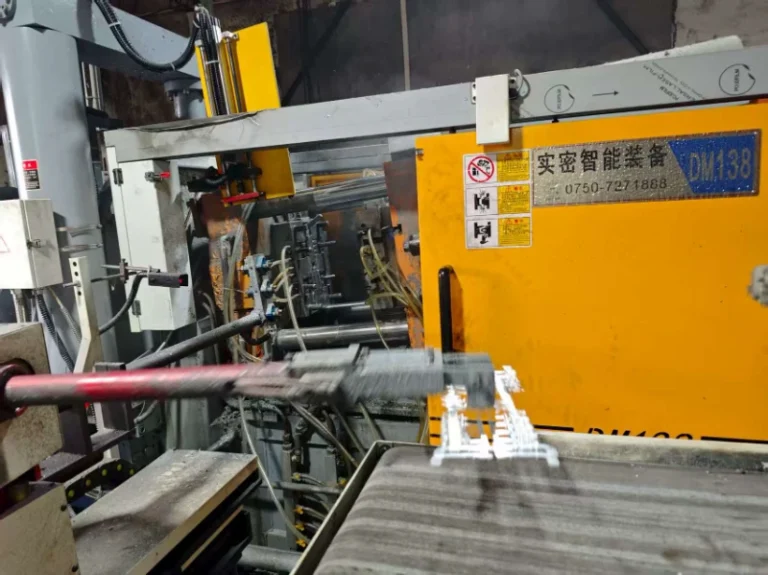
The production of luggage hardware fitting involves multiple processes, including moulding, die-casting/stamping, polishing, electroplating and assembly; a delay at any stage can hold up the overall delivery schedule. This is particularly true for outsourced electroplating: when environmental regulations are tightened, electroplating plants face tight scheduling, which can easily lead to backlogs.
Recommendations for Mitigation
- When placing an order, request that the supplier provide a production schedule specifying the key milestones at each stage.
- Allow for a buffer period of 7–10 days, particularly for export orders.
- Select source factories with a complete production chain to reduce reliance on subcontractors.
- For important orders, request delivery in batches to minimise the risk of delays in any single batch.
How to Choose a More Reliable Hardware Supplier
Taking all the above points into account, a reliable supplier of luggage hardware fitting should possess the following capabilities:
Core Capabilities
In-house mould shop capable of independently carrying out mould making and repair
Clear quality control procedures and inspection standards
Material certificates and environmental compliance reports available
Collaboration
We support customisation based on provided drawings and a sample approval process
We clearly communicate delivery times and have a mechanism in place for handling issues
For large orders, we can arrange delivery in batches
Compliance capabilities
Familiar with ROHS environmental requirements for international trade
Able to assist with third-party factory audits or product inspections
Conclusion
The procurement of hardware fitting for luggage and bags is not simply a matter of ‘looking at drawings to find products’; rather, it is a systematic process involving materials, manufacturing techniques, moulds, quality control and environmental standards. By taking an extra step to verify details at each stage—such as sample confirmation, material selection, drawing annotations, mould specifications and acceptance criteria—purchasers can effectively minimise disputes later on.
For commonly used categories such as D-rings, square buckles, dog clips, snap fasteners, magnetic clasps, rivets, corner protectors and luggage labels, it is advisable to establish standardised procurement lists and supplier evaluation forms, thereby codifying experience into processes to enhance the stability and efficiency of the supply chain.