Customized Zipper Puller online in China
In the luggage hardware customization industry, the zipper puller, as the core component that affects the detailed texture and assembly compatibility of the products, the customization accuracy directly determines the qualification rate of the finished luggage products. Currently, most start-up brands and cross-border merchants choose the online customization model, which allows them to complete the production and implementation of exclusive LOGO zipper puller without the need for offline on-site coordination. However, online customization is divided into two modes: no physical image size customization and physical original sample replication customization. The processes, modification times, and production timeliness of these two modes vary greatly. This article, based on real online customization cases, thoroughly disassembles the entire process of no physical pull tab customization, analyzes the common problems in the customization process, and compares the core advantages of having or not having physical customization, providing practical reference for luggage merchants’ online hardware customization.
Complete practical case of online custom production of pull tabs without physical samples
The client this time is an online luggage startup brand. There are no existing physical samples of the pull tabs. Only reference pictures and detailed size parameters are provided. They require customizing the same type of luggage pull tabs with the brand LOGO on both sides. This is also the most common cooperation scenario for online customization at present. The entire customization process involved multiple revisions, communication among three parties, and final adjustments for the bulk goods, fully demonstrating the entire process and pain points of custom production without physical samples.
Initial requirement alignment and drawing design
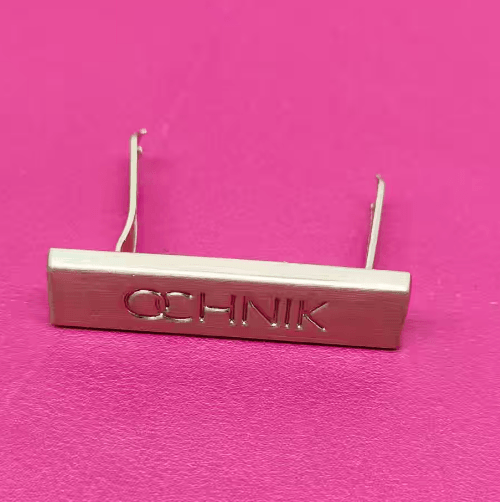
At the beginning, the client had no physical samples. They only sent reference pictures of the pull tabs, basic size data such as length, width, and thickness, and clearly stated the core customization requirements: to replicate the shape of the reference pull tab, to engrave the exclusive brand logo on both sides of the pull tab, and to retain the structural feature of the original pull tab where the thickness at the head and tail is inconsistent. Based on the textual and graphic data provided by the client, we precisely drew the three-dimensional design drawings for the customized pull tabs, marking every detail such as size, thickness, logo engraving position, electroplating process, etc., and sent them to the client for online confirmation. After verifying that the drawings were correct, we initiated the sample production process
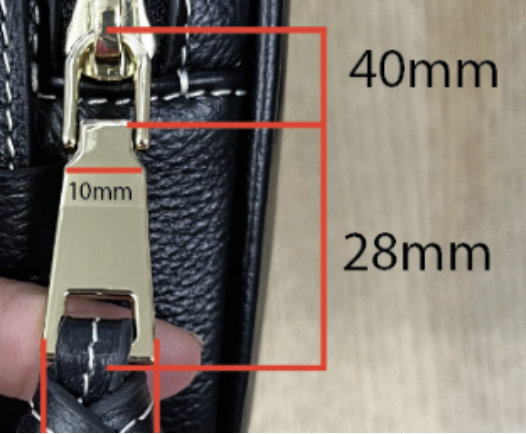 | 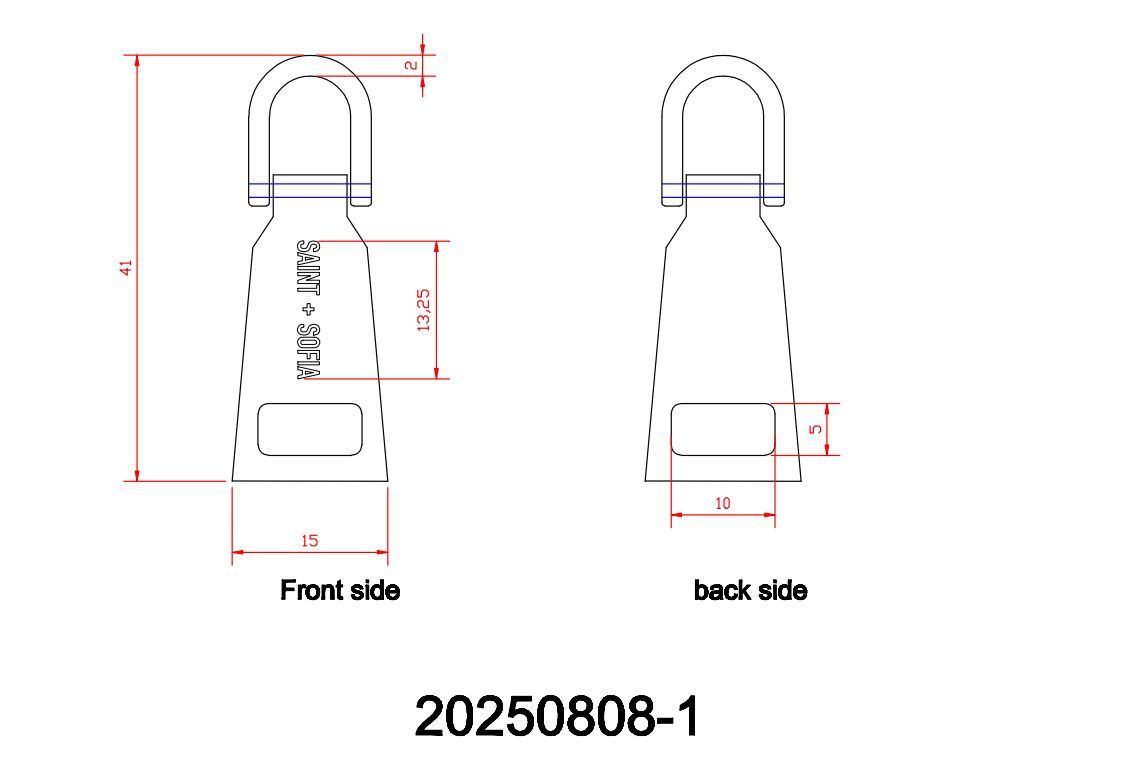 |
| The client provide the picture and size for us | artwork for client |
First sample production and customer modification adjustments
After confirming that the drawings were error-free, the factory completed the production of the first batch of samples and sent them to the customer for verification. After receiving the physical samples, the customer proposed structural modification requirements, rejected the original design with differentiated thickness at the head and tail, and requested that the factory adjust the overall thickness of the pull tab to a uniform specification.Due to the lack of an original physical reference, relying solely on visual judgment from the pictures led to deviations. The customer was unable to predict the visual and tactile effects of the physical thickness in the early stage, which was the core reason for this modification.
In response to the customer’s modification requirements, we re-optimized the design drawings, unified the overall thickness of the pull tab, and sent the drawings again for the customer’s verification and confirmation. After finalizing the drawings, the factory initiated a second sample production, newly produced samples with a uniform pull tab thickness, and sent them to the customer.
| 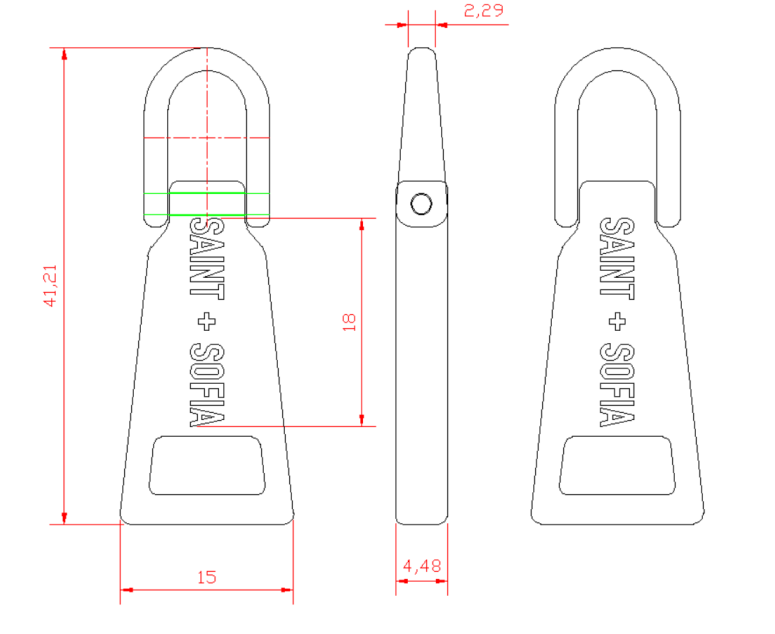 |
| Original artwork | new artwork |
Final confirmation of the sample and the first batch of mass production
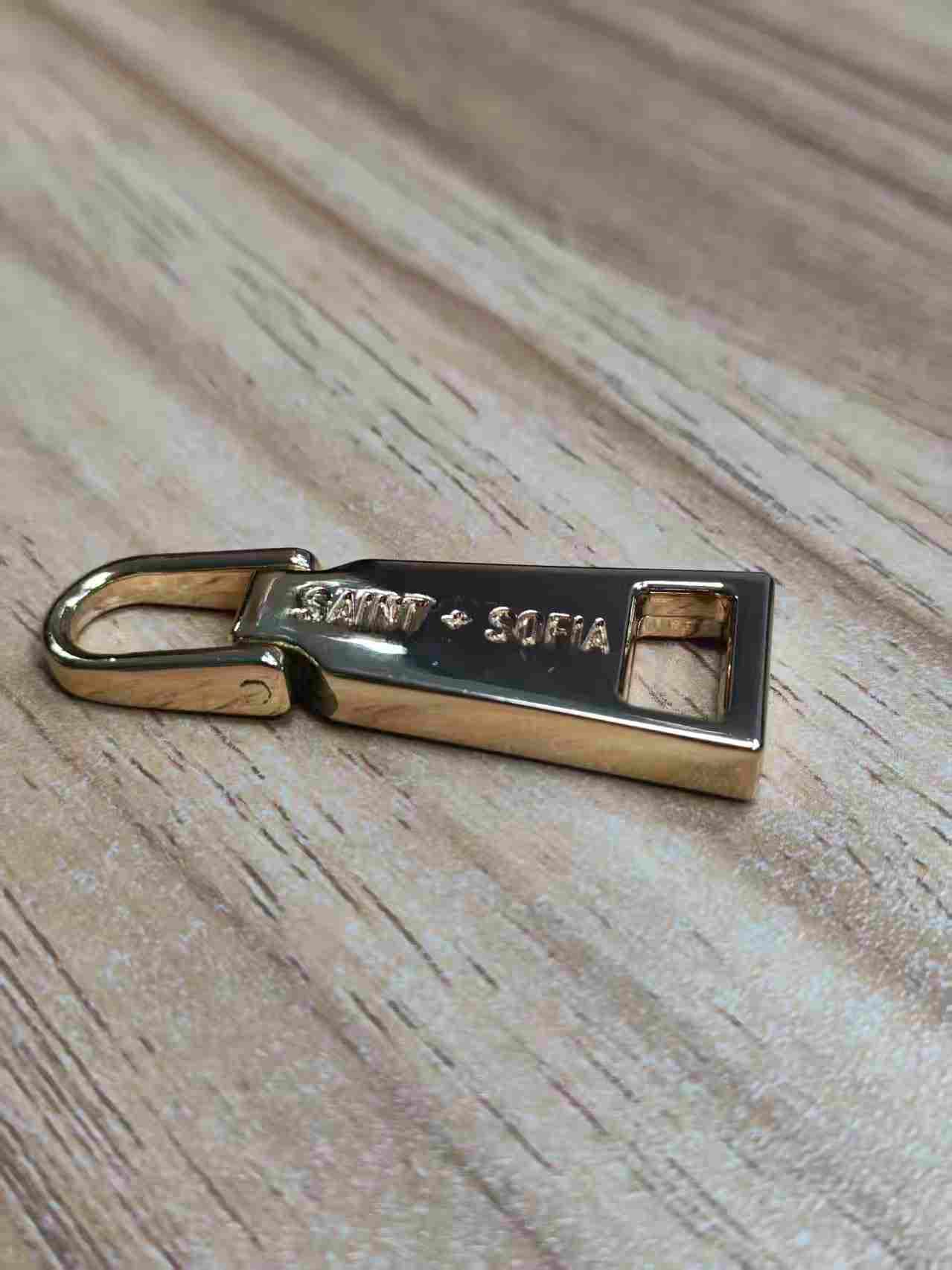
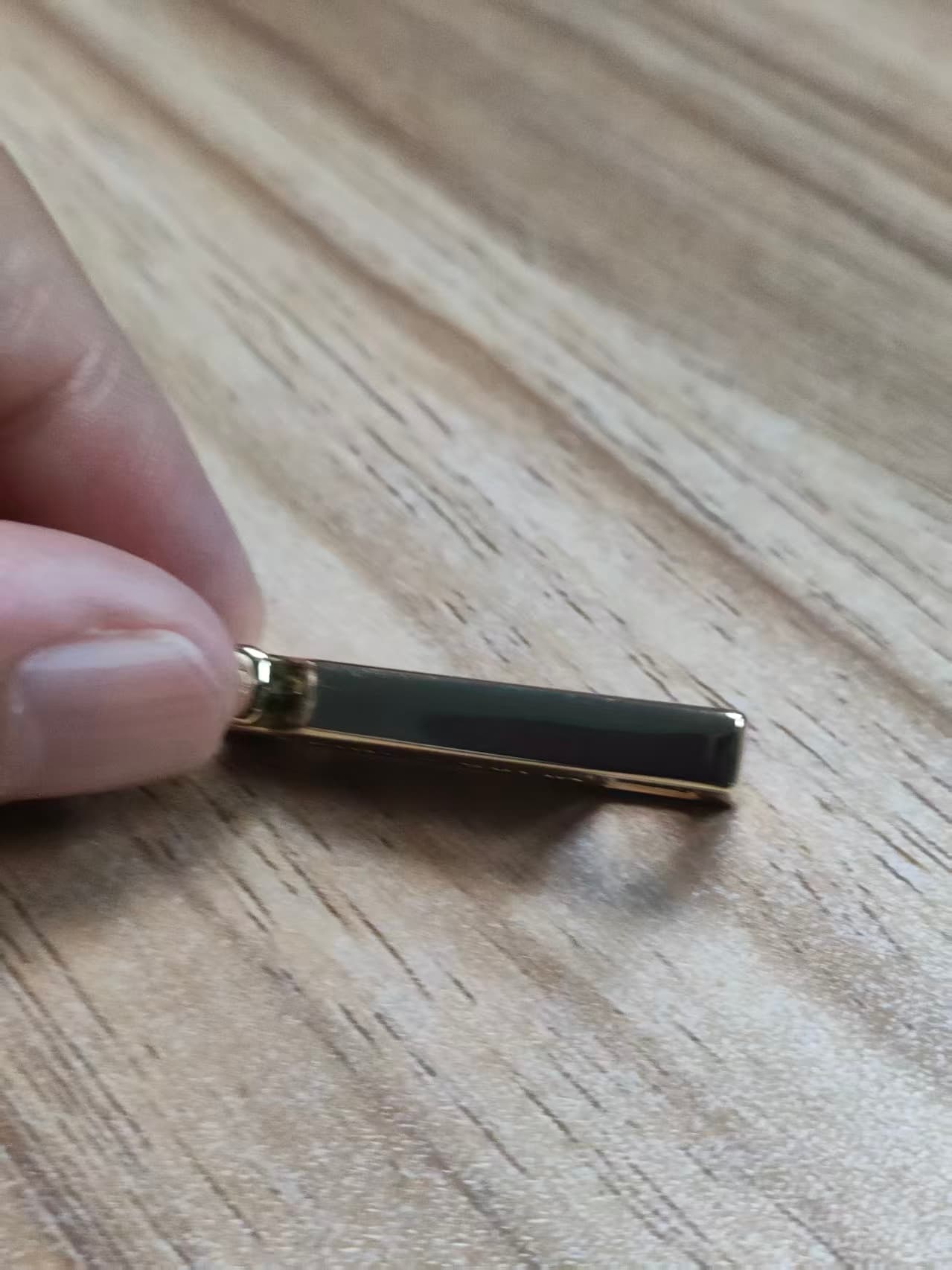
After the customer received the second revised sample, they approved the pull-out shape, thickness, LOGO engraving effect, and overall texture. We officially confirmed the sample as finalized and issued a mass production order.The factory immediately started the full process of mass production, electroplating, and packaging, and completed the delivery of the first batch of goods.
 |  |
Received feedback from the customer’s assembly supplier regarding the thickness issue.
To quickly resolve the problem, we immediately coordinated with the customer and the customer’s assembly supplier for a three-party online communication, verified the YKK slider compatibility parameters, and finally confirmed that we would change the thickness of the pull tab nose from 2.3mm to 1.6mm to strictly match the standard slider size. After the customer confirmed the rectification plan, we re-optimized the parameters, adjusted the production process, and fully reworked to produce a new batch of full-sized products, ensuring that the products could be normally assembled and used.
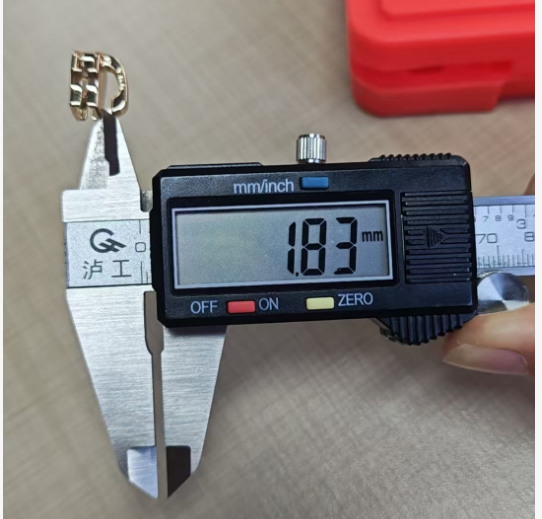 | 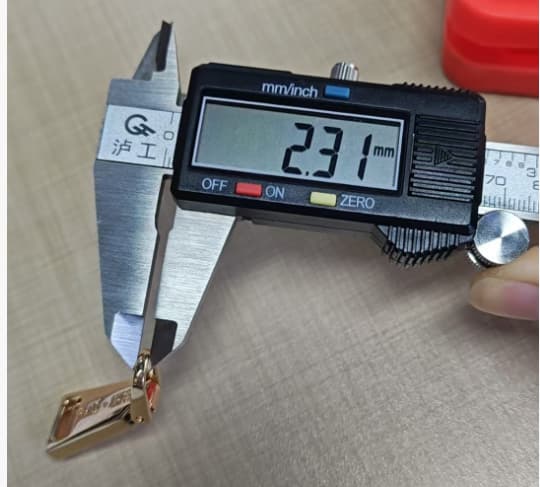 | 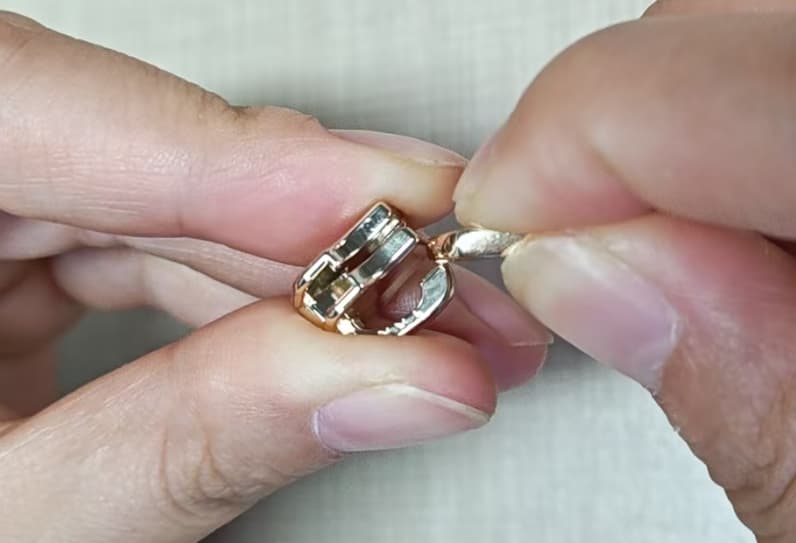 | 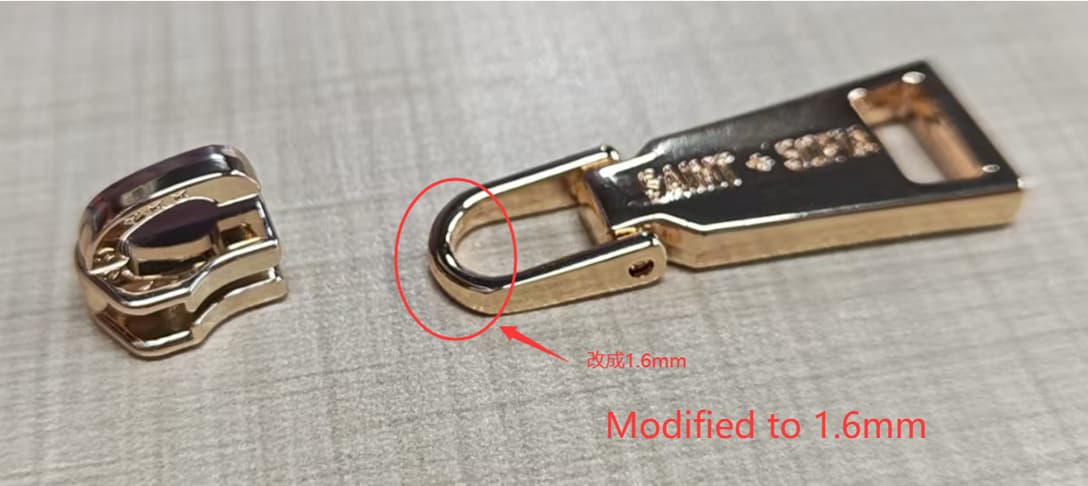 |
| The thickness of slideris 1.8mm | The thickness of nose 2.3mm | So it cannot be installed | need to modify to 1.6mm |
The standard process for customizing pull-outs based on actual physical samples
Unlike the custom model where customers provide custom-made graphic and text samples without physical objects, the custom mode where customers provide ready-made qualified physical samples is the optimal solution for online customization of luggage hardware. It is suitable for most precise replication and minor upgrade customization requirements, with a simple process, zero repeated model changes, and extremely high implementation efficiency.
The above real case clearly shows that whether physical samples are available directly determines the number of model changes, production efficiency, cost loss, and product qualification rate for the customized zipper puller. To clearly demonstrate the difference between the two, the following provides a comprehensive comparison from the aspects of the customization process, model changes, production cycle, compatibility rate, and communication costs.
This real customization case clearly shows that the biggest pain point is online customization of pullers based solely on images and dimensions. The main problem lies in the deviation of visual data and the inability to accurately predict assembly parameters. Luggage pullers are precision small hardware components. A thickness difference of 0.7mm will cause them to be unable to fit the standard YKK zipper slider. Once the initial parameter prediction is incorrect, it will trigger multiple model changes, large-scale rework, third-party communication and rectification, and a series of other problems. This not only prolongs the production cycle but also increases additional costs such as labor, materials, and logistics, and delays the new product launch and shipment plans for customers.
Core Differences in Customized Production between No-physical sample and physical sample
From the above real cases, it is clearly evident that whether there are physical samples directly determines the number of model modifications, production efficiency, cost loss, and product qualification rate for the custom-made parts. To visually illustrate the difference between the two, the following provides a comprehensive comparison from the aspects of the customization process, model modifications, production cycle, compatibility rate, and communication costs through a table.
| Comparison project | There is also customized production (where the customer provides the actual sample for the sheet). | Customization without physical objects (only drawings / pictures / descriptions, no physical objects) |
| Customization process | Obtain the physical object → Measure the dimensions, structure, curvature, thickness of hardware, and surface treatment → Establish a 3D model → Produce a sample → Have the customer compare with the physical object for confirmation → Produce the final batch of goods | Receive the requirements for drawings / pictures / text → Understand the shape, assembly gap, material, and surface effect → Build a 3D model → Produce the first sample → Have the customer check the sample → Make repeated adjustments → Confirm and then start mass production |
| Model modification | The number of revisions is relatively small. Using the physical object as the reference benchmark, the dimensions and shapes are clearly defined. The initial modeling has a high degree of accuracy, with only a few minor adjustments; the revisions mainly focus on surface treatment, coatings, and other details. | Receive the requirements for drawings / pictures / text → Understand the shape, assembly gap, material, and surface effect → Build a 3D model → Produce the first sample → Have the customer check the sample → Make repeated adjustments → Confirm and then start mass production |
| Production cycle | The cycle is relatively short. The mapping and modeling process is fast, and the pass rate for prototyping is high. This reduces the time spent on repeatedly modifying the mold and re-running the prototype. | The cycle is longer. The first batch of samples is prone to not meeting expectations. Multiple mold modifications and re-production of samples prolong the overall time of the sample-making stage. |
| Compatibility (Assembly Adaptation) | High adaptability. It enables direct measurement of the assembly relationship between the actual object and the zipper head, leather material, and slot, effectively avoiding problems such as assembly jams and incorrect hole positions in advance. | The adaptability risk is high. We can only rely on the theoretical dimensions in the drawings and cannot predict the actual assembly tolerances. This makes it easy for the large-scale products to encounter problems such as not being assembled properly, loosening, and material scraping. |
| Communication cost | Communication is straightforward. The physical objects are intuitive, and both parties have a unified understanding of the shape, feel, texture, and color, reducing misunderstandings and minimizing disputes. | The communication cost is high. There are often differences in perception regarding details such as curvature, thickness, texture, and chamfer. A large number of pictures and texts are needed for repeated confirmation of requirements. |
| Cost loss risk | The risk is low. There are fewer modifications during the initial sample production, resulting in lower costs for mold modification and waste reduction; the defect rate of the large-scale production can be controlled. | The risk is relatively high. Repeated mold modifications will incur additional mold costs and sample material expenses; if there is a deviation in the understanding of key dimensions, there is a risk of scrapping the large-scale production batches. |
| Product qualification rate | The product qualification rate is high, and the sample is highly consistent with the original physical items provided by the customer. | The product qualification rate is relatively low. The first sample often fails to meet the customer’s expectations. It requires multiple iterations to meet the requirements. |
Conclusion
Overall, in the process of customizing the mold, providing physical samples can serve as the development benchmark. The dimensions, shapes, and assembly feel are all clearly visible. The modeling accuracy is high, the number of modifications is small, the communication deviation is low, the production cycle is short, the cost risk is lower, and the stability of the finished product is better. Without physical customization, it only relies on pictures, drawings, or text for communication. Details are prone to cause understanding differences. The model iteration times are more, the sample verification cycle is longer, there are more assembly compatibility risks, and the risks of mold modification and batch production are higher. It is more suitable for the development of new styles. Customers can choose the solution according to the project requirements. Having physical references is a more efficient and reliable customization method.