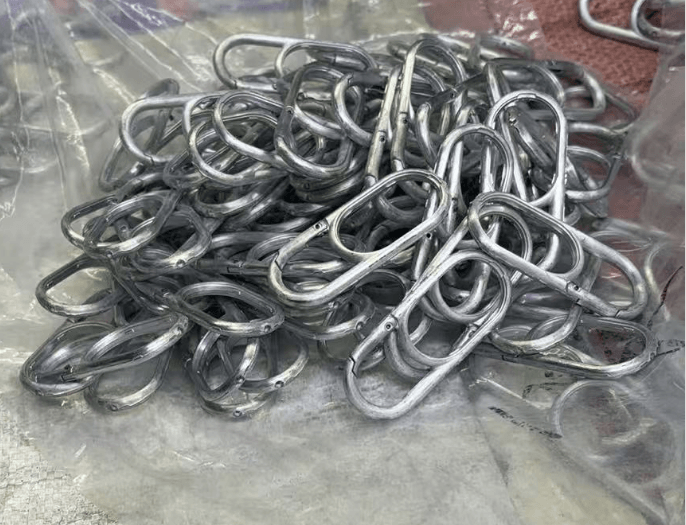
Bag Hardware Names: A Comprehensive Classification by Function
Bag hardware is a core component that balances a bag’s functionalityand aesthetic appeal . We can categorize bag hardware into five main types based on its functional roles and application scenarios.They are Connecting Hardware, Securing Hardware, Adjusting Hardware, Closure & Lock Hardware, and Decorative & Auxiliary Hardware. Bellow is a detailed breakdown of each type, including Bag Hardware Names, features, and core uses.
1. Connecting Hardware (Linking Bag Body & Accessories)
This type of hardware primarily connects different parts of a bag. We often make this hardware (such as shoulder straps, ornaments, or detachable components) ring-shaped or hook-shaped. Its design focuses on flexibility and stability to ensure smooth assembly and disassembly.
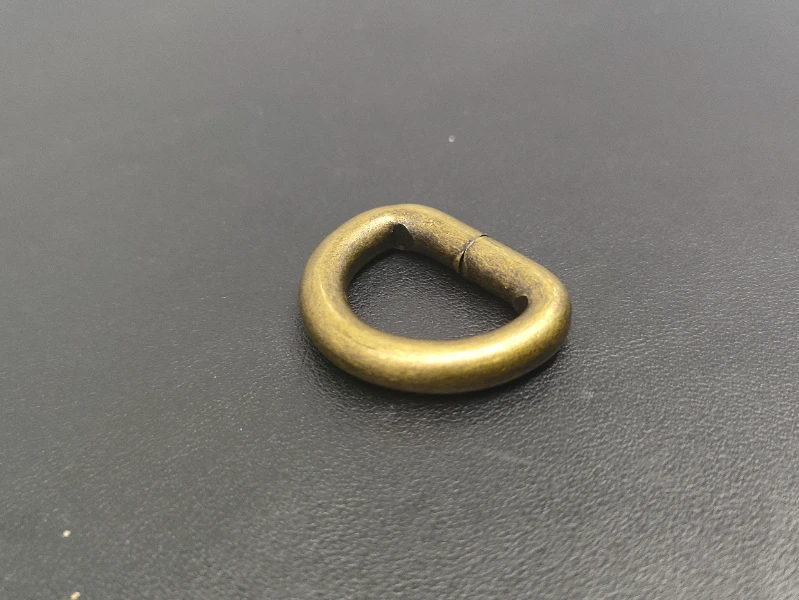
D Ring:
Shaped like the letter “D,” with one straight side and one curved side. Its core function is to attach detachable shoulder straps. People usually thread a small piece of leather through the straight side, fold it back, and fix it to the bag body. The curved side connects to hooks or straps for easy adjustment.
O Ring
A fully circular ring. Compared to the D Ring, its all-curved structure offers greater flexibility. Making it ideal for linking backpack straps or serving as a decorative accent on the bag.
Rectangle Ring / Square Ring:
Structured as a rectangle. People call it a Square Ring if all four sides are equal in length.
Both types excel at auxiliary fixation—for example, stabilizing the connection between shoulder straps and the bag body or linking small accessory loops.
- Triangle Ring: Manufacturers also know this hardware as a Triangular Ring, and they mostly use it on backpacks rather than handbags. Beyond its basic role in connecting straps, its angular shape adds a unique design touch to the bag’s overall look.
- Oval Ring: Nicknamed the “Egg-Shaped Ring” due to its oval contour. Designers typically incorporate it in pairs (stacked together) for adjusting shoulder strap length: users slide the strap through the overlapping rings to customize the fit.
- O-Clip: A specialized circular clip with an openable “gate.” Users open the gate when needed to attach the clip to the bag. You can remove it entirely when not in use, ensuring it stays hidden and does not disrupt the bag’s appearance.
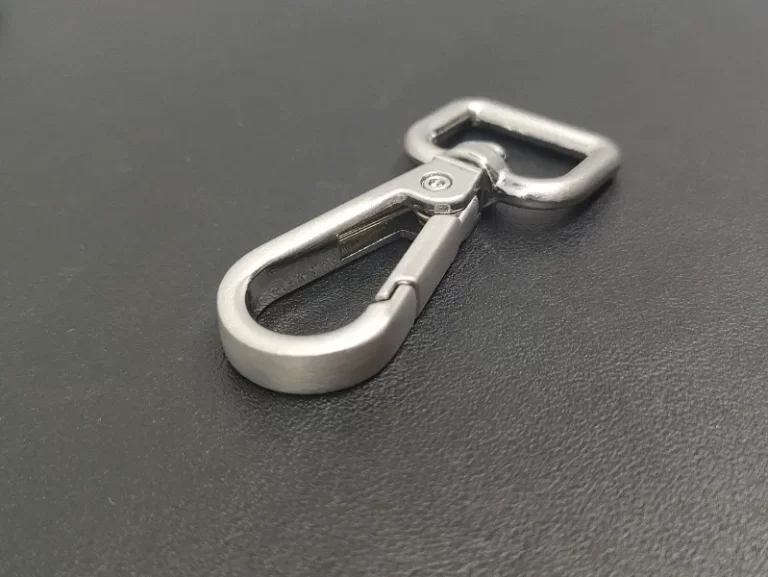
- Strap Hook: Manufacturers also call this hardware a Spring Hook or Swivel Hook, and they always use it in pairs. Workers fix it to both ends of a shoulder strap, and users can clip it onto a D Ring to convert a handbag into a shoulder bag. It also works for hanging small items like coin purses or charms as complementary accessories.
2. Securing Hardware (Stabilizing Structure & Reducing Wear)
The main purpose of this hardware is to reinforce the bag’s structure (preventing stitching from coming loose) and protect the leather (minimizing friction damage). The most common type is rivets, which come in various shapes to suit different needs.
- Rivet: The most widely used securing hardware, available in multiple designs based on head shape:
- Flat-Head Rivet: Features a flat top, suitable for areas where a low-profile look is preferred (e.g., along bag seams).
- Round-Head Rivet (Mushroom-Shaped Rivet): Has a rounded, mushroom-like head, adding a subtle decorative element while securing parts.
- Pyramid-Shaped Rivet: Boasts a sharp, pyramid-style head, often used for edgy or casual bag designs to enhance visual texture.
- Barrel-Shaped Rivet: Cylindrical in shape, it provides extra stability for thicker leather or high-tension areas (e.g., where straps meet the bag body).
- Double-Sided Rivet: Designed with exposed heads on both sides, it is used when both the front and back of the hardware need to serve a decorative purpose (e.g., forming patterns or brand logos on the bag).Beyond fixation, rivets have practical uses: those installed on the bag’s bottom isolate the leather from the ground, reducing wear; some rivets are inlaid with artificial gemstones, combining functionality with ornamental value.
3. Adjusting Hardware (Customizing Strap Length)
This category is dedicated to adjusting shoulder strap or webbing length, ensuring the bag fits users of different heights or preferences. It focuses on ease of adjustment and secure locking.
- Pin Buckle (Center-Pin Buckle): Features a small pin in its center, designed for straps, waistbands, or webbings with multiple holes. To use, the pin is inserted into a hole on the strap—changing the hole position adjusts the strap length, while also connecting two separate strap sections.
- Strap Slide (Adjustable Strap Buckle): Specialized for adjusting soft straps or webbings. It is often paired with Strap Hooks to create a detachable, adjustable shoulder strap: sliding the webbing through the buckle allows users to shorten or lengthen the strap to their desired fit.
4. Closure & Lock Hardware (Controlling Bag Opening & Sealing)
This hardware governs the opening and closing of the bag, ensuring the security of internal items while maintaining a neat appearance. Designs vary from simple snaps to stylish locks, adapting to different bag styles (e.g., clutches, backpacks).
- Frame (Wallet Frame / Snap Frame): Commonly found on evening bags or coin purses, it consists of two arched metal frames connected at both ends. Opening or closing the arched frames controls the bag’s mouth; some frames have small loops (on the inner or outer side) to attach Strap Hooks, enabling hand-carrying.
- Snap: Composed of four components, it is used to close bag bodies, pockets, or as a connection point for shoulder straps. It relies on a “snap” mechanism (pressing two parts together) for quick opening and closing.
- Magnetic Snap: A snap with built-in magnets, available in basic and lidded versions. The Lidded Magnetic Snap has a small cover on one side, which enhances magnetic force—making it ideal for bag flaps to ensure a tight seal between the flap and the bag body.
- Invisible Magnetic Snap: As its name suggests, it is hidden beneath the leather. It has only two components, usually covered with a small piece of fabric and secured with stitching to the back of the leather. This design keeps the hardware out of sight, preserving the bag’s clean, minimalist look.
- Turn Lock (Twist Lock): Operated by rotating the lock tongue 90 degrees—twisting it one way locks the bag, and twisting it the opposite way unlocks it. It is both easy to use and secure, often used on structured handbags or satchels.
- Press Lock: Opens by pressing the lock tongue to separate it from the base. It is typically installed on bag flaps, as its pressing mechanism ensures the flap adheres tightly to the bag body, preventing accidental opening.
5. Decorative & Auxiliary Hardware (Enhancing Aesthetics & Supporting Functions)
This hardware primarily boosts the bag’s visual appeal or provides secondary functional support, bridging practicality and design.
- Metal Label / Tag: A small metal piece engraved with a brand logo, name, or production information. It has two small “feet” on the back for fixing to the bag. Instantly elevating the bag’s premium feel and reinforcing brand recognition.
- Tassel Cap: A cap-shaped hardware with a hole in the center, used to secure decorative tassels. After attaching the tassel to the cap. The cap can be hung on the bag to add a playful, elegant touch.
- Edge Trim: A thin metal strip designed to wrap around the edges of the bag (most common on tote bags). It not only covers raw leather edges for a neater look but also adds durability by reducing edge wear.
- Corner Guard: Installed on the bag’s corners. It is always used in even numbers (2 or 4 pieces) to maintain symmetry. It protects the vulnerable corner leather from scratches and scuffs while adding a refined, structured detail.
- Eyelet (Grommet): Also called a “Chicken Eye,” it is often used in groups of 6 or more at pocket openings. When paired with a soft cord, pulling the cord’s ends tightens the pocket mouth. Creating a simple, effective closure for drawstring-style pockets.
Bag hardware can be categorized not only by function but also by color, size, material, and other attributes. However, naming them based on their function and location on the bag is more common. Over time, new bag hardware designs and emerging technologies may continue to introduce novel types of hardware. Potentially leading to more names. Additionally, different countries and regions have varying customs. Resulting in slight differences in how bag hardware is referred to—aspects all worth noting.