Spring‑Ring Hardware Selection Guide For Genuine‑Leather Handbags | OYC Hardware
Spring‑rings are compact but functionally‑critical connecting hardware widely applied on genuine‑leather handbags, used for chain‑strap connections, wrist‑strap pivots and decorative‑chain attachments. Different from bulky snap‑hooks, spring‑rings feature refined low‑profile styling. Smooth spring‑gate operation delivers satisfying tactile “click” feedback for end‑users.
Improperly‑specified spring‑rings may trigger problems including chain distortion, unstable connection, or component fracture under load. This guide breaks down five core selection dimensions: material, load‑bearing capacity, opening‑mechanism structure, dimensional matching and surface‑finish, for leather‑goods designers and B2B procurement teams
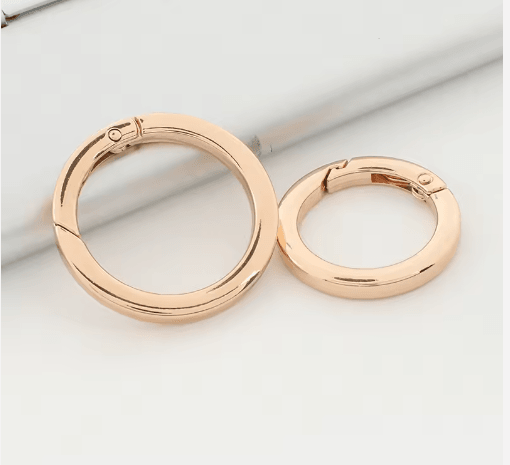
Material‑Selection: Foundation Of Spring‑Ring Durability & Performance
The material of a spring ring hardware forms the foundation for all its properties, determining the coil’s strength, the spring’s durability, and ultimately its surface finish.
Brass — Premium‑Grade For High‑End Leather‑Goods
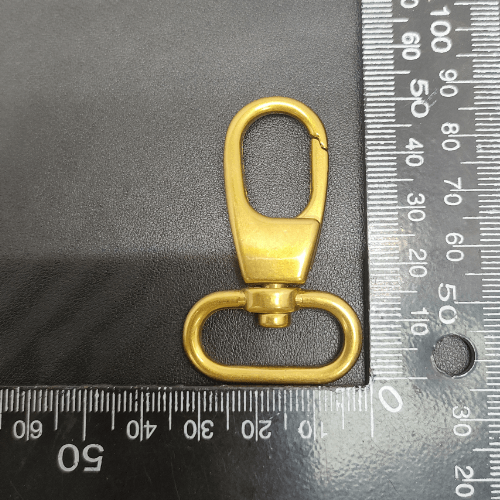
Brass (a copper-zinc alloy) is the material of choice for high-end handbag hardware, particularly suited for manufacturing spring rings hardware
Key Performance Advantages
- Superior mechanical toughness: Brass provides excellent fatigue‑resistance for repeated opening‑closing cycles, maintaining stable spring tension over long‑term usage.
- High‑precision machinability: Supports tight‑tolerance assembly; minimises gaps for smooth gate‑operation and premium tactile feel.
- Desirable material texture: High‑density weight delivers solid premium hand‑feel. After plating wears, brass forms natural vintage patina instead of ugly corrosion spots.
Recommended Application Scenarios
Mid‑to‑high‑end genuine‑leather handbags, designer‑brand collections and products requiring long‑term hardware service‑life
Zinc‑Alloy — Cost‑Effective Die‑Cast Option
Formed through die casting, zinc alloy serves as a common choice within the industry for achieving a balance between cost and performance.
Key Performance Advantages
- Complex‑shape forming capability: Die‑casting supports embossed logos and intricate 3D sculpted details.
- Good cost‑performance: Lower raw‑material & production‑cost compared with brass.
Known Limitations & Risk Points
Lower mechanical toughness than brass. Long‑term repeated load may damage shafts or latch‑structures; inferior internal springs will suffer early fatigue‑loss of elasticity.
Performance heavily relies on plating‑quality. Once plating peels, base‑alloy oxidises and darkens, hurting aesthetics and service‑life.

Recommended Application Scenarios
Fashion‑oriented fast‑moving consumer handbags and mid‑range collections with strict cost‑control. Always validate plating‑quality during sample‑approval.
Stainless‑Steel — High‑Strength & Corrosion‑Resistant Option
Stainless steel is renowned for its unparalleled strength and corrosion resistance.
Key Performance Advantages
Outstanding corrosion‑resistance and wear‑performance; suitable for scenarios exposed to sweat and humid environment.
Stable spring‑service‑life.
Clean minimalist metallic visual style.
Recommended Application Scenarios
Minimalist‑style luxury shoulder‑bags, practical backpacks and rugged outdoor‑focused leather‑goods.
Electroplating & IP‑Plating: Surface‑Finish Performance Differences
Base‑material properties define mechanical strength; final visual appearance and wear‑resistance are determined by plating. IP (ion) plating delivers thicker, more uniform coating with superior adhesion, scratch‑resistance and colour‑retention over conventional electroplating. For frequently‑opened spring‑rings, high‑grade IP plating greatly extends surface‑finish service‑life.
Load‑Bearing Performance: Safety Margin For Real‑World Usage
Though small, the spring ring serves as the critical load-bearing point connecting the chain to the case. Its load-bearing capacity directly impacts the safety and reliability of use.
Static Breaking‑Load vs Safe Operating‑Load
The load-bearing capacity of a spring coil typically refers to its static breaking strength—the minimum force required to deform or break it during testing. However, safe operating loads should remain well below this value. Dynamic impacts (such as rapid standing up or body swaying while walking) and metal fatigue (natural strength degradation over prolonged use) must be accounted for. A safe rule of thumb: Actual continuous load should not exceed 1/5 of the rated load capacity.
How Material & Geometry Affect Load‑Bearing Capacity
- Material Impact: When compared to zinc alloy, brass and stainless steel spring coils show a significantly increased minimum load capacity
- Structural Factors: The band thickness, connecting shaft diameter, and latch design are all key elements. Not surprisingly thicker bands offer more support for heavy loads than do the smaller bands.
Load‑Rating Recommendation By Handbag Product Category
Small Clutch Bags, Evening Clutches: Designed solely for lightweight items like phones and lipstick, these bags have the lowest spring loop load requirements. Prioritize aesthetics when selecting.
Daily Crossbody Bags, Shoulder Bags: Need to hold items like wallets and small water bottles. Opt for spring loops with a load capacity rating of 8-12kg or higher.
Large totes, chain-strap briefcases: May hold heavier items. Due to concentrated pressure from thin chain straps, these require the highest spring ring load capacity. Must select products rated for 15kg+ load capacity, made of brass or stainless steel.
Whole‑Assembly System‑Level Evaluation
The load-bearing capacity of a spring ring must match the strength of the chain to which it is connected. A spring ring rated for 20 kg will still render the entire connection system vulnerable if attached to a fragile hollow chain or one with poor welds.
Note:Spring‑ring strength cannot be evaluated in isolation; mating chain / D‑ring strength must match the spring‑ring rated‑load.
Opening‑Mechanism Types: Operation Experience & Safety Characteristics
The design of the spring coil determines its user experience, safety, and suitability for various scenarios. Beyond the most common sideways-press type, numerous variations exist.
Classic Side‑Press Spring‑Ring (Most‑Common Standard Type)
This one is by far the most common style of lock on this type of ring where you push in on the latch for one side and the opposite side will pull back which allows it to open.
- Advantages: The design is user-friendly and the locking mechanisms are easy to lock and unlock. The structure is also simple, so in addition to the miniaturization.
- Disadvantages:The pressing area on the latch is small, which can make it harder for some people (with longer nails or weaker hands, for example) to press down. Furthermore, the safety of this device is directly proportional to the reliability of such internal spring.
- Applications: This design is suitable for many bag and wristlet bags, which is one of the most practical fashion choice.
Double‑Ring Squeeze‑To‑Open Spring‑Ring
All metal construction with no exposed latches; the folded solid band is used for maximum wear and durability
Advantages
- High security: It can reduce the possibility of accidental opening caused by bumping or snagging, and it has excellent anti-misoperation points
- Unified appearance: The wheel hub centric ring create a unified appearance and are sensitive to design considerations making them look good.
- Excellent user experience: Ergonomically design squeezing action, comfortable operates with a great tactile feedback and easy to use.
Disadvantages: It often requires using two hands to work which may not be the most convenient in certain instances
Suitable applications: High-end handbags, connections requiring maximum security and designs featuring minimalistic looks.
Safety‑Catch Enhanced Spring‑Ring (Double‑Security Structure)
This design improves upon traditional lateral-press design by incorporating a sliding or rotatable safety catch. The clasp must then be released before pressing the release to open.
- Advantages: The double-safety feature of this building adds strength without compromising security, making it one of the safest units you’ll find. This makes it especially suitable for bags charged with heavy equipment or which might potentially undergo external impacts.
- Disadvantages: The additional steps of opening the product require some inconvenience which may damage user convenience.
- Suitable Scenarios:Perfect for travelling bags, outdoor taste leather goods and handbag keeping something valuable
- Key Selection Criteria: When a closure style is chosen, some things to consider are the convenience of the classic snap or double-ring snap; presentational through the aesthetics and security of the double-ring; and superior protection with locking snap. It depends on the purpose of what you are going to use it for and then give the bag itself’s covered services as a guide.
Dimensional Specification: Compatibility & Visual‑Proportion Matching
Selecting the dimensions of a spring coil is a precise undertaking that balances aesthetic proportion with practical functionality.
Inner Diameter: Critical For Component‑Interoperability
The inner diameter of a spring coil determines the maximum thickness of components it can connect.
Connecting to the body: Where welding the spring ring directly to a D-ring or square ring on the body, it is necessary that when in closed position, the spring ring may pass through fastening ring. The general rule is that the OD of spring ring is a bit greater than ID of fastening ring. This design factor becomes critical in order not to have it pulled off once the connection has been established and without taking into account the relative sizes of the components.
Connecting to a Chain: Hooking up to a chain also needs meticulous attention. Make sure the last chain link can fit through the spring ring without difficulty when attaching to a chain..
Versatility: That if the inner diameter is too small, the spring ring can functionally be limited or by having said inner diameter too large, becomes a bit cumbersome and may not sit right on finer chains,” she says.
Wire‑Gauge & Outer‑Diameter: Balance Of Strength And Visual Scale
Wire Gauge: Gauge The gauge of the wire refers to the thickness of the metal rod used in making these spring coils. The thicker wire makes stronger coils that can handle more weight, and it gives a robust look
Overall Diameter: Outside diameter is the size of the entire ring. This measurement needs to be in proportion with the width of your chain and bag.
- Large Handbags & Thick Chains: Pair with spring rings featuring larger overall diameters and thicker wire gauges. Smaller sizes appear fussy and mismatched.
- Small Handbags & Delicate Chains: For small purses with finer chains, you may want to choose a spring ring clasp that has a smaller overall diameter and thinner wire. Big rings may feel clunky and “if you’re not used to it, keep banging it around
Golden Rule: In general, the width of the spring ring is related to an outer diameter which is 1.5-25 times those of the widest chain link for esthetically validity
Note: original text “1.5‑25 times” is likely typographical error; verify target proportion with physical sample.
Gate / Latch Dimension: Influencing Press‑Operation Experience
The size of the pressing portion on the latch also has a great effect on user’s comfort. If the latch is too small, it will be difficult to apply sufficient force, if an oversized latch is used, it may affect the structural integrity of the ring. The active spring ring has been designed for the perfect balance between latch size, wire gauge and overall diameter providing a good response when pressing down but also being strong enough to return vigorously.
Surface‑Finish & Colour: Styling And Hardware‑System Consistency
Color is the final appearance Springcoil presents to the world, the language through which it converses with the design philosophy of handbags.
Common Hardware‑Finish Aesthetic Characteristics
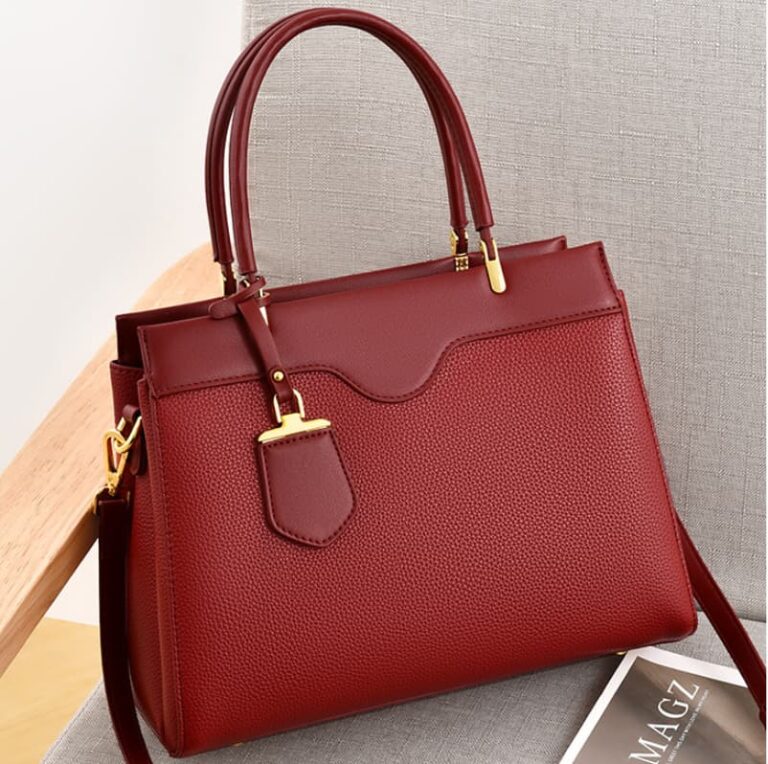
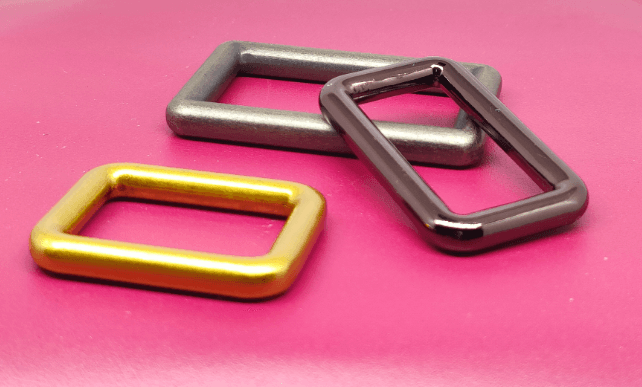
- Gold: This traditional colour represents warmth and luxury, as well as the classics. It pairs perfectly with browns, burgundies and warm beige leathers to add that great vintage look to a purse or bag. Options such as antique bronze gold and red antique gold only add more to the throwback, artisan quality of it all.
- Silver: This metal represents cool and tech vibes. Paired with blacks, whites, grays and cool-browns leathers it contributed to the sharp, clean and edgy urban look. The brushed silver feel in particular is quite interesting and gives excellent tactile feedback.
- Gunmetal Black/Black Nickel:A subtle, edgy fear-monger of a finish. Often found in men’s carried goods, rock-influenced fashion and military-inspired looks, it is a technique for hiding hardware that also draws the eye to texture of the leather and quality of SADDLE stitches etc.
- Distressed and Special Effects:In addition to traditional colorways, treatments such as rubbed-out distressing (in which underlay metal tones are exposed in raised areas to simulate the look of wear), pearlescent finishes, and enamel fillings answer the need for customized and conceptual design.
Key Principles For Hardware‑Colour Matching
- Uniformity Principle: All metal fixture components on a handbag – like spring rings, zippers, the logo plate, or studs on the feet – should be of the same color and finish (both matte and glossy). This sameness establishes the basis for perceived quality.
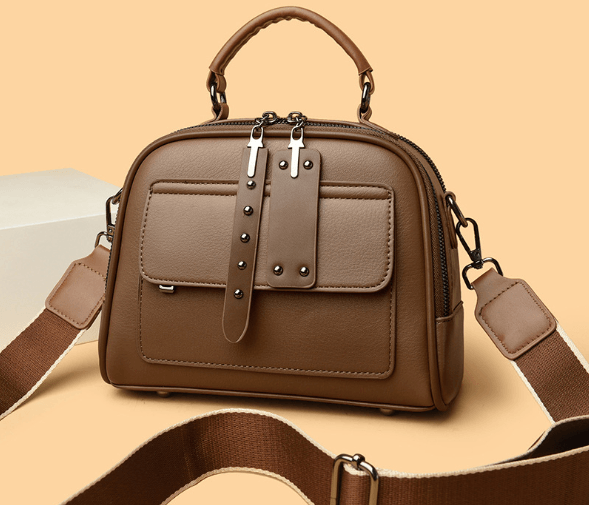
- Monochromatic Harmony: When you select hardware, follow a similar palette as the leather – try to stay in the same color family. For example, brown leather and gold hardware are a beautiful combination, as well as black or gray leather with silver hardware. This combination is still the most traditional and safe method.
- Accent with Contrasting Colors: Use contrasting colors for dramatic effect. As an example would be, a basic black purse accented with a splashy spring-hued gold ring adds insult to injury and provides you with some fashion flair. It is a method which requires an extraordinary aesthetic discipline.
Available Surface‑Finish Types & Trade‑Offs
- High Gloss/Mirror Finish: Very sparkling and grandeur to look plain, made up of a unifying reflective surface prison. But case is not free of finger print smudges and scratches soiled it’s neat look.
- Matte/Brushed Finish: A premium texture that gives your phone a new and understated elegance. It’s scratchproof and fingerprint-resistant, qualities that make it a signature in modern luxury.

Quick Spring‑Ring Specification‑Summary Table
| Material | Load‑Bearing Feature | Typical Finish Options | Best‑Fit Use‑Case |
| Brass | Excellent fatigue resistance; stable spring tension after thousands of opening cycles | Antique brass, matte gold, polished gold, nickel free plating | High‑end genuine leather handbags, designer collections, premium leather accessories |
| Zinc Alloy (Zamak) | Moderate load capacity; prone to spring fatigue under frequent heavy pulling | Polished gold, gunmetal, rose gold, matte black | Mid‑range fashion leather bags, seasonal styles, cost‑controlled bulk lines |
| Stainless Steel (304) | High tensile strength, consistent performance in humid / salty environments | Brushed steel, polished silver, PVD black | Outdoor leather goods, travel luggage hardware, pet accessories, sweat‑resistant items |
FAQ for Spring‑Ring Hardware Sourcing
Q1: Which material is better for spring‑rings: brass, zinc‑alloy or stainless‑steel?
A: Brass delivers superior fatigue‑resistance for high‑end goods; zinc‑alloy balances cost‑performance for fashion‑oriented lines; stainless‑steel is preferred for humid / sweat‑exposed scenarios.
Q2: What is the difference between static breaking‑load and safe operating‑load for spring‑rings?
A: Static breaking‑load is ultimate destructive test‑value. Safe continuous‑operating load should be kept well below breaking‑load (common rule‑of‑thumb ≤ 1/5 breaking‑load), accounting for dynamic‑shock and metal‑fatigue.
Q3: Why does a high‑rated spring‑ring still fail in real‑usage?
A: Most‑often caused by system‑mismatch: mating chain / D‑ring may be weaker than spring‑ring; or repeated dynamic impact beyond static test‑condition. Whole‑assembly validation is required.
Q4: Side‑press vs double‑ring squeeze‑open spring‑ring: how to choose?
A: Classic side‑press: wide compatibility, easy operation for most fashion‑bags. Double‑ring squeeze‑open: lower risk of accidental opening but needs two‑hand operation. Safety‑catch type adds anti‑release function at cost of extra‑operation‑steps.
Q5: What key items need sample‑verification for spring‑ring projects?
A: Gate‑opening smoothness, spring‑tension retention, actual load‑performance, dimension‑fit with mating components, plating adhesion and colour‑consistency.
Conclusion
Spring‑ring hardware selection requires multi‑dimensional balancing of material grade, safe load‑margin, opening‑mechanism design, dimensional compatibility and surface‑finish.
Procurement and design teams should avoid judging quality only from visual appearance. It is critical to define material grade, load‑rating requirements, plating‑specifications and dimensional tolerances in technical documents, and complete physical‑sample validation before bulk‑order release. Pay attention to system‑matching: spring‑ring performance must coordinate with mating chains, D‑rings and bag‑body assemblies.
OYC Hardware provides stock and custom‑spec spring‑ring hardware for genuine‑leather handbag projects, and can provide corresponding performance‑test documentation for cross‑border bulk‑orders
Discuss Your Spring‑Ring Hardware Sourcing Project
- Chat on WhatsApp +86-13924451472
- Submit Your Hardware Requirement