Custom‑Design Metal Zipper Pulls for Handbags | Real Project Case | OYC Hardware
In custom luggage‑hardware manufacturing, new‑product development often includes multiple rounds of drawing review, prototype validation and structural revisions. This risk is higher for projects built purely from images and dimensions without physical reference samples, where gaps frequently appear between design expectation and real‑world assembly. This custom metal zipper‑pull case documents the full workflow: drawing confirmation, initial prototyping, structural revision and final mass‑production with post‑assembly adjustment.
Early Project Phase: Confirmation of Original Design Drawings and Development of the First Prototype
Drawing Preparation and Client Approval
The client’s initial request was to create a 1:1 replica of a new zipper pull based on the provided images and dimensions, incorporating their own brand. There was no physical sample of the product—only image references and basic dimensions—and the thickness of the original design’s zipper pull varied between the head and tail.
Even though the client explicitly requested that the design and dimensions match the original images, we still followed standard procedures by creating engineering drawings based on the images and dimensions. We then resubmitted these drawings to the client for review and confirmation to avoid any misunderstandings caused by visual discrepancies in the images. Only after the client confirmed that the drawings were accurate did we proceed with the production of the prototype.
We accept reference photos, sketches, PDF, STEP and STP engineering drawings for custom zipper‑pull development. Clear dimension annotations reduce revision cycles.
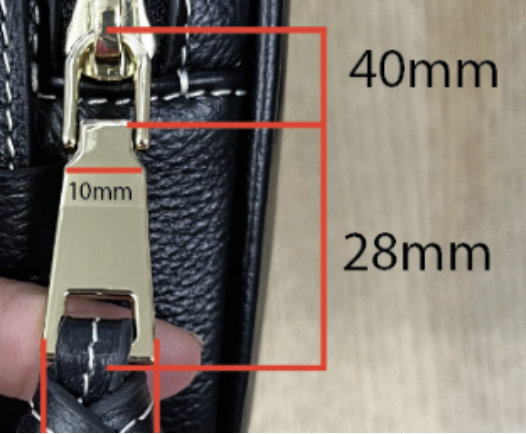 | 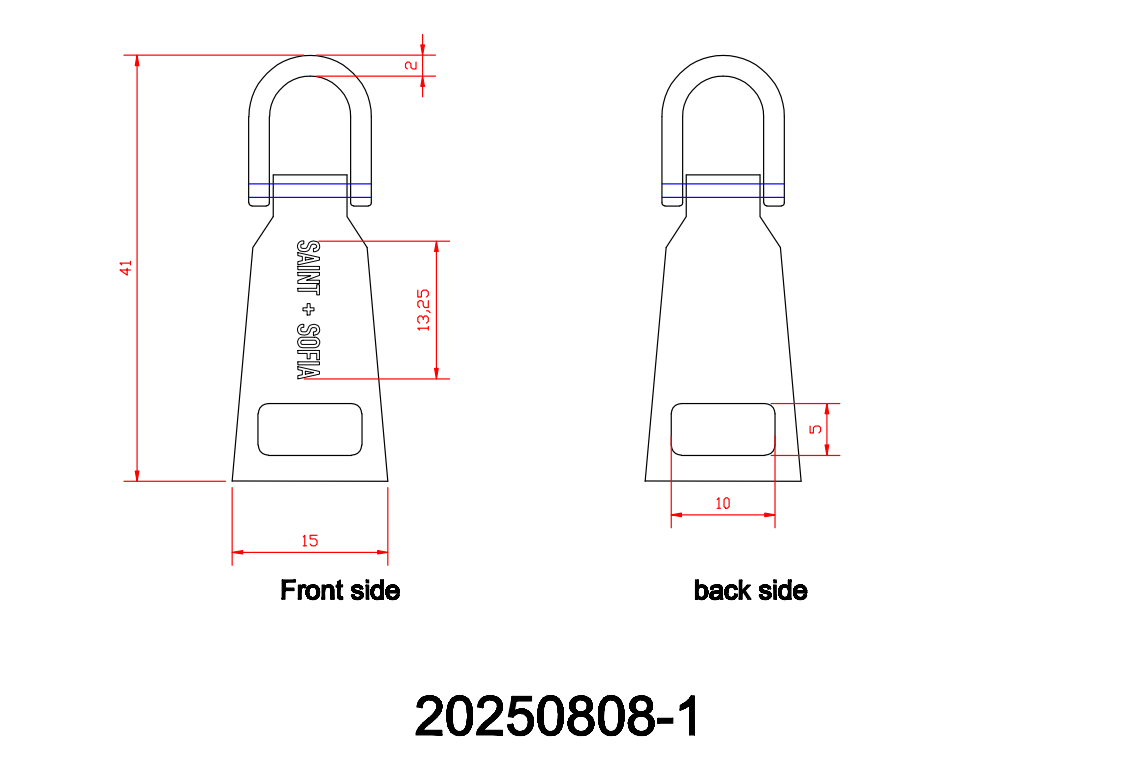 |
| original sample picture | artwork |
Production of the First Prototype and Customer Feedback
After we obtained the customer’s approval on the drawings, we arranged for the production of the first prototype and submitted it to the customer for review. The prototype strictly adhered to the original design in the drawings
Upon receiving the physical prototype, the customer was dissatisfied with the original structural design. While they found it difficult to visualize the final product based solely on images, once we produced the physical prototype, they saw that the uneven thickness at the head and tail did not meet their expectations, so they requested revisions.
Prototype lead‑time for image‑based custom zipper pulls is normally 7‑10 working days after drawing confirmation
Product Redesign: Confirmation of New Drawings, Sample Validation, and Production of the First Batch
Redrawing Drawings to Meet New Requirements
The client has provided new design requirements: the thickness at the beginning and end of the pull tab must be uniform, and there are significant changes to the structure and appearance, rendering the original drawings obsolete.
We redrew the engineering drawings according to the client’s new requirements, specifying the uniform thickness, logo placement, and specifications, and resubmitted them to the client for review. After the client approved the drawings, we proceeded to the prototype production phase for the new version.
New Sample Approved; Mass Production Begins
With the new drawings finalized, we produced the revised samples for the customer’s inspection. The samples met the requirement for consistent thickness from end to end, and the customer approved them.
After we obtained approval for the samples, we arranged for mold production and began mass production of the first batch.
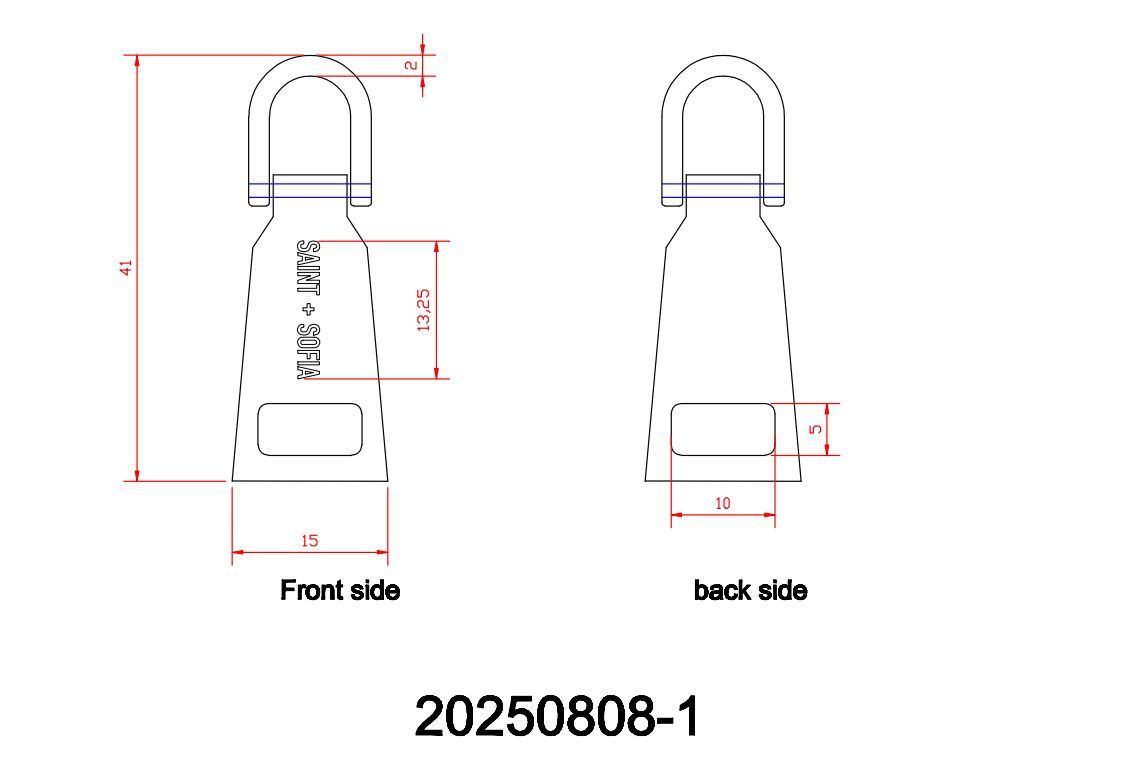 | 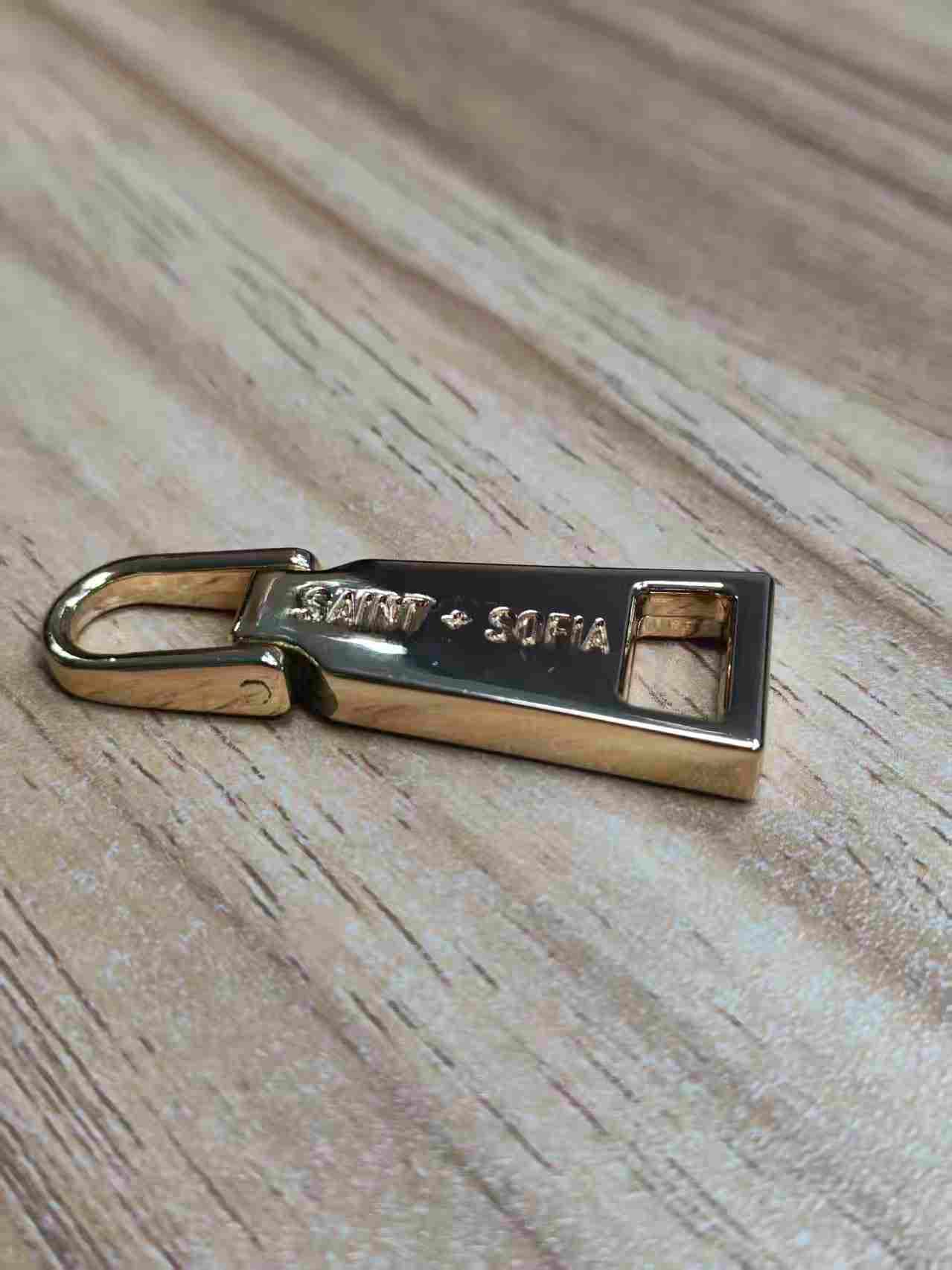 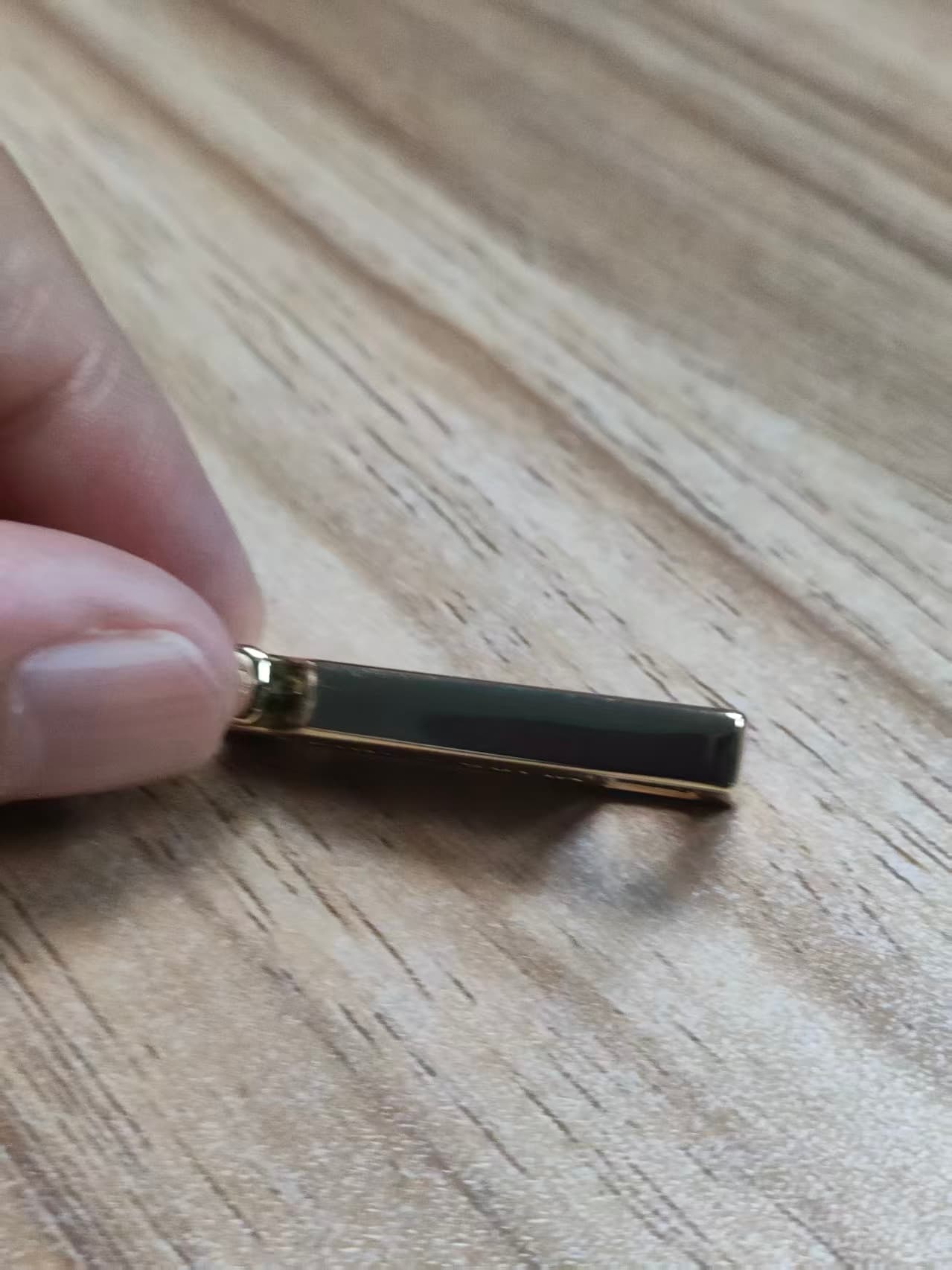 |
| new artwork for client | same thickness of new sample |
Assembly Problem Detected: Over‑Thick Pull‑Tab Nose — Second Revision & Final Mass‑Production
Dimensional Mismatch Issue During Mass Production Assembly
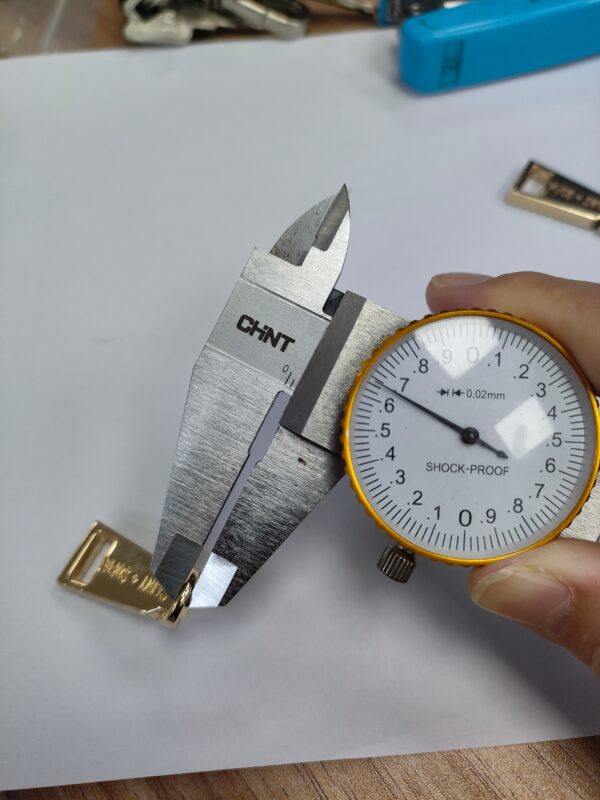
After the company delivered the first batch of mass-produced units and the customer put them into use, the customer reported assembly issues The tab nose had a thickness of 2.2 mm, but the opening and closing clearance of the corresponding slider was only 1.8 mm. Because the tab nose was too thick, it could not fit into the slider, so the workers could not assemble the product properly
Following discussions between both parties, they agreed on a corrective action plan: they would reduce the thickness of the pull tab nose to 1.6 mm to allow for an assembly clearance that accommodates the slider’s 1.8 mm opening space
Key lesson:When you custom‑make zipper pulls, please provide the exact zipper‑slider dimension /slider sample together. Matching assembly components in advance avoids fit‑failure after mass‑production.
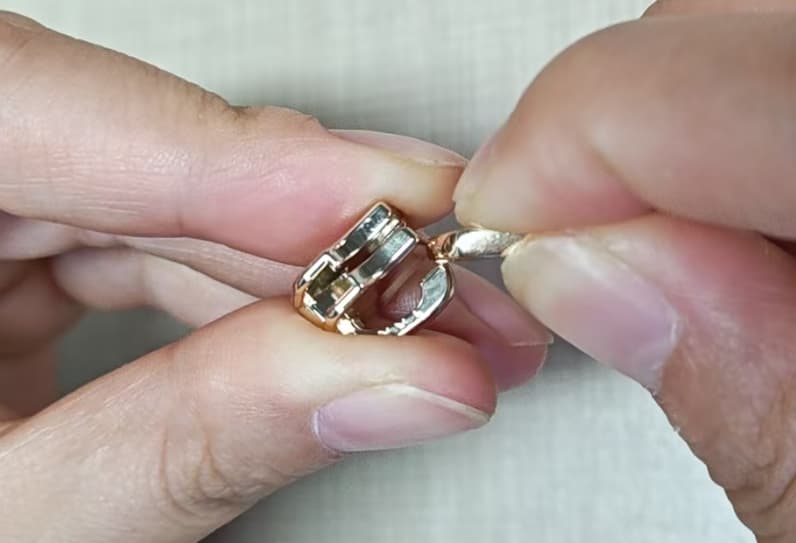 | 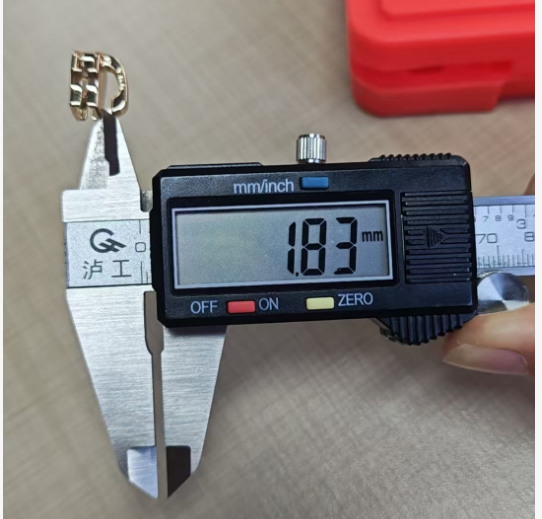 | 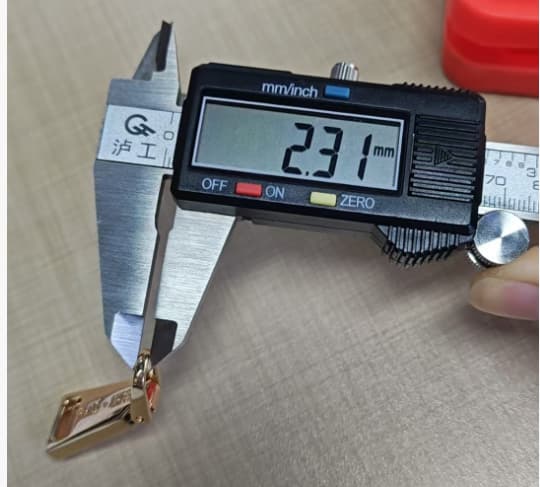 | 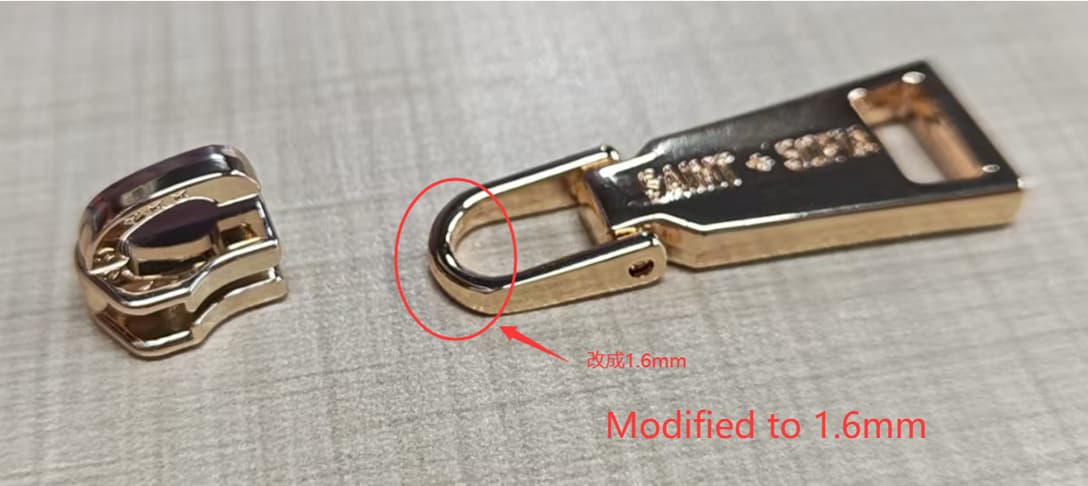 |
| The puller cannot be installed into the YKK slider | Slider gap: 1.8mm | the head thickness of puller is 2.3mm | Please modified to 1.6mm |
Confirmation of Drawing Revisions and Completion of Final Production Run
We adjusted the drawings and molds to accommodate a nose thickness of 1.6 mm. After completing the revisions, we submitted the revised design to the client for approval. Once the client approved the adjustments, we produced another set of prototypes to verify the assembly results.
After the prototype assembly tests passed, we immediately arranged for the final production run. The team successfully met the end-assembly requirements and finalized the project
FAQ for Custom Zipper‑Pull Development
Q1: What files should I prepare for custom zipper‑pull development?
A: Reference photos, physical sample, sketches or engineering files like AI, PDF, STEP, STP. Vector logo file is required for embossed / debossed branding. Please also provide your zipper‑slider sample or slider inner‑clearance dimension for assembly‑fit validation.
Q2: How long is the prototype lead‑time for custom metal zipper pulls?
A: Development from reference images:7‑10 days; revision on existing design:7-10 working days.
Q3: What finishes can you apply for custom zipper pulls?
A: Gloss gold, matte gold, nickel, antique brass, black plating, brushed & sandblasted surface, with logo options including emboss, deboss and laser engraving.
Q4: Why does a perfectly‑looking sample fail to assemble on real zippers?
A: Most fit‑failures come from ignoring zipper‑slider inner‑clearance dimension. Even if appearance looks fine, thickness of pull‑tab nose must match slider opening space.
Q5: Can you make small‑batch custom zipper pulls without new mold?
A: Limited options are available for logo‑only modification based on our existing stock zipper‑pulls; totally new shape normally requires mold‑opening.
Project Review & Key Takeaways
This slider development project fully demonstrated the characteristics of custom, non-standard product development: design renderings do not necessarily match the actual physical product, and drawing confirmation and prototype validation are essential steps. Even when a client insists on replicating the original design exactly, obtaining engineering drawings for confirmation in advance can help reduce misunderstandings between both parties.
At the same time, this project also highlights that, in addition to appearance and structure, product development must involve verifying the parameters of downstream assembly components in advance. The team failed to anticipate the installation clearance for the sliders in the early stages, causing dimensional conflicts that only came to light during mass production. For future new product development, in addition to confirming drawings and prototypes, we need to proactively collect assembly parameters for components and conduct assembly simulation tests in advance to reduce the cost of later mold modifications and improve project delivery efficiency.
This real‑world case highlights our full‑cycle custom‑hardware workflow. If you plan to develop custom zipper pulls or other bag hardware from images, sketches or reference samples, our engineering team will proactively check downstream assembly dimensions at the prototype stage to prevent costly mold revisions.
Discuss Your Custom Zipper‑Pull Idea
📧 [email protected] 📱 WhatsApp: +86-13924451472