How to choose materials for luggage hardware? A comparison of the pros and cons of the three most commonly used materials: zinc alloy, brass and iron
When sourcing hardware components for luggage and bags, the choice of material directly impacts the durability, aesthetic quality and cost control of the finished product. For luggage manufacturers, leather goods designers and brand companies, understanding the fundamental characteristics of different materials helps them make more informed decisions when commissioning custom moulds or placing bulk orders.
Drawing on our factory’s (OYC ACCESSORIES LTD) many years of production experience, this article provides a straightforward comparison of three mainstream materials—zinc alloy, brass and iron—across four dimensions: hardness, corrosion resistance, suitability for surface treatments and cost positioning. Presented without exaggeration or superfluous information, it serves as a reference for procurement and design teams.
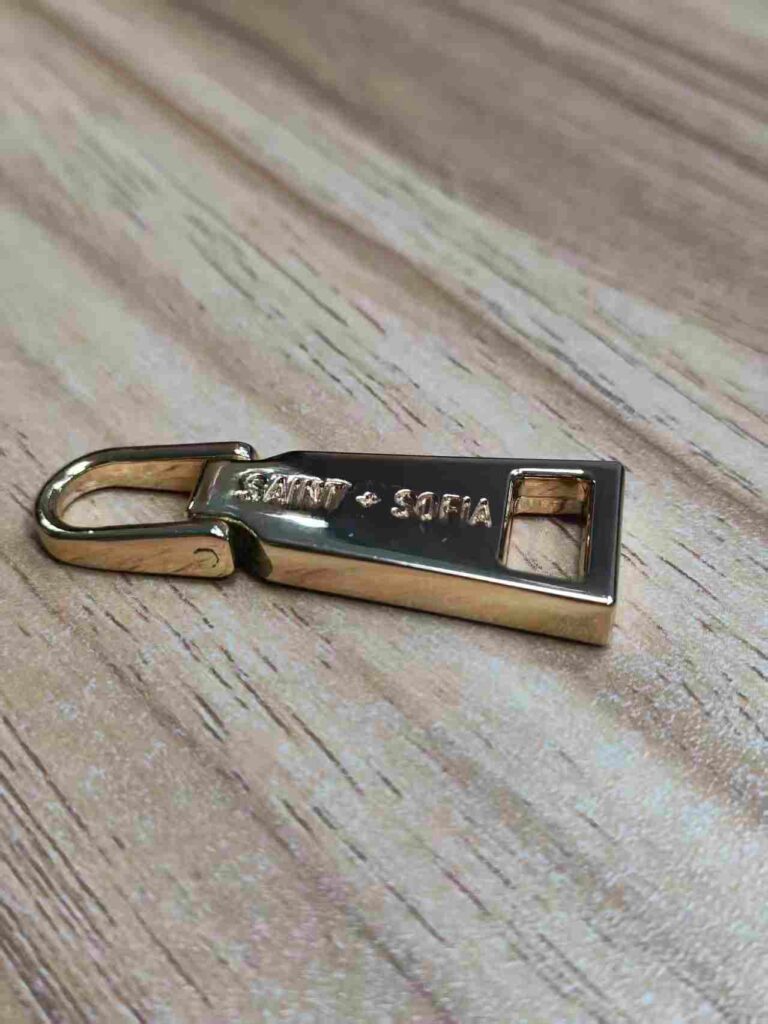
Zinc alloy: The most commonly used material for custom-made items, suitable for complex designs
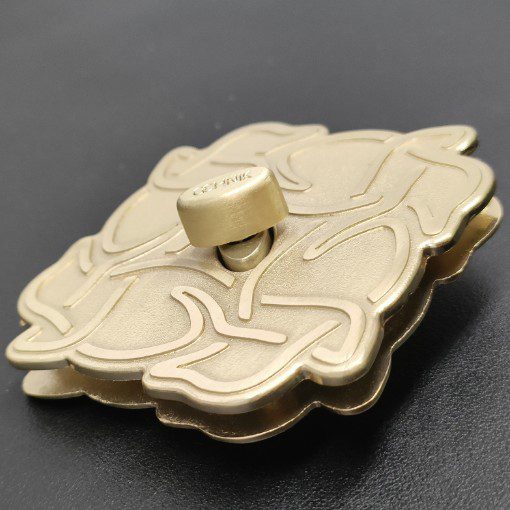
Zinc alloy is currently one of the most widely used materials for luggage hardware fittings; it is particularly suitable for fittings featuring three-dimensional patterns, intricate logos or irregular shapes, such as buckles, magnetic fasteners, luggage tags and bases.
Analysis of Advantages
- High casting precision: Suitable for mould production of complex structures, with excellent reproduction of fine details.
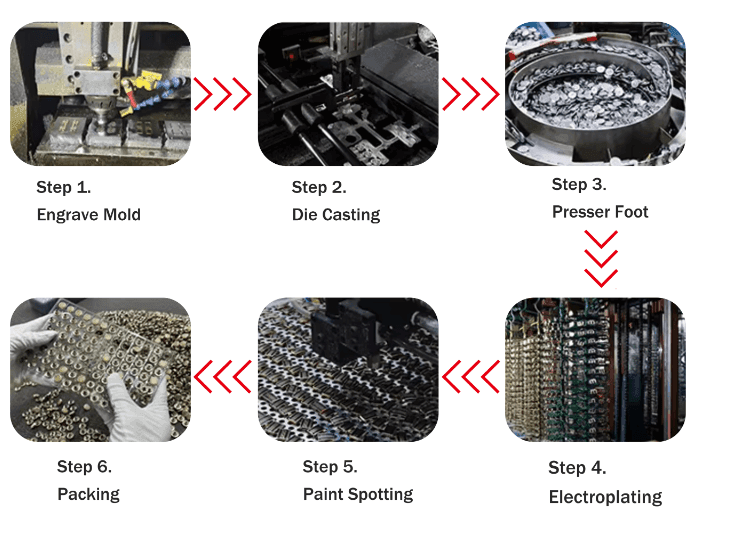
- Diverse surface treatments: A range of processes are available, including nickel plating, antique bronze, black gold, electrophoretic black, brushed finish and spray coating, and can also meet the ROHS environmental plating requirements for export orders.
- Moderate hardness: Suitable for the daily wear and tear of standard luggage locks and fasteners.
- Controllable costs: Offers consistent value for money in mass production, making it suitable for bulk purchases by mid-to-high-end leather goods manufacturers and brands.
Points to note
- Large, thin-walled structural components require strength reinforcement during the design stage.
- Some low-cost zinc alloy raw materials pose environmental risks; it is recommended that suppliers be required to provide environmental testing reports.
Suitable product types
Snap fasteners, magnetic fasteners, luggage bases, metal plate, custom-logo metal fittings, decorative fasteners, etc.
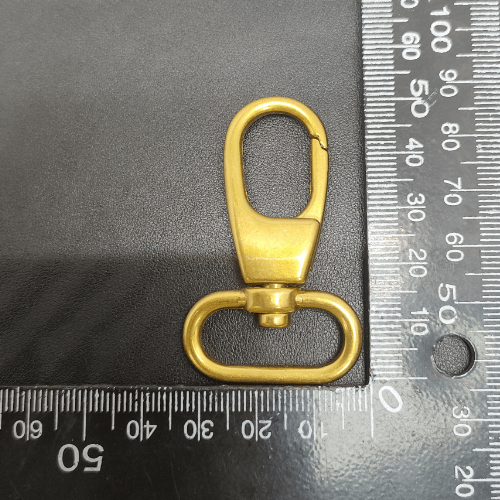
Brass: A material commonly used in high-end leather goods, renowned for its distinctive texture and excellent corrosion resistance
Brass is commonly used in high-end leather goods, briefcases, vintage-style luggage and products exported to European and American markets. It is characterised by its natural, luxurious metallic finish and good corrosion resistance.
Analysis of Advantages
- High corrosion resistance: Offers excellent resistance to oxidation without the need for heavy plating, making it suitable for use in damp environments or for storage and transport in high-humidity conditions.
- Warm, lustrous finish: Particularly well-suited to vintage finishes such as antique bronze and brushed finishes; develops a natural oxidised patina with use.
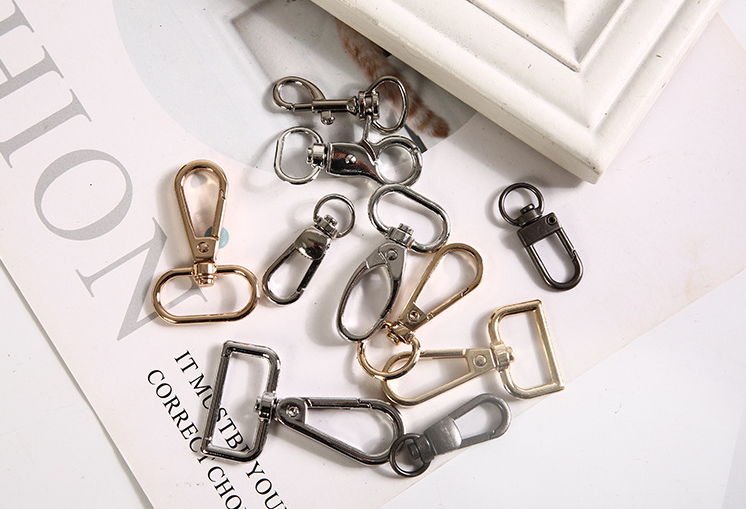
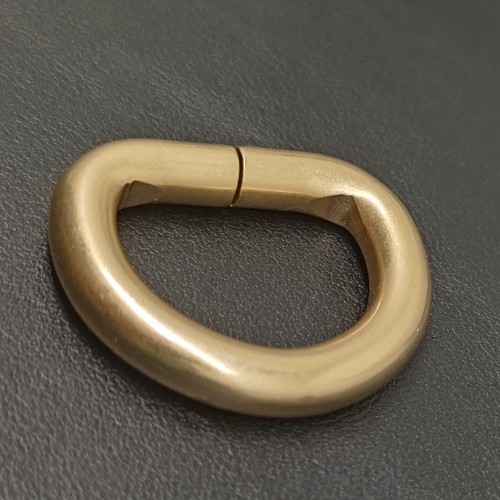
- Balance of hardness and toughness: Resistant to breakage, making it suitable for load-bearing structural components such as D-rings, square rings, half-round rings and dog clips.
Points to note
- Raw material costs are higher than those for zinc alloys and iron components.
- The lead times for tooling and production are relatively long.
Suitable product types
High-end ladies’ handbag clasps, briefcase hardware, vintage dog-clip fasteners, D-rings, square buckles, corner protectors, etc.
Iron fittings: High strength and cost-effective, suitable for heavy-duty components
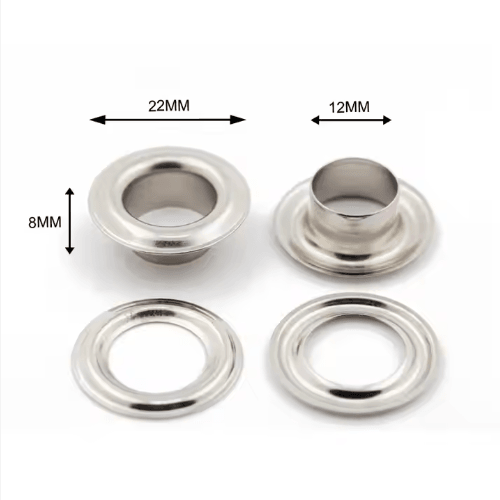
There remains a steady demand for iron hardware fittings in outdoor luggage, pet carriers, tool bags and other applications requiring high strength; they are commonly found in large dog clips, webbing buckles and base supports.
Analysis of Advantages
- High strength: Excellent tensile and impact resistance, making it suitable for structural components subjected to high tensile forces.
- Cost-effective: Significant price advantages are available through bulk purchasing.
- Stable performance after electroplating: Following processes such as nickel electroplating and electrophoretic black coating, it meets standard anti-corrosion requirements.
Points to note
- It offers less corrosion resistance than brass and high-quality zinc alloys, and it rusts easily once the surface plating is damaged.
- It is relatively heavy and is therefore unsuitable for lightweight luggage designs.
- It requires a high standard of plating; poor-quality plating is prone to flaking.
Suitable product types
Large dog clips, webbing buckles, luggage bases, tool bag fasteners, outdoor luggage hardware, etc.
IV. Comparison of Key Specifications for the Three Types of Materials (Summary Table)
| Material | Hardness and toughness | Corrosion resistance | Process compatibility | Cost positioning |
| Zinc alloy | Moderate, with good castability | Good (depending on electroplating) | Excellent; suitable for complex styles | Intermediate |
| Brass | Good toughness and fatigue resistance | Excellent (corrosion-resistant body) | Good; suitable for fine engraving and brushing | higher |
| iron | High strength, moderate toughness | General (requires electroplating) | Moderate; suitable for simple structures | Economy |
V. Recommendations for Material Selection (by Application)
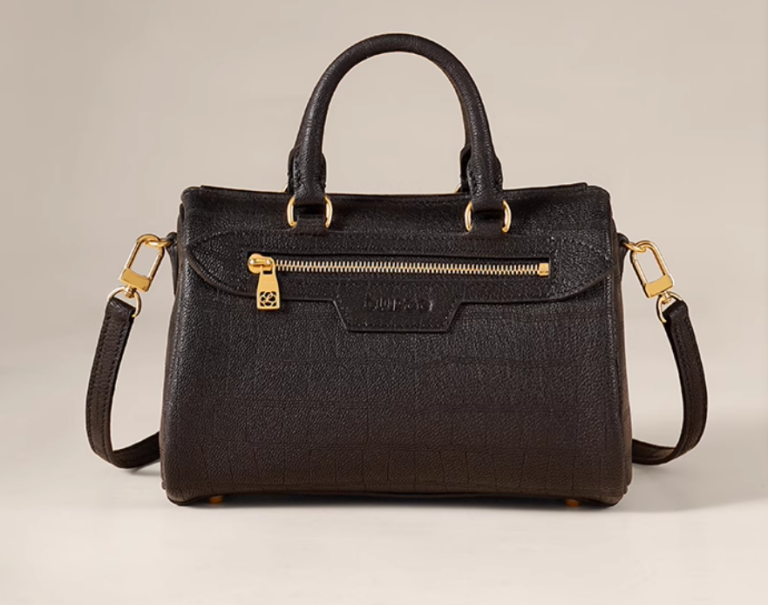
Everyday women’s handbags and bags
- Recommended materials: zinc alloy, brass
- Reason: These materials combine aesthetic appeal with sufficient strength, and offer a wide range of surface finishes.
Luxury leather goods and business briefcases
- Recommended material: Brass
- Reason: The material has a fine texture and offers sufficient corrosion resistance to meet the demands of long-term use.
Outdoor luggage, pet carriers, rucksacks
Recommended materials: Iron (load-bearing components) + zinc alloy (decorative components)
Reason: “Iron serves load-bearing parts to ensure strength, whilst zinc alloy serves exterior components to ensure the desired design effect
4. Export orders (EU/US markets)
- Recommended materials: Eco-friendly alloys (ROHS-compliant), brass
- Reason: Mature eco-friendly electroplating processes are available, and we can provide relevant testing support
VI. Key Points to Avoid Pitfalls in Material Procurement
Do not focus solely on the material name: consider the source of the raw material: even for the same zinc alloy, different batches of raw material may vary in terms of impurity content and environmental standards.
The thickness of the electroplated coating affects corrosion resistance: the material itself does not determine the final corrosion resistance; the electroplating process is equally critical.
Achieving the required hardness requires consideration in conjunction with structural design: for the same material, wall thickness and the design of reinforcing ribs directly affect the durability of the components
You may request that suppliers provide material specifications and environmental reports: reputable source factories will be able to provide these.
VII. Conclusion: There is no ‘best’ material, only the ‘most suitable’ solution
When procuring customised luggage hardware, there are no absolute standards for material selection. Zinc alloy offers suitability for complex shapes and a variety of surface finishes; brass provides an ideal choice for high-end ranges and vintage styles; whilst iron fittings serve best for heavy-duty and budget-friendly products. Purchasers may make a comprehensive assessment based on product positioning, intended use and budget, or consult our technical staff to receive a tailored solution.
We offer customisation based on provided drawings and mould-making services. Our standard materials include zinc alloy, iron, brass and eco-friendly alloys, whilst surface treatments encompass nickel plating, antique bronze, black gold, electrophoretic black, brushed finishes, spray painting and hypoallergenic eco-friendly plating (compliant with ROHS environmental standards for international trade). Suitable for hardware components across all categories, including high-end leather goods, rucksacks, ladies’ handbags, briefcases, outdoor luggage and pet carriers.