A Guide to Avoiding Pitfalls When Sourcing bag Hardware: Common Risks in B2B Bulk Purchasing and Strategies for Mitigation
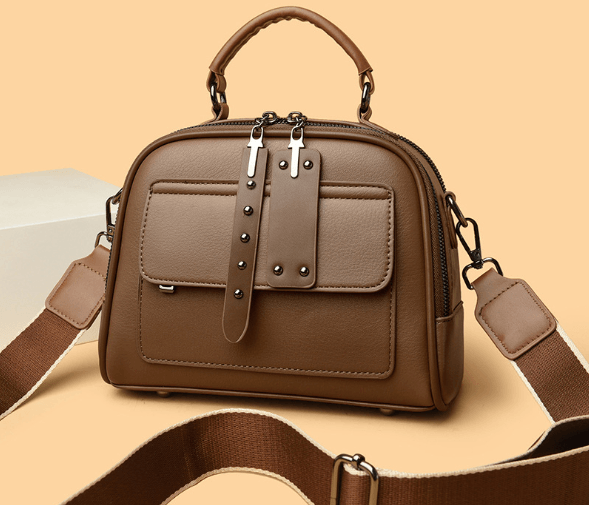
Within the B2B supply chain system for the luggage, leather goods and handbag industries, metal fittings are the core components that determine a product’s texture, durability and compliance. Fittings such as D-rings, square buckles, dog clips, luggage locks, magnetic clasps, eyelet rivets, corner protectors and metal labels may appear small and simple in structure, yet they directly impact the quality grade of finished luggage, the factory acceptance rate and eligibility for customs clearance in international trade. For luggage manufacturers’ procurement teams, leather goods designers, branded luggage companies and international trade buyers, when purchasing bag hardware in bulk, a single error in model selection, substandard materials, inadequate craftsmanship or lapses in supply chain management can easily lead to a series of issues—including batches of defective goods, delivery delays, failure to pass environmental testing and after-sales claims—which directly increase a company’s production costs and operational risks.
Unlike retail procurement, B2B bulk procurement of bag hardware places greater emphasis on stability, compliance, compatibility and the reliability of customisation.We find that most procurement risks do not stem from cosmetic defects in the products, but rather hide in details such as material specifications, surface finishes, environmental standards, custom moulding and batch quality control. Drawing on the production experience of source factories, this article addresses the pain points throughout the entire procurement process for luggage and bag hardware, identifies high-frequency procurement risks within the industry, and provides standardised mitigation strategies suitable for a wide range of product categories, including high-end leather goods, rucksacks, outdoor luggage, pet carriers and briefcases. It offers professional and practical procurement guidance for major purchasing organisations and manufacturing plants.

Risks associated with material selection: Incorrect material selection may result in the finished product failing to meet durability standards
The material is the foundation of the quality of bag hardware fittings. Different materials vary greatly in terms of hardness, toughness, resistance to oxidation and load-bearing capacity, and are suited to different luggage applications. Many small and medium-sized buyers select hardware components based solely on price or appearance, neglecting the compatibility between the product’s intended use and the material’s performance. This ultimately leads to quality issues such as breakage, deformation and rust in batches of finished products, representing the most common fundamental risk in the procurement of bag hardware.
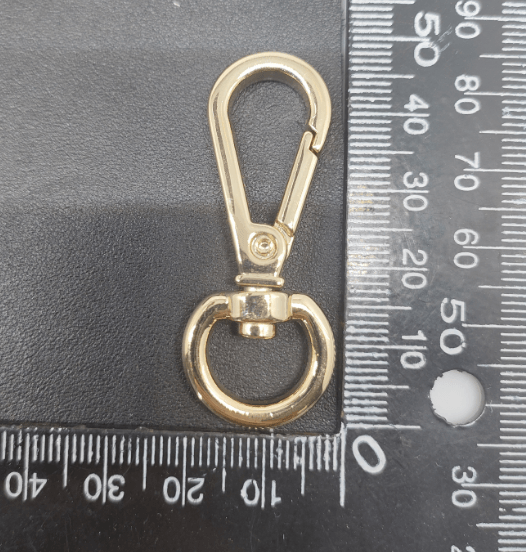
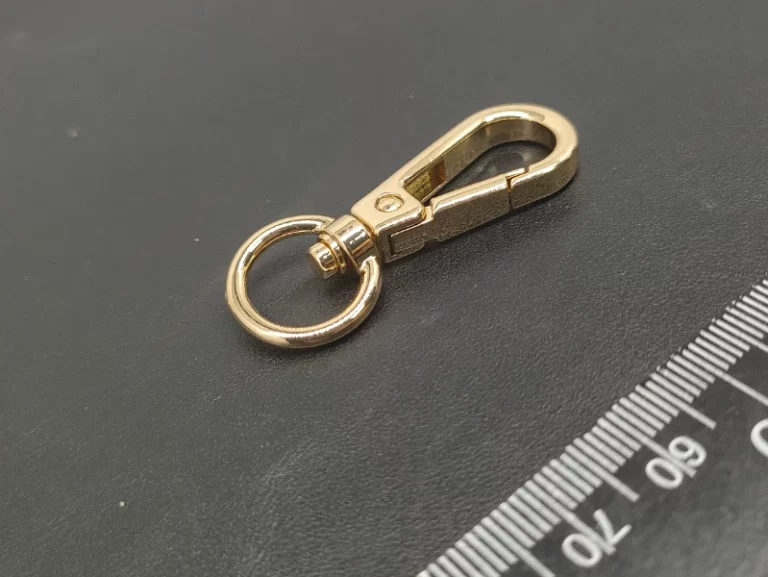
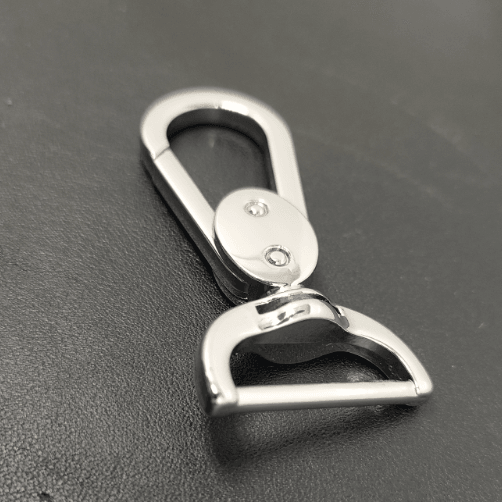
We classify luggage hardware into four materials: iron (moderate cost, high hardness, good load-bearing—used for D-rings, buckles on outdoor bags, but requires plating to prevent rust); zinc alloy (highly malleable—ideal for locks, nameplates on premium handbags); brass (premium feel, oxidation-resistant—used for logos on luxury goods, though costlier); and eco-friendly alloys (designed for export orders, meeting international environmental standards)
Common misconceptions regarding material selection in procurement
Firstly, selecting materials with low toughness for high-stress applications—for example, using standard zinc alloy hardware for load-bearing components in outdoor luggage—which is prone to breakage and deformation following prolonged pulling and exposure to direct sunlight, thereby significantly reducing the product’s lifespan.
Secondly, using standard iron bag hardware in high-end, light-luxury leather goods; even if the appearance and craftsmanship meet standards, the lack of material quality will lower the finished product’s calibre and undermine the brand’s image. Furthermore, some unscrupulous suppliers pass off inferior products as genuine, substituting recycled or mixed materials for brand-new raw materials. Such substandard materials produce hardware components with an uneven internal structure, making them highly prone to hidden defects when used in large quantities—defects that the naked eye cannot detect.
The key strategy for mitigating this risk
Prior to procurement, establish material standards based on the luggage category, usage scenarios and product positioning. For outdoor, workwear and pet luggage, prioritise the use of iron and high-hardness eco-friendly alloys; for high-end leather goods and branded ladies’ handbags, prioritise precision-cast zinc alloys and brass; For export orders, secure eco-friendly alloy materials in advance. At the same time, require suppliers to provide material specifications and batch testing documentation, and reject bulk hardware goods without traceable material origins, thereby eliminating material mismatches and the substitution of inferior materials for superior ones at source.
Process quality risk: Surface treatment defects leading to batch-wide after-sales issues
The surface finish of bag hardware directly determines the product’s wear resistance, corrosion resistance, visual texture and service life, and is also a key criterion for procurement and acceptance. Most low-cost hardware fittings on the market have had production processes cut back in terms of surface treatment. Whilst they may present no obvious issues during short-term use, once they enter the market in large quantities, various defects such as colour fading, paint peeling, oxidation, scratches and burrs will emerge. This leads to after-sales risks such as complaints from end customers and brand-related returns and exchanges, causing irreversible damage to the reputation of luggage manufacturers.
Our factory offers nickel, antique bronze, black gold, electrophoretic black, brushed, spray and eco-friendly platin g—all ROHS-compliant for exports. Electroplating suits standard fittings with smooth, uniform lustre; antique bronze and black gold give vintage texture for retro leather goods; brushed finish resists wear and scratches; electrophoretic black seals out air to prevent oxidation; eco-friendly plating meets environmental standards, ideal for exports, baby bags and high-end leather
The most frequently encountered manufacturing risks in procurement are primarily centred on two aspects: manufacturing cost-cutting and incorrect process adaptation.
Manufacturing cost-cutting commonly manifests as insufficient plating thickness, a simplified spray-painting process, or the omission of sealing treatments. In damp environments and under daily friction, such metal fittings will develop issues such as colour fading, rusting and flaking within a short period; Errors in process adaptation, on the other hand, arise from failing to select processes appropriate to the intended environment. For example, hardware for outdoor luggage that has not undergone electrophoretic coating or thickened electroplating is highly susceptible to rapid oxidation and ageing when subjected to prolonged exposure to wind, rain and UV radiation. Furthermore, some small manufacturers have outdated production equipment, leading to manufacturing defects such as colour inconsistencies, burrs on edges and blocked holes during mass production. As manual sorting cannot completely eliminate these defects, the yield rate of finished luggage is reduced.
The key to avoiding process risks
Before bulk purchasing, we must request samples for actual tests of wear resistance and oxidation resistance. Based on the product’s end-use scenarios, we must match the corresponding processes. For outdoor and high-frequency use bags, we should prefer electroplating, thickened electroplating, and sandblasting processes; for high-end appearance-level leather goods, we should prefer fine electroplating and spray oil processes; for export orders, we should uniformly adopt the ROHS environmental electroplating process. At the same time, we must confirm that the supplier has a complete production line for processes to avoid unstable processes caused by outsourcing and subcontracting, thereby ensuring the uniformity of process and stability of quality for bulk goods
Environmental compliance risks: failure to pass inspections for foreign trade orders; non-compliance with certification requirements
As global environmental regulations become increasingly stringent, both the domestic luggage export sector and domestic mid-to-high-end luggage brands impose strict environmental testing requirements on metal fittings; the RoHS environmental standard has become the basic entry threshold for metal fittings used in export luggage. When companies engage in export business or supply bulk orders to brands, they should place greater emphasis on the environmental compliance of metal fittings than on their appearance or price in procurement decisions. They should also note that small and medium-sized procurement departments most often miss this hidden risk
When many buyers source standard consumer-grade metal fittings for export orders destined for Europe, the US or South-East Asia, issues such as excessive levels of heavy metals or the leaching of harmful substances frequently arise. This can result in entire consignments of luggage being unable to clear customs, being detained or returned for rectification, leading to substantial logistics losses, penalties for delays, and may even jeopardise a company’s eligibility for international trade. Even for domestically sold branded luggage, mainstream supermarkets and brand distribution channels now require environmental testing reports for hardware components; non-compliant products cannot gain access to these mainstream sales channels.
Common Compliance Pitfalls in the Industry
Suppliers claim verbally that they have met environmental requirements, but they are unable to supply us with corresponding batch test reports
they confuse standard electroplating with eco-friendly electroplating processes, meaning hardware produced using standard electroplating fails to pass RoHS testing;
hardware components manufactured from recycled materials contain excessive levels of impurities, with unstable environmental performance indicators and inconsistent test results from batch to batch, making it impossible to guarantee compliance across the entire production run.
Compliance Risk Mitigation Strategy
When procuring for international trade and bulk brand purchases, we should give priority to source factories that have passed environmental testing. We need to stipulate that all goods be produced with ROHS-compliant processes and that each batch come with relevant test reports. We ought to refuse low-cost hardware from unlicensed small workshops and dismiss any unverified verbal promises about environmental standards. For established suppliers, we will carry out periodic random inspections on environmental compliance to ensure bulk production stays consistently compliant and to prevent total order loss due to defective hardware components
Risks Associated with Custom Moulding: Dimensional Deviations, Mould Failure, and Production Batch Discrepancies
Branded luggage, bespoke leather goods and high-end outdoor bags often require personalised hardware fittings. Custom moulding services—such as logo-engraved hardware, irregularly shaped corner protectors, bespoke clasps, and D-rings or square buckles in special sizes—are among the core requirements of B2B procurement; however, the customisation process is also a high-risk area for procurement. Compared to standard hardware components, custom-moulded hardware involves multiple uncertainties—such as dimensional compatibility, mould precision, batch replication and lead time control—making it highly prone to procurement pitfalls.
Common pain points in custom procurement
- Firstly, the mould lacks sufficient precision. After we approve the first sample, dimensional deviations and structural misalignments emerge during mass production, causing hardware fittings to fail to fit the bag pattern and making the product impossible to assemble and use
- Second, distortion in the details of logo engraving and customised textures, with blurred lettering and distorted patterns that fail to meet the brand’s visual standards;
- third, suppliers arbitrarily altering mould parameters and simplifying processes to cut costs, resulting in batch products that differ from the samples in terms of texture and hardness;
- fourth, delays in customisation lead times, caused by insufficient production capacity at small factories and protracted mould debugging, which affect the overall production and delivery schedule for the luggage.
Furthermore, some suppliers lack the capacity to produce their own moulds and, after accepting orders, subcontract the work to third parties. This leads to a breakdown in communication regarding customisation and a loss of control over quality assurance; when problems arise, they pass the buck and fail to provide timely after-sales support, which seriously disrupts the purchasing company’s production schedule.
Risk Mitigation Strategy for Custom Moulding
Prioritise source factories with their own mould workshops and in-house production capacity to ensure full control over the entire process of mould development, production and quality control;
Prior to customisation, confirm detailed dimensional specifications, manufacturing requirements and logo specifications; sign a customisation technical agreement to clarify the standards for consistency between samples and mass-produced goods;
Once our quality team has approved the first sample, we must forbid suppliers from altering production processes or mould parameters without authorisation. Additionally, we need to agree upfront on lead times and after-sales compensation standards to reduce losses caused by delays or defective products
Batch quality control risks: batch color differences, insufficient hardness, prone to detachment
The key requirement for B2B bulk procurement is product consistency. It is a widespread issue in the industry that, whilst many buyers accept samples as compliant, various quality problems arise once large batches are delivered. The hardness, durability and batch consistency of hardware fittings for luggage directly determine the quality consistency of the finished products and are also the core focus of a factory’s quality control.
Common Issues in Batch Quality Control
Colour variations and inconsistencies in gloss levels between different batches of goods result in a lack of uniformity in the appearance of finished luggage items within the same batch;
Hardware fittings fail to meet hardness standards; load-bearing components such as D-rings, dog clips and rivets are prone to deformation and loosening under stress; eyelet rivets and metal labels are prone to falling off or cracking after installation; Some components have hidden defects, such as internal cracks or structural looseness, leading to failure after a short period of use.
Once such issues arise, the production team must rework and rectify the entire batch of finished luggage, significantly increasing labour and time costs
The Root Causes of Batch-Related Quality Control Issues
Small factories often have outdated production equipment and lack quality control processes; they mix different batches of raw materials, use inconsistent production process parameters, and do not carry out full inspections before dispatch. In contrast, large-scale manufacturers have standardised production systems, with centralised procurement of raw materials, fixed process parameters and multi-stage quality inspections prior to dispatch, ensuring that every batch of goods meets the required hardness standards, has a consistent colour and offers stable performance.
Quality Control Measures for Bulk Purchasing
When procuring goods, prioritise large-scale source factories and ensure they have a standardised quality control system in place; retain a signed sample for confirmation prior to placing bulk orders, to serve as the acceptance standard for the main production run; upon arrival, conduct random spot checks on the batch for colour variation, hardness and structural integrity to verify consistency with the sample; for load-bearing components such as rivets and fasteners, carry out load-bearing tests in advance to ensure the products meet the requirements of mass production.
Supply chain service risks: lack of after-sales support, delays in restocking, and inefficient coordination
B2B procurement of bag hardware involves long-term, ongoing partnerships; in addition to product quality, the supplier’s service capabilities directly impact the production efficiency of luggage manufacturers. Many buyers focus solely on unit prices whilst neglecting the supplier’s service capabilities. Once the partnership begins, issues such as a lack of dedicated after-sales support, delays in the return or replacement of defective goods, an inability to meet urgent restocking requests, and inefficient communication regarding customisation often arise, leading to production line stoppages and delays in order fulfilment.
Common supply chain risks in the industry
Suppliers lacking a comprehensive after-sales service system, and shirking responsibility for batches of defective products rather than addressing the issue; insufficient stock levels and excessively long restocking lead times, making it impossible to meet factories’ urgent production requirements; unprofessional liaison staff who are unable to accurately match hardware solutions or answer questions regarding manufacturing processes and materials; and inadequate capacity to handle international trade orders, resulting in a failure to provide supporting documentation such as customs clearance documents and environmental compliance certificates.
Supply Chain Risk Mitigation Strategy
For long-term bulk purchases, prioritise reputable manufacturers specialising in B2B factory wholesale, with well-established systems for coordination, after-sales service and restocking. At the outset of the partnership, verify the supplier’s stock levels, production capacity and after-sales policies. For international trade partnerships, confirm in advance the counterparty’s international trade credentials and ability to provide the necessary documentation to ensure the smooth delivery of orders. Establish fixed, long-term partnerships with suppliers to create stable supply channels, thereby minimising the quality and service risks associated with frequent changes of supplier.
Summary: Standardising procurement processes to mitigate risks in hardware procurement at source
Although bag hardware fittings may appear to be minor components, they are integral to the entire supply chain—from production and quality inspection to sales and after-sales service. The core sources of procurement risk lie in inaccurate product selection, mismatched manufacturing processes, non-compliance with standards, inconsistent quality control and an unstandardised supply chain. For B2B procurement organisations, only by abandoning a ‘lowest price first’ procurement mindset and establishing a standardised procurement approach based on ‘appropriate materials, compatible manufacturing processes, compliance with standards, consistent quality control and reliable service’ can they fundamentally avoid various issues such as batches of substandard products, compliance failures, delivery delays and after-sales losses.
High-quality luggage and bag hardware not only enhances the quality and service life of finished products, but also reduces rework costs, improves brand reputation and ensures that export orders clear customs smoothly. Effective risk management throughout the entire process—from procurement and selection to custom moulding and batch inspection—is a crucial step for luggage and leather goods manufacturers in reducing costs, improving efficiency and enhancing their products’ core competitiveness.