Digital Product Passports for Bag Hardware: What EU Brands Will Need from Their Hardware Suppliers
The Digital Product Passport (DPP) is the part of the EU’s Ecodesign for Sustainable Products Regulation (ESPR) that most fashion brands have already started preparing for. What many brands have not yet worked through is this: the passport is not just a brand-side project. It reaches deep into the supply chain – and bag hardware sits squarely inside that chain.
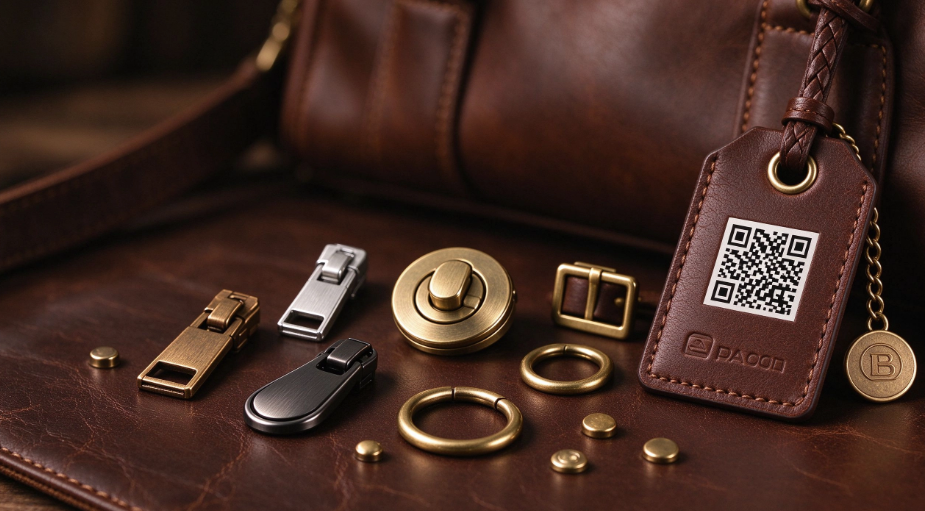
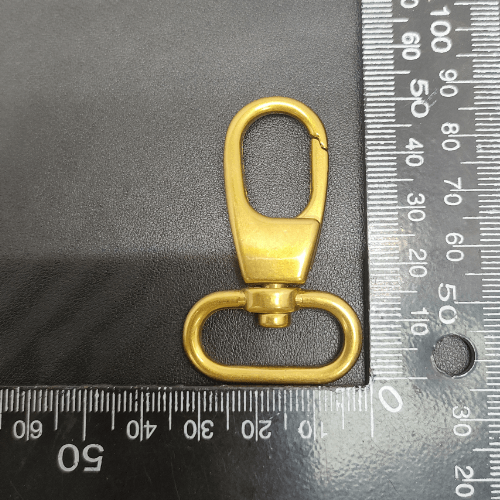
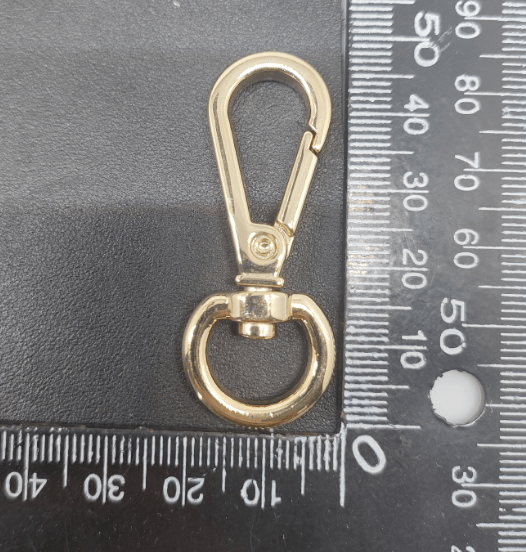
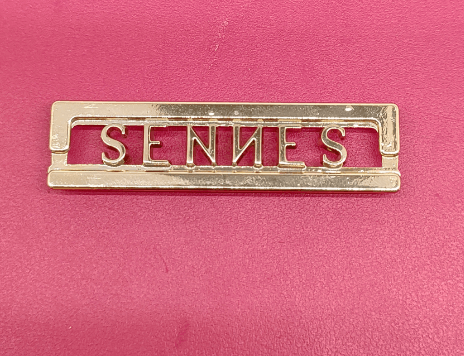
If you sell handbags, backpacks, belts or leather goods in the EU, every metal D-ring, snap hook, zipper pull and logo plate on your product will eventually need traceable data behind it: what alloy it is made from, what plating process was applied, which factory produced it, and which test reports back up the claims.
This guide explains the confirmed timeline, what data your hardware supplier will need to provide, and the five questions you should be asking suppliers right now – so that DPP readiness does not become a 2028 scramble.
The Confirmed Timeline (as of late 2026)
These dates are published regulation or officially released standards – not speculation:
| Date | Milestone | What it means for hardware |
| 19 July 2024 | ESPR (Regulation (EU) 2024/1781) enters into force | The legal foundation is already active EU law |
| April 2025 | EU Working Plan confirms textiles & apparel as a priority category | Bags and accessories fall under the textile track |
| May–Sept 2026 | All 8 CEN/CENELEC technical standards for DPPs published; 6 cited in the EU Official Journal on 15 July 2026 | The technical “rulebook” for how passports work is finished |
| 19 July 2026 | EU DPP Registry goes live; destruction ban for unsold textiles applies to large companies | The infrastructure now exists; enforcement machinery is being switched on |
| Sept 2026 | Empowering Consumers Directive applies across the EU | Generic green claims without verifiable data become prohibited |
| Late 2026–2027 (expected) | Textile delegated act adopted | Defines the exact mandatory data fields |
| Approx. 2028–2029 (expected) | Mandatory compliance, at least 18 months after the delegated act | The first fully in-scope collections |
Two things matter for hardware buyers in this table. First, component suppliers are explicitly named as economic operators under ESPR – the obligation does not stop at the brand. Second, the data-gathering work cannot start when the law bites, because it depends on your suppliers’ records: alloy composition, plating chemistry, factory IDs, batch numbers. Those records take months or years to build. The suppliers who have them ready will be the ones brands keep.
Why Bag Hardware Is Inside the Passport’s Reach
A DPP for a handbag will carry composition and traceability data for the whole product – and hardware is roughly 5–15% of a bag’s bill of materials but carries a disproportionate share of its compliance risk:
- Metal content: nickel release is already restricted under REACH Annex XVII, Entry 27 (0.5 µg/cm²/week for items in prolonged skin contact), and lead and cadmium face their own restrictions. DPP chemical disclosure builds directly on this data.
- Origin traceability: the passport needs tier-2 and tier-3 supplier identification. Your hardware foundry is a tier-2 or tier-3 supplier of your brand.
- Durability data: ecodesign requirements are expected to include physical durability metrics. Salt spray hours and plating wear are exactly this kind of data for metal components.
- From September 2026, brands can no longer make vague sustainability claims. Every material statement that ends up on a hang tag must be backed by verifiable supplier data.
In short: a brand can only build a credible passport if its hardware supplier can produce the underlying records.
The 7 Data Items a DPP-Ready Hardware Supplier Should Provide
Use this as your supplier audit checklist. A supplier who can deliver these seven items today will be easy to work with in 2028; a supplier who cannot deliver three of them will become your compliance bottleneck.
1. Alloy designation and composition. “Zinc alloy” is not enough. The passport-grade answer is a named alloy – for die-cast hardware, typically Zamak 3 EZDA3 (Zn-Al-Mg-Cu) – (USA ASTM B86-96 STAND)with the actual composition available on request. Vague material answers are the first red flag.
2. Plating process disclosure. The plating stack, not the base metal, is where most restricted-substance risk sits (this is where nickel strike layers hide). A ready supplier can state whether their line is nickel-free, what the layer structure is, and what the plating thickness is in microns.
3. Restricted-substance test reports. REACH-aligned reports from recognised third-party labs (SGS, TÜV, Intertek, Bureau Veritas) – ideally nickel release per EN 1811, plus lead and cadmium as applicable. Ask whether reports cover the exact finish you are ordering, because a gold finish and a gunmetal finish from the same factory can behave differently.All colour we can pass the nickle free test
4. Batch-level traceability. A one-time certificate from 2023 says nothing about the order arriving in 2027. Batch or lot numbers linking production runs to QC records are the backbone of the passport.
5. Factory identification. Country of production and factory identifiers (GLN or equivalent) are expected data points. Brands cannot fill in “supplier in Asia”.
6. Durability test data. Salt spray testing hours (we run 48-hour neutral salt spray on plated finishes), abrasion or pull-test results – the raw material of the durability metrics ecodesign rules are expected to require.
7. Document stability. Reports that can be re-issued and re-confirmed per order, not just a PDF emailed once. Under the DPP, records must remain accessible for years – your supplier’s document discipline becomes part of your own.
Five Questions to Ask Your Current Hardware Supplier This Quarter
You do not need to wait for the delegated act to find out whether you have a problem. Ask these five questions now:
- “Can you provide the alloy designation and composition for the hardware we buy, in writing?”
- “Is your plating line nickel-free, and can you prove it with an EN 1811 report for our finish?”
- “Do you keep batch-level production records we can reference per order?”
- “Which third-party lab issues your restricted-substance reports, and how recent are they?”
- “If we need this data in a structured format for a Digital Product Passport, can you provide it – and how long would it take?”
The answers will sort your supplier list faster than any price comparison. A supplier who answers four or five confidently is an asset; a supplier who answers none is a 2028 liability.
How OYC Is Preparing
We are a bag hardware manufacturer with 15+ years of export experience, and we have started treating DPP readiness as a product feature, not paperwork:
- Named alloys: our die-cast hardware is produced in Zamak 3 zinc alloy; composition documentation is available on request.
- Plating transparency: we can state per finish whether the plating line is nickel-free, and support orders with third-party nickel-release (EN 1811) test reports.
- Durability testing: plated finishes are verified with 48-hour neutral salt spray testing; pull testing and third-party reports can be arranged for export orders.
- Batch discipline: QC records are kept per production run, so colour consistency and test claims can be traced back to the batch that made your order.
- Predictable production: MOQ 500 pieces per design, free samples before bulk, and a standard 20-day lead time confirmed in every quotation.
We will not pretend the final delegated act is published – it is not, and any supplier claiming to sell a “DPP-compliant buckle” today is ahead of the law. What we offer is the honest position: the underlying records are ready to be assembled, and we work with brands who want to build that file early.
FAQ
Q: When exactly will Digital Product Passports be mandatory for bags?
A: The textile delegated act is expected to be adopted in late 2026–2027, and mandatory compliance is expected roughly 18 months after that – so around 2028–2029. The exact date is not final, but the DPP registry went live in July 2026 and the technical standards are already published, so brands should treat preparation as a current task.
Q: Does the DPP apply to hardware suppliers outside the EU?
A: Yes. The ESPR applies to anyone placing products on the EU market, and component suppliers are named as economic operators. A Chinese hardware manufacturer does not hold the brand’s legal obligations, but the brand cannot comply without the supplier’s data – which makes non-providing suppliers a practical liability.
Q: What is the difference between a DPP and a REACH test report?
A: A REACH report (for example EN 1811 nickel release) is a chemical-safety document for one aspect of one item. A Digital Product Passport is a structured, machine-readable file covering composition, traceability, chemicals, durability and end-of-life data for the product. REACH reports feed into the passport; they do not replace it.
Q: What should I do first as a small brand?
A: Map your hardware to its suppliers and start collecting the seven data items above for your best-selling line. Even a simple spreadsheet per product – alloy, finish, report numbers, batch references – puts you ahead of most of the market and makes the eventual migration to formal DPP formats straightforward.
Start Your Hardware Data File Now
→ Link: Bag Hardware by Material (zinc alloy / brass / stainless steel comparison page) → Link: Zinc Alloy Bag Hardware category page
→ Link: Contact / inquiry page
OYC Accessories provides free samples, MOQ 500 per design, and 20-day standard lead time. Send us your hardware list and we will tell you exactly which data items we can provide for each piece – before you commit to anything.