Handbag Hardware Purchasing Guide: Materials, Costs, and Supplier Selection—Essential Knowledge for Brand Owners
Handbag hardware may seem like a minor detail—small components such as D-rings, clasps, chains, and rivets account for only a small portion of the total material cost—but they directly determine the product’s quality, durability, and even whether cross-border orders can clear customs smoothly. Many brands invest significant effort in selecting leather and refining patterns, yet lack a standardized system for hardware procurement. As a result, they often encounter issues such as samples looking beautiful but mass-produced items fading or rusting, or shipments being detained due to failing export inspections. From a brand procurement perspective, this article breaks down the logic behind handbag hardware procurement across five key dimensions—quality risks, material selection, industry trends, compliance certifications, and supplier screening—to help brands strike a balance between quality, cost, and delivery while mitigating hidden supply chain risks.
Why the Quality of Hardware Matters More Than You Think (Risk Analysis from a Buyer’s Perspective)
Hidden Quality Risks Drive Up Brand After-Sales Costs
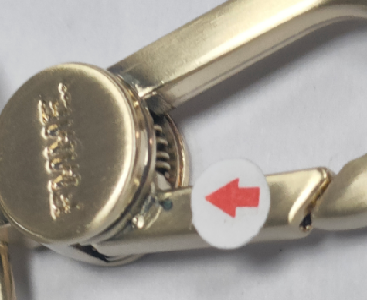
Most brands tend to fall into the trap of “prioritizing fabric over hardware,” believing that hardware is merely an accessory that doesn’t warrant significant investment. However, in the context of handbag use, hardware components such as clasps, chains, rivets, and buckles are subjected to frequent stress and friction, making them the primary weak point in a product’s durability.
Substandard hardware is highly prone to issues such as discoloration, rust, deformation, breakage, and plating peeling, which directly lead to consumer returns, negative reviews, and after-sales compensation claims. Compared to the low unit cost of the hardware itself, the hidden costs associated with after-sales repairs, order returns and exchanges, and compensation for customer complaints are extremely high, severely eroding the brand’s profit margins.
 |  |  |
The quality of hardware directly determines a brand’s reputation and prestige.
When consumers evaluate the quality of a handbag, in addition to the fabric and craftsmanship, the hardware details are a key factor. The refined quality of high-end handbags largely depends on high-quality hardware that is smooth, shiny, durable, and colorfast.
Cheap hardware is rough, prone to oxidation, and feels flimsy, which directly undermines the product’s overall quality and prevents the brand from commanding a premium price. Long-term, large-scale use of substandard hardware will cement a low-end brand image, making it difficult to elevate the brand’s market positioning.
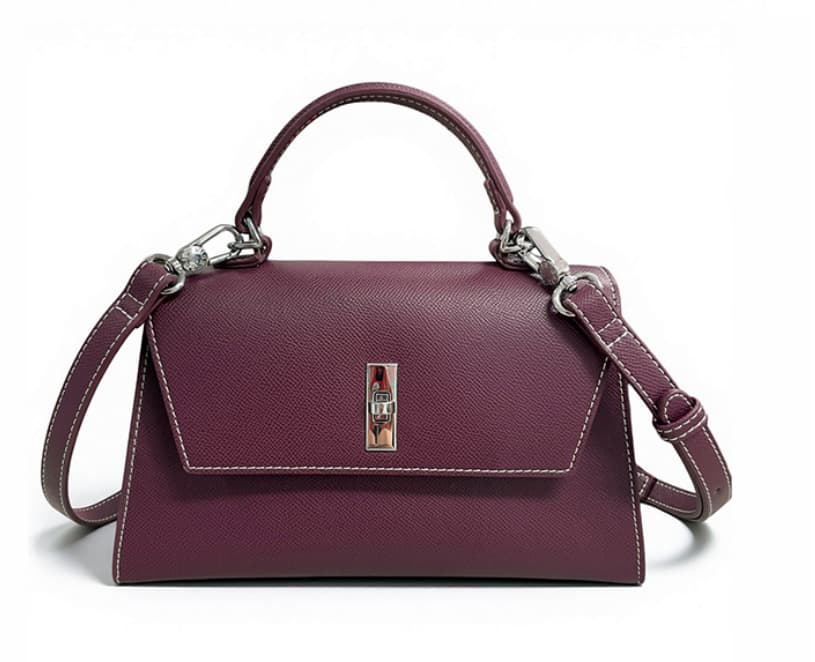
Lack of control over batch quality inspection poses a risk of order defaults
Hardware components are standardized parts; if a supplier’s quality control is inconsistent, it can easily lead to significant variations in product appearance, dimensional deviations, and defect rates exceeding acceptable limits. Defects in small batches increase labor costs for sorting, while quality issues in large batches can result in serious consequences such as order delays, customer payment deductions, and termination of partnerships, causing irreversible business losses for the brand.
A Detailed Comparison of Materials: Brass vs. Zinc Alloy vs. Stainless Steel (Key Comparisons of Performance, Cost, and Applications)
Comparison of Key Parameters for the Three Main Types of Hardware Materials
The three main types of hardware materials used in the handbag industry are brass, zinc alloy, and stainless steel. These three materials differ significantly in terms of forming processes, durability, appearance and texture, and procurement costs, and are suited to completely different product positioning. Careful selection is key to controlling costs and ensuring quality.
| Material | Core Performance | Cost Hierarchy | Process Characteristics | Applicable Scenarios |
| brass | Highly malleable, excellent adhesion for electroplating, fine texture, resistant to deformation, moderate oxidation resistance, and a substantial, high-end feel | On the high side (high electroplating costs; the amount of gold absorbed is about three times that of stainless steel) | It can be finely polished, engraved, and shaped, resulting in finished products with high flatness and few imperfections. | High-end affordable luxury handbags, custom genuine leather bags, hardware for haute couture gift boxes, and high-end accessories |
| zinc alloy | Easy to die-cast, available in a wide variety of shapes, and of medium hardness; it has relatively poor wear resistance and corrosion resistance, and is prone to oxidation and discoloration with prolonged use. | Slightly below average, offering the best value for the price | Ideal for complex, irregularly shaped, openwork, and carved designs; high mass-production efficiency | Mass-market, affordable handbags; fast-fashion styles; trendy niche bags; products with short lifecycles |
| Stainless Steel | High hardness, wear-resistant, durable, corrosion-resistant, and extremely colorfast—it doesn’t rust or fade easily, and offers maximum stability. | Slightly above average, with the lowest total cost of ownership | Vacuum plating is commonly used; the coating is stable and resistant to peeling or flaking, but the process is technically challenging. | Outdoor Commuter Bags, Cross-Border Trade Bags, Durable Commuter Bags, Handbags That Retain Their Value Over Time |
Key Points to Avoid Pitfalls When Selecting Materials for Procurement
For brass hardware, pay close attention to the plating process. High-quality real gold plating has a translucent finish, while low-quality, thin plating is prone to blackening and fading. Even with high-quality raw materials, quality issues may still arise if the plating process does not meet standards. For zinc alloys, be wary of products made from recycled materials; excessive impurities can lead to batch-wide deformation, cracking, and rapid oxidation.
For stainless steel, it is essential to distinguish between 201 and 304 grades. 201 stainless steel is suitable only for dry indoor environments and is prone to rust in humid conditions; 304 stainless steel offers superior corrosion resistance and is the material of choice for export and high-quality products.
Industry Trends: Why Stainless Steel Hardware Is Gaining Popularity
Controllable After-Sales Costs, Suitable for Brands’ Long-Term Operations
The biggest challenge with traditional zinc alloy hardware is the high rate of after-sales service requests. This is particularly true in humid, rainy cross-border markets, where discoloration and rust are common issues. Thanks to its exceptional wear resistance, corrosion resistance, and oxidation resistance, stainless steel hardware significantly reduces the rate of after-sales complaints, helping brands cut after-sales expenses and maintain a stable reputation.
As Market Demands Evolve, Durability Becomes a Key Selling Point
Today’s consumers no longer prioritize short-term aesthetics; instead, they place greater emphasis on a handbag’s durability and ability to retain its value. Stainless steel hardware feels substantial, has a premium texture, and resists wear over time, perfectly aligning with the consumer trend toward long-lasting, affordable luxury that retains its value—making it the material of choice for mid- to high-end brands.
Highly Suitable for Foreign Trade, Aligned with Cross-Border Industry Development
Cross-border e-commerce and overseas brick-and-mortar channels place higher demands on product durability and stability, and harsh overseas climates pose a significant challenge to the quality of hardware components. Stainless steel hardware is suitable for climates in many regions around the world, requires minimal after-sales service, and meets overseas product quality standards, making it the mainstream choice for handbags in the foreign trade market.
Process Upgrades and a Narrowing Cost Gap
In the past, stainless steel was relatively expensive and limited in design options due to the difficulty of processing and forming constraints. Today, with the maturation of vacuum plating and precision CNC machining, stainless steel can achieve a variety of intricate designs. Mass production efficiency has improved, unit prices have decreased, and cost-effectiveness has significantly increased, leading to the gradual replacement of traditional zinc alloy and standard brass hardware.
Compliance Checks: An Introduction to REACH, RoHS, and Other Certifications (Essential for the European and U.S. Markets)
The Core Necessity of Export Compliance
For handbag brands targeting the European and American markets, hardware compliance is the minimum requirement for customs clearance. If the levels of heavy metals or hazardous substances in hardware components exceed the limits, this can directly lead to customs detention, product recalls, fines and compensation claims, or even being placed on an export blacklist—resulting in massive financial losses and a brand crisis.
Two Core Certification Requirements
RoHS certification primarily restricts the content of six hazardous substances, including lead, mercury, and cadmium, to prevent hardware from exceeding heavy metal limits. It serves as the foundational market access certification for the European and American markets, and all mass-produced hardware must meet these standards.
REACH certification, specific to the EU market, requires that hardware materials and plating auxiliaries be free of substances of very high concern. It also mandates that suppliers provide complete material test reports and compliance declarations, making it an essential qualification for cross-border brands.
The Urgent Need for Dedicated Nickel Release Testing
Handbag hardware comes into direct, prolonged contact with the skin, and European and U.S. markets have mandatory standards for nickel release levels. Low-quality alloy hardware is highly prone to exceeding nickel limits, which can cause skin allergies. To ensure compliance, procurement must verify nickel release test reports to mitigate compliance risks.
Key Practical Points for Procurement Compliance
Brand buyers do not need to delve deeply into testing standards; the key is to establish a qualification verification mechanism: request a complete set of valid certification reports before partnering with a supplier, and conduct spot checks and retesting before placing bulk orders. This prevents suppliers from reusing outdated or fraudulent reports and ensures that every batch of products meets compliance standards.
Supplier Evaluation: Practical Core Screening Criteria
Minimum Order Quantity (MOQ): Aligning with the Brand’s Production and Sales Rhythm
Startup brands and those with rapidly evolving product lines should prioritize suppliers with low MOQs to flexibly accommodate small-batch trial orders and customization requests for multiple styles, thereby reducing excess inventory. For established best-selling products, partnering with large manufacturers is recommended; a higher MOQ can secure lower unit prices, optimizing procurement costs.
Delivery Capability: Ensuring Consistent Order Fulfillment
Delivery reliability is a core strength of suppliers and directly determines a brand’s shipping schedule. Procurement teams must verify suppliers’ production capacity and peak-season scheduling rules in advance, and clearly define sample lead times, mass production lead times, and penalty clauses for late deliveries to prevent entire orders from being in breach due to hardware delays.
Response Speed: Enhancing Procurement Efficiency
High-quality suppliers must possess efficient communication and response capabilities, covering scenarios such as inquiries and quotations, sample revisions, post-sales support, and urgent reorders. Rapid responses can shorten product selection, sample modification, and restocking cycles, aligning with the brand’s operational needs for rapid new product launches and emergency reorders.
Sample and Mass Production Testing: Ensuring Quality Consistency
A passing sample does not guarantee that the mass production batch will pass; it is essential to establish a standardized testing process. The procurement team must independently verify the results of salt spray tests, abrasion resistance tests, and adhesion tests to assess the hardware’s rust resistance, wear resistance, and colorfastness. At the same time, conduct random inspections of the mass production batch to verify dimensions, color differences, and defect rates, thereby preventing any discrepancy in quality between samples and mass production.
Comprehensive Capabilities and After-Sales Support
Prioritize source factories with their own production facilities, complete production lines, and robust quality control systems to avoid markups from middlemen and issues with inconsistent quality control. Additionally, confirm after-sales terms and clearly define compensation and restocking plans for issues such as defects in mass production, quality non-compliance, and delivery delays to mitigate procurement risks.
Conclusion
Getting handbag hardware procurement right means juggling quality, cost, compliance, and lead time. Going for the most expensive option isn’t always the answer, but skimping on quality just to save money never pays off either. The smarter move is to match materials—brass, zinc alloy, or stainless steel—to each product’s price point and positioning, while keeping a tight screening and audit process in place for suppliers. That way, you get consistent quality without overpaying or taking on unnecessary risks, and that’s what builds a brand over the long haul.